
Free Practice Questions for the Microsoft Certified: Azure AI Cloud Developer Associate AI-200 Exam (2026 Updated)
At Marks4sure, we are dedicated to providing IT professionals with the most accurate and reliable preparation materials for the Microsoft AI-200 exam. To support your certification journey, we have made a selection of our premium 2026 Microsoft Certified: Azure AI Cloud Developer Associate practice questions and answers available completely free. You can take this practice test as many times as you need. Every question includes a detailed, expertly verified explanation to ensure you fully grasp the core security concepts before test day.
You are developing an AI application that retrieves database credentials from Key Vault by using the Azure SDK for Python.
The application must use managed identity for authentication.
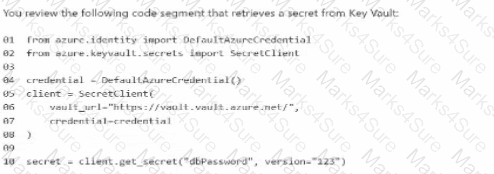
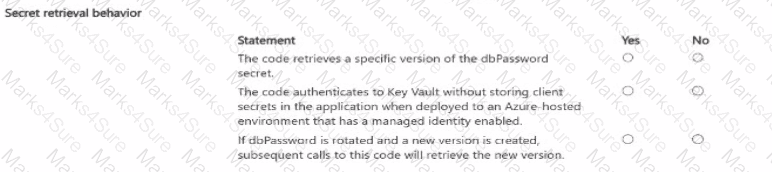
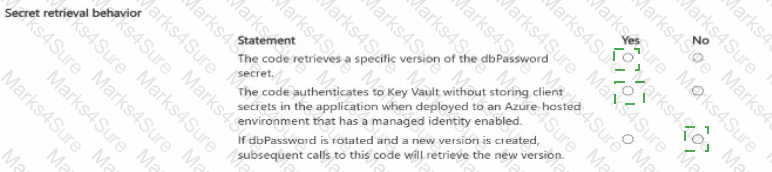
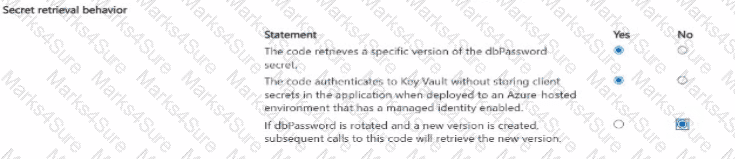
For each of the following statements, select Yes if the statement is true. Otherwise, select No.
NOTE: Each correct selection is worth one point.
You are designing an Azure Function app that exposes a public API.
The solution must:
Validate incoming request data and return results immediately to the caller.
Support Microsoft Entra ID authentication.
Scale automatically under variable load.
You need to implement a trigger.
Which trigger should you implement?
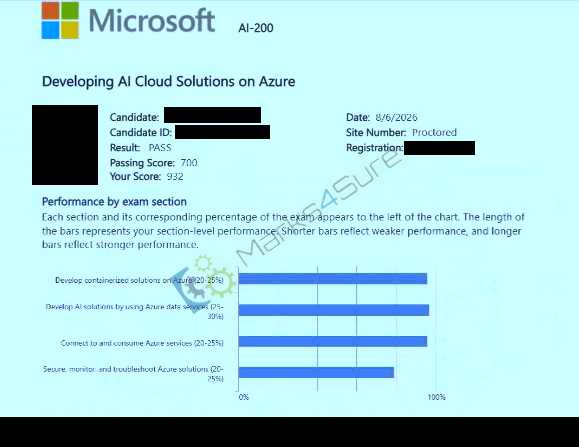
AI-200 Report Card
You have an Azure subscription named Sub1 that contains a resource group named RG1 and a Service Bus queue named SB1.
You plan to implement an Azure Event Grid push even: subscription that will deliver an event lo SB1 whenever a resource is created, modified, or deleted in RG1. You must minimize the development and configuration efforts.
You need to create an Event Grid topic for your planned implementation
Which type of event topic should you create?
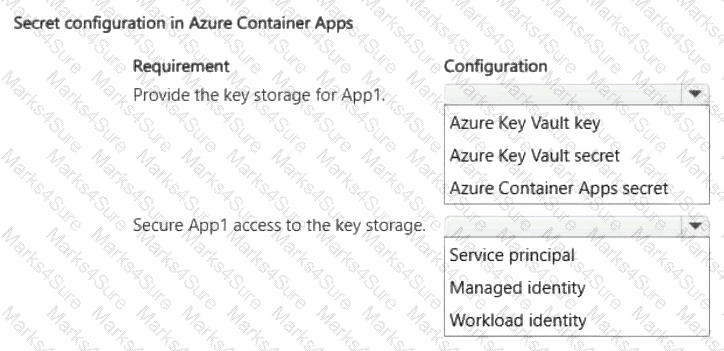
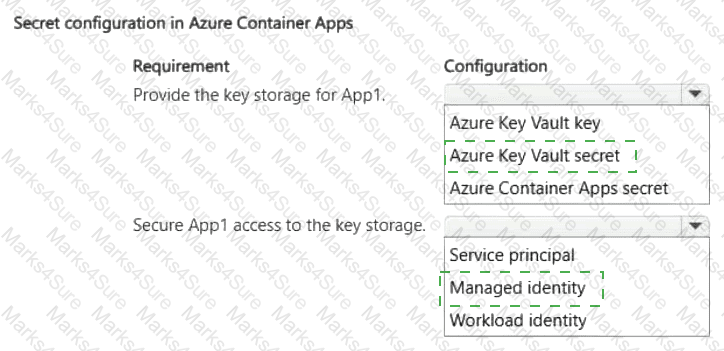
You plan to deploy an Azure Container Apps app named App1. App1 will use an access key to connect to a backend API.
The solution must store the key outside of the App1 environment and minimize maintenance efforts.
You need to configure secure key storage for App1.
Which configurations should you use? To answer, select the appropriate options in the answer area.
NOTE: Each correct selection is worth one point.
Note: This question is part of a series of questions that present the same scenario. Each question in the series contains a unique solution that might meet the stated goals.
You are using Azure Monitor Application Insights to investigate a production API. You open the Logs blade and set the time range to Last 24 hours.
An engineer recommends the following query to count requests by result code and sort the results from most frequent to least frequent:
requests
| summarize request_count = count() by resultCode
| order by request_count desc
You need to determine whether the query returns the number of requests grouped by result code and sorted from most to least frequent.
Solution: The result codes are sorted alphabetically.
Does the solution meet the goal?
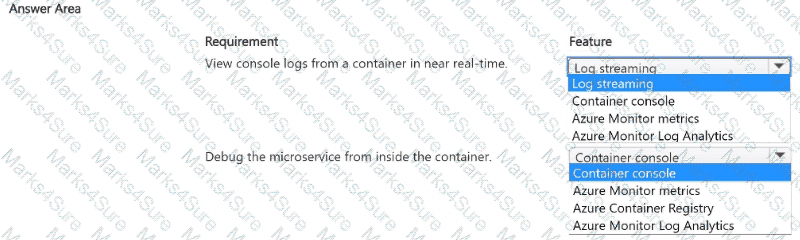
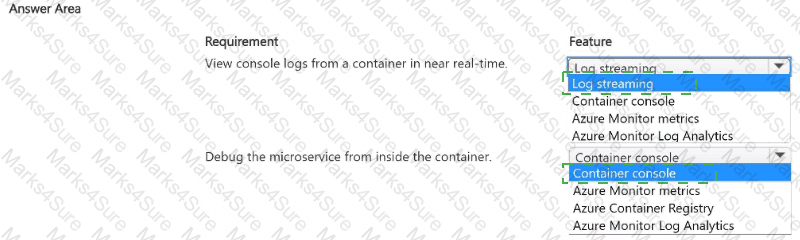
You are developing several microservices to run on Azure Container Apps.
You need to monitor and diagnose the microservices.
Which features should you use? To answer, select the appropriate feature in the answer area.
NOTE: Each correct selection is worth one point.
You have an Azure Service Bus namespace with a partitioned queue named queue1.
You plan to send a large number of messages through queue1 over the next few weeks. The order of messages will be random. You must minimize the possibility of message transmission interruption by transient failures of individual partitions.
You need to use the optimal configuration of the partition key in the messages.
Which configuration should you use?
You are configuring sampling for a distributed application that sends traces to Azure Monitor. The solution must:
• Preserve upstream sampling decisions across distributed traces
• Capture all spans during local testing.
• Sample 10 percent of traces in production.
You need to apply the appropriate sampling configuration for each requirement.
What should you do? To answer, move the appropriate configurations to the correct requirements. You may use each configuration once, more than once or not at all. You may need to move the split bar Between panes or scroll to view content.
NOTE: Each correct selection is worth one point.



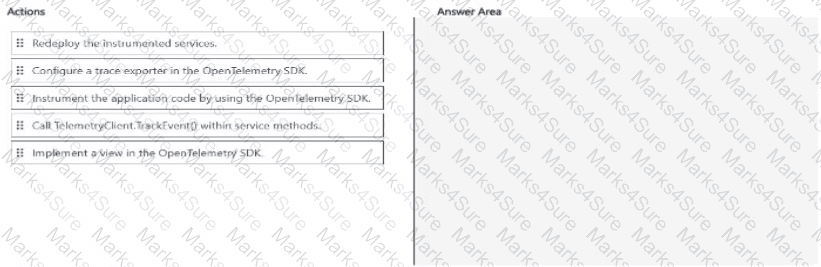
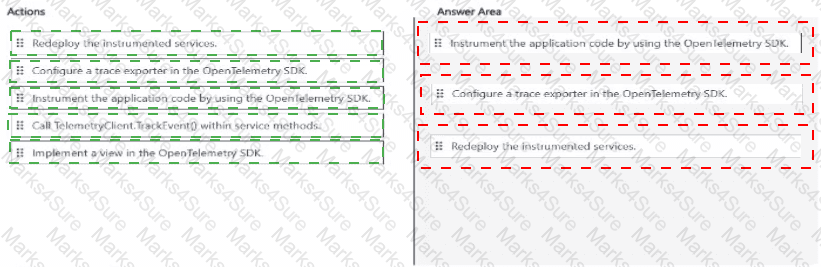
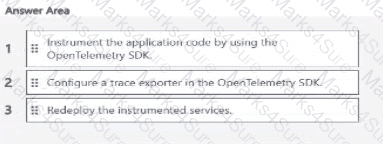
You need to implement trace correlation according to the business requirements.
Which three actions should you perform in sequence? To answer, move the appropriate actions from the list of actions to the answer area and arrange them in the correct order.
NOTE: More than one order of answer choices is correct. You will receive credit for any of the correct orders you se lect.
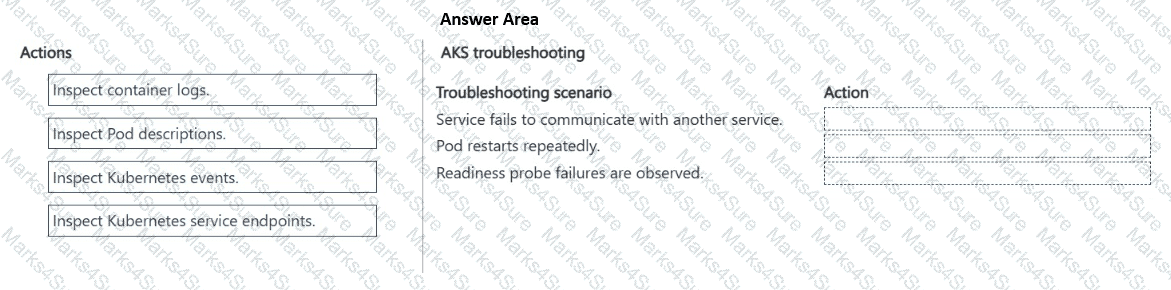
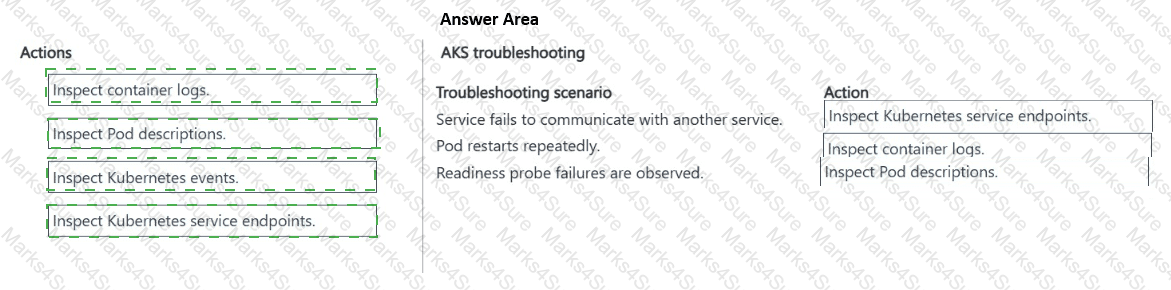
You need to troubleshoot connectivity failures between microservices running in AKS.
Which troubleshooting actions should you perform? To answer, move the appropriate action to the correct troubleshooting scenario. You may use each action once, more than once, or not at all. You may need to move the split bar between panes or scroll to view content.
NOTE: Each correct selection is worth one point.
You need to configure a connection string for the partner-facing service according to the technical requirements.
What should you use?
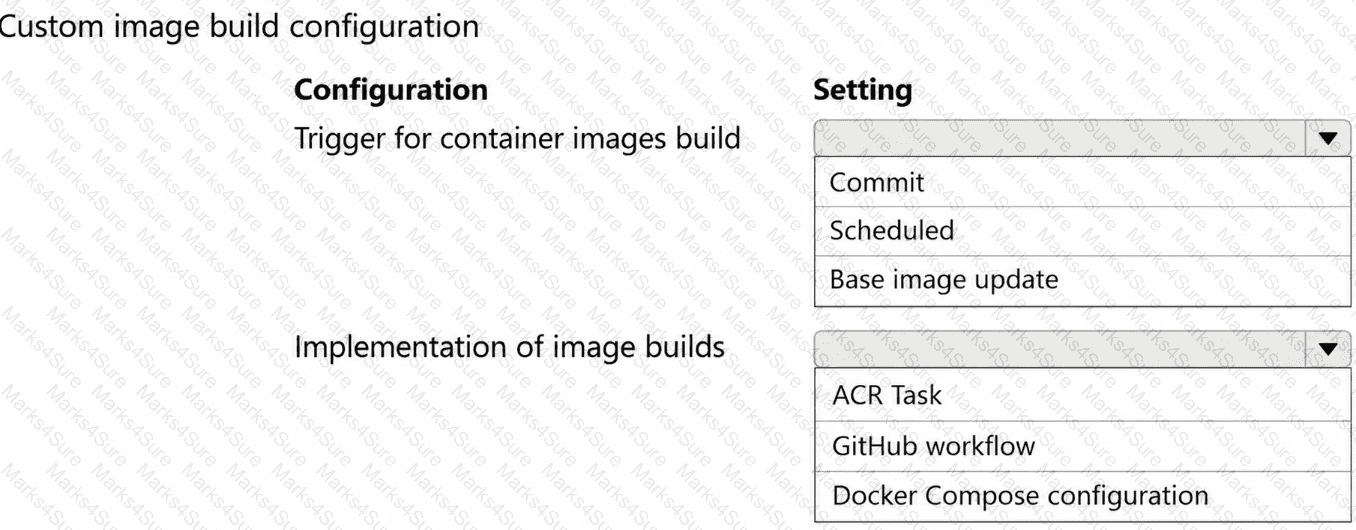
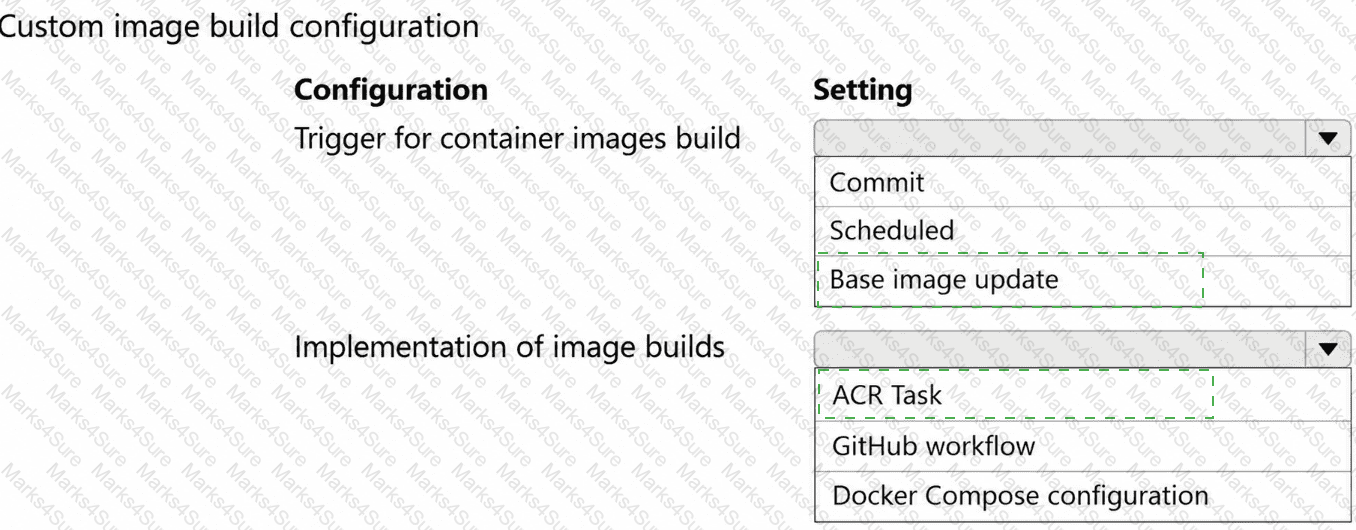
You need to configure image build automation based on the technical requirements.
Which settings should you configure? To answer, select the appropriate options in the answer area.
NOTE: Each correct selection is worth one point.
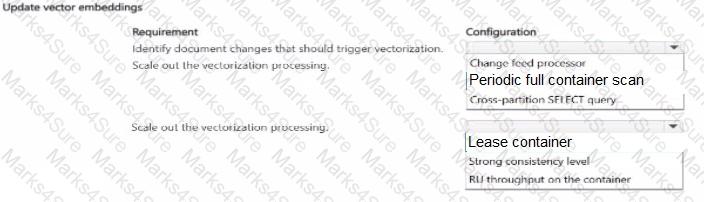
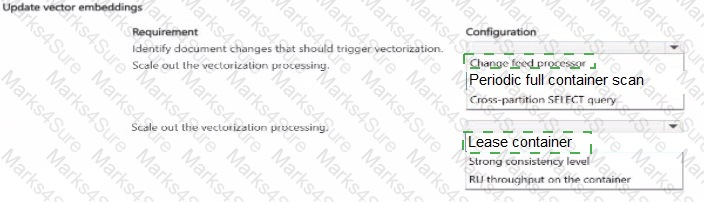
You need to configure vector embedding updates according to the business and technical requirements.
Which information should you use? To answer, select the appropriate option in the answer area.
NOTE: Each correct selection is worth one point.

You need to address the known issue resulting from vector similarity queries.
Which two actions should you perform? Each correct answer presents part of the solution. Choose two.
NOTE: Each correct selection is worth one point.
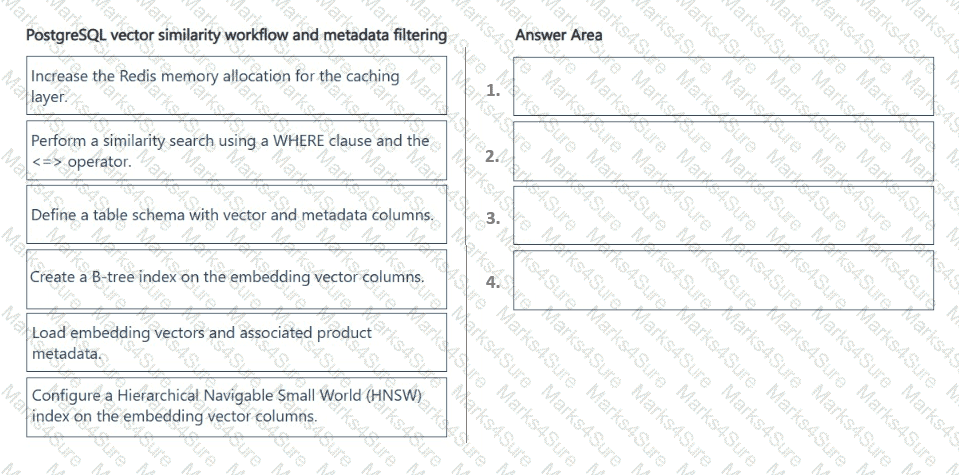
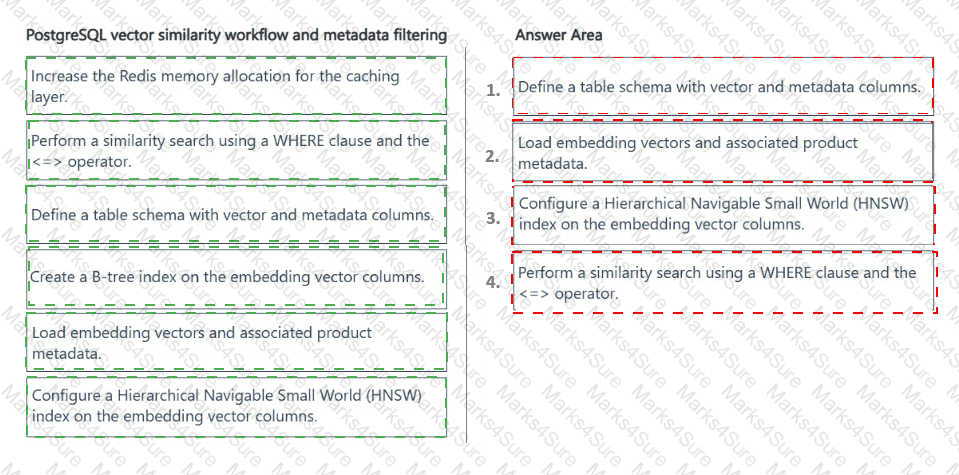
You need to implement the semantic retrieval workflow for the recommendation engine to meet the technical and performance requirements of Fabrikam Inc.
Which four actions should you perform in sequence? To answer, move the appropriate actions from the list of actions to the answer area and arrange them in the correct order.
You need to deploy Azure function resources and apps by using an automated, version-controlled CI/CD pipeline that supports declarative infrastructure deployment. What should you use?
You need to deploy a batch embedding workload according to the planned application architecture.
What should you use?
You manage an Azure Cosmos DB for a NoSQL API account named account1. The account contains a database named db1, which contains a container named container1. You configure account1 with a session consistency level.
You plan to develop an application named App1 that will access container1. Individual instances of App1 must perform reads and writes. App1 must allow multiple nodes to participate in the same session.
You need to configure an object to share the session token between the nodes.
Which object should you use?
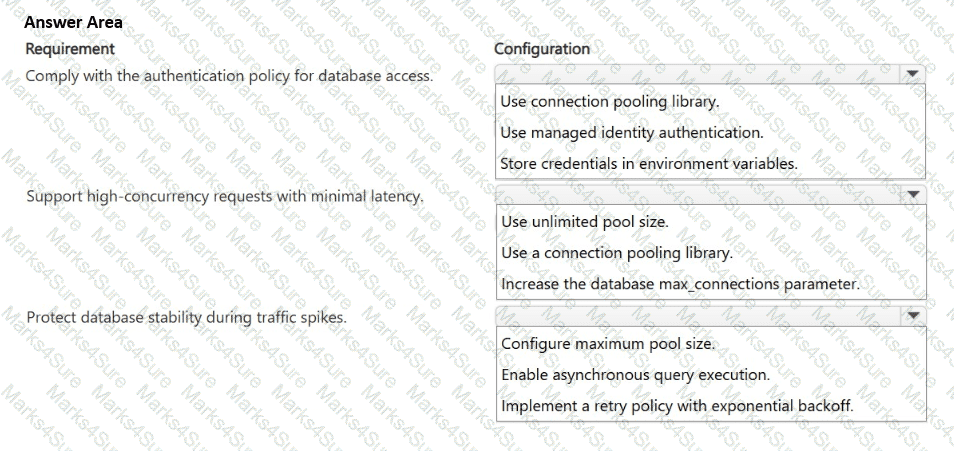
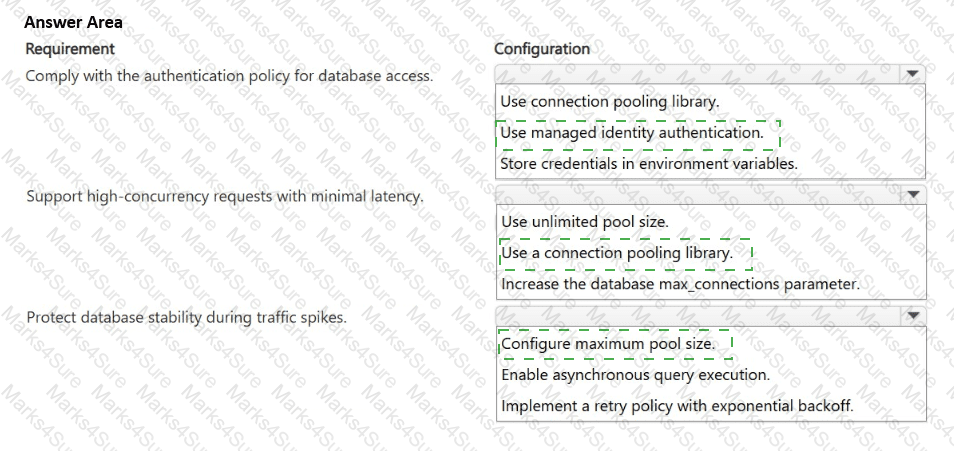
You need to optimize secure database connectivity from the containerized Recommendation API.
How should you configure the application?
You need to improve throughput for concurrent application requests to PostgreSQL.
What should you implement?
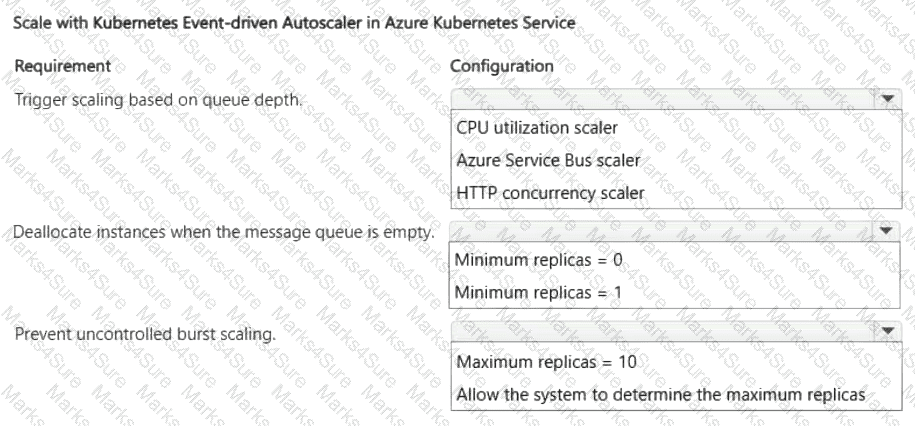
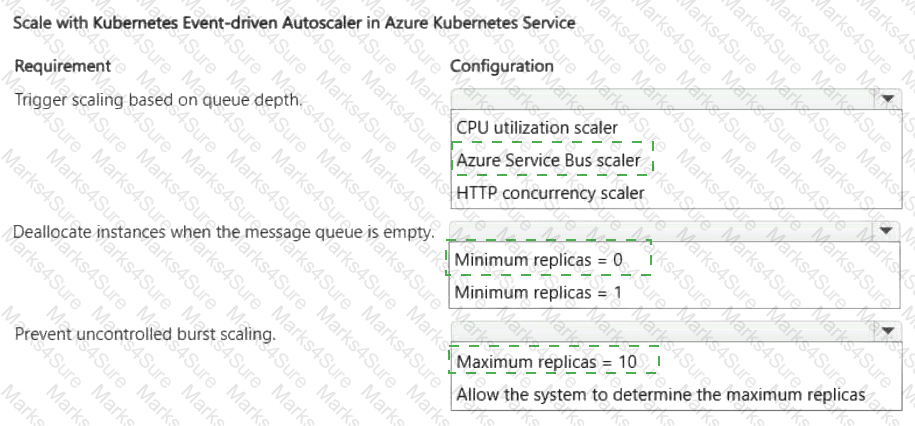
You need to deploy a batch retraining workload.
How should you complete the scaling configuration? To answer, select the appropriate options in the answer area.
NOTE: Each correct selection is worth one point.
You are implementing the expiration requirement for AI-generated summaries in the Redis cache.
You need to purge the AI summaries five minutes after creation, regardless of how often they are accessed.
What should you do?
You are troubleshooting a production Azure OpenAI service that is experiencing intermittent connectivity issues. All telemetry is sent to a Log Analytics workspace.
You must write a KQL query that analyzes the AppRequests table. The query must filter for requests that occurred within the last 30 minutes and have a failed status.
The final output must display the total number of failures for each unique operation.
You need to select the KQL operators required to filter the time range and aggregate the failure counts.
Which two operators should you use? Each correct answer presents part of the solution. Choose two.
NOTE: Each correct selection is worth one point.
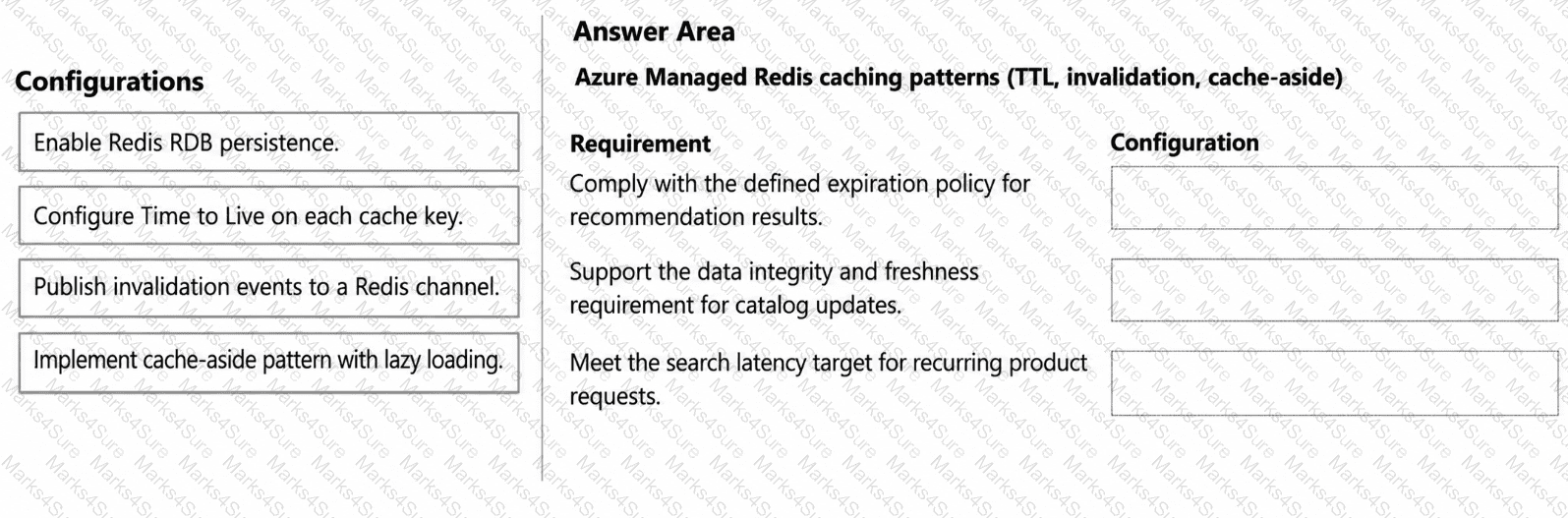
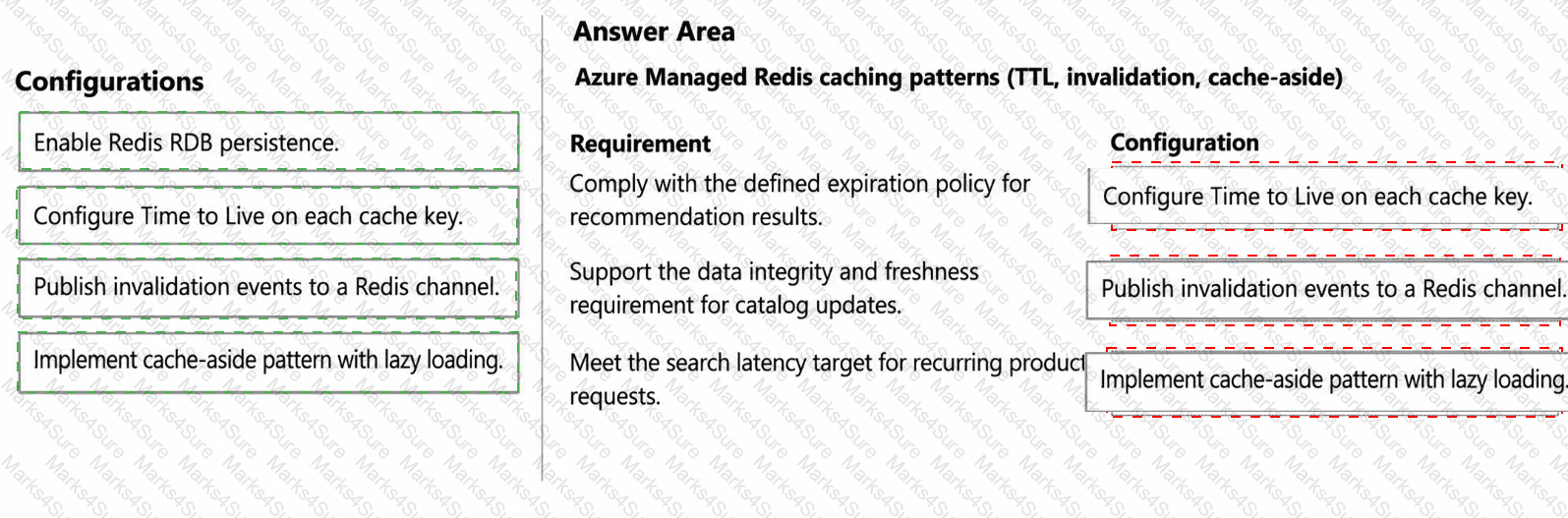
You need to configure the Redis integration for the Recommendation API.
Which configurations should you use? To answer, move the appropriate configurations to the correct requirements. You may use each configuration once, more than once, or not at all. You may need to move the split bar between panes or scroll to view content.
NOTE: Each correct selection is worth one point.
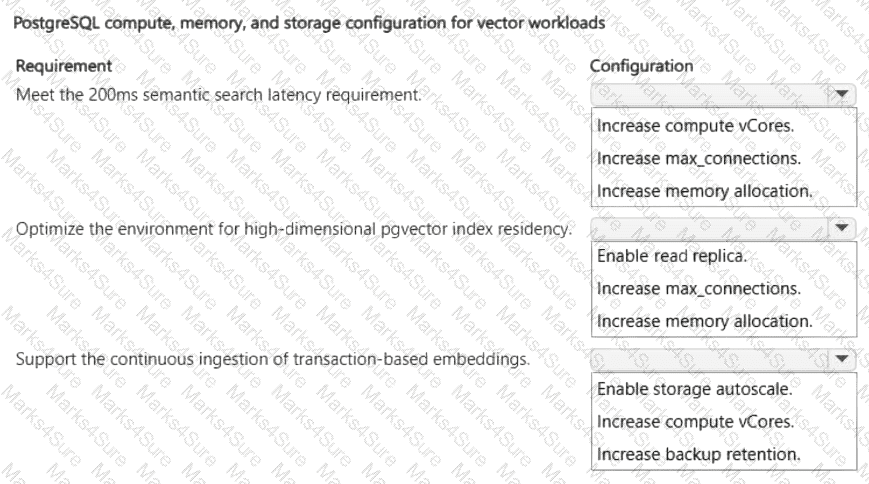
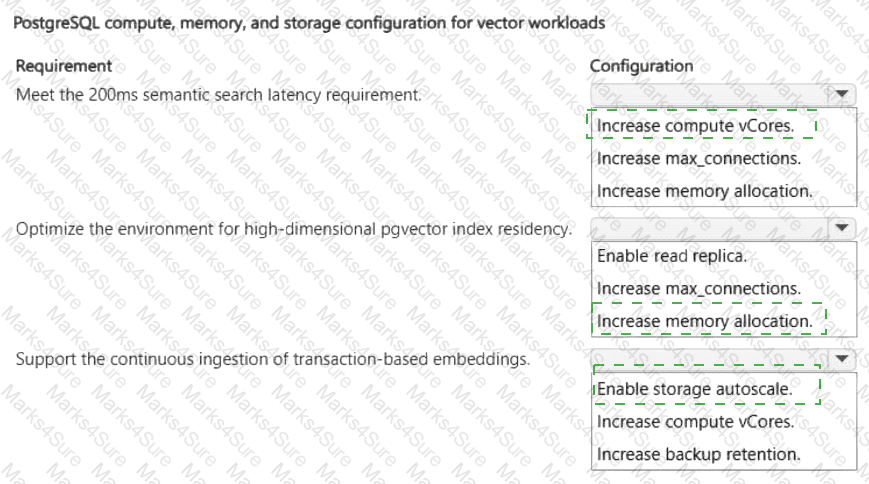
You need to configure the database resources for the Azure Database for PostgreSQL instance.
How should you complete the configuration to meet the business and technical requirements? To answer, select the appropriate options in the answer area.
NOTE: Each correct selection is worth one point.
PDF + Testing Engine

Testing Engine
PDF (Q&A)