
Free Practice Questions for the Microsoft Certified: Machine Learning Operations (MLOps) Engineer AI-300 Exam (2026 Updated)
At Marks4sure, we are dedicated to providing IT professionals with the most accurate and reliable preparation materials for the Microsoft AI-300 exam. To support your certification journey, we have made a selection of our premium 2026 Microsoft Certified: Machine Learning Operations (MLOps) Engineer practice questions and answers available completely free. You can take this practice test as many times as you need. Every question includes a detailed, expertly verified explanation to ensure you fully grasp the core security concepts before test day.
A team is building a Retrieval-Augmented Generation (RAG) system.
The team observes that the retrieved documents are often irrelevant or incomplete.
You need to improve retrieval accuracy.
What should you adjust?
You train a model in Azure Machine Learning.
You plan to capture experiment details for later comparison. The training code must log parameters and metrics for each run.
You review the following training script.
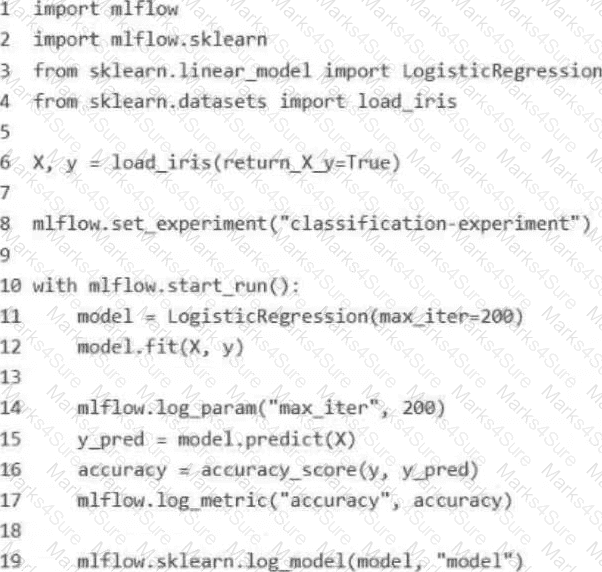
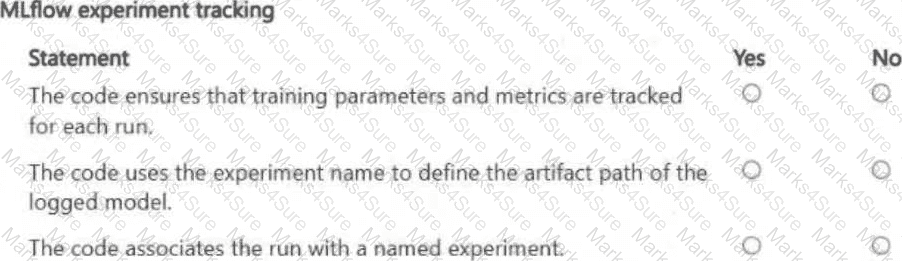
You need to verify whether the training script meets the experiment tracking requirement.
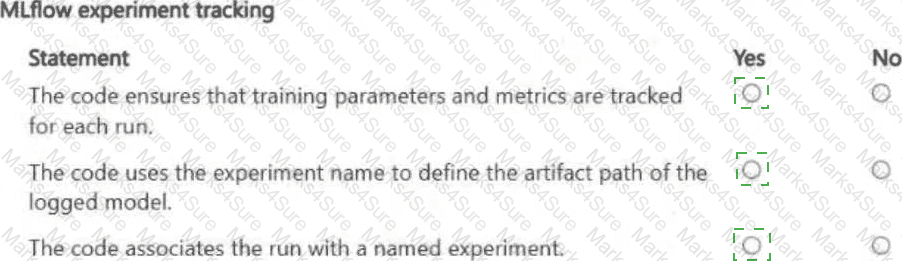
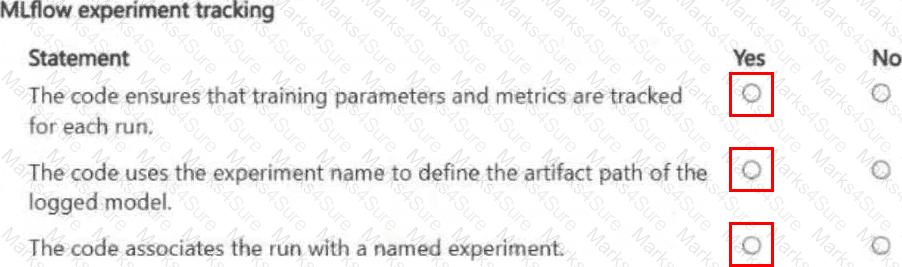
For each of the following statements, select Yes if the statement is true. Otherwise, select No. NOTE: Each correct selection is worth one point.
You use the Azure Machine Learning SDK v2 for Python and notebooks to train a model. You use Python code to create a compute target an environment and a training script You need to prepare information to submit a training job. Which class should you use?
A real-time endpoint is deployed in Azure Machine Learning to serve predictions to a web application.
Users report intermittent failures and unexpected responses when calling the endpoint.
You need to identify the appropriate troubleshooting action for each reported issue.
Which troubleshooting action should you perform for each issue? To answer, move the appropriate troubleshooting actions to the correct issues. You may use each troubleshooting action once, more than once, or not at all. You may need to move the split bar between panes or scroll to view content. NOTE: Each correct selection is worth one point.



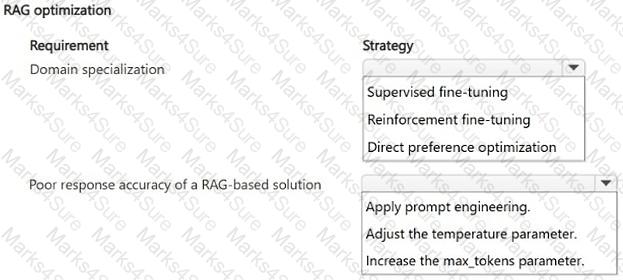
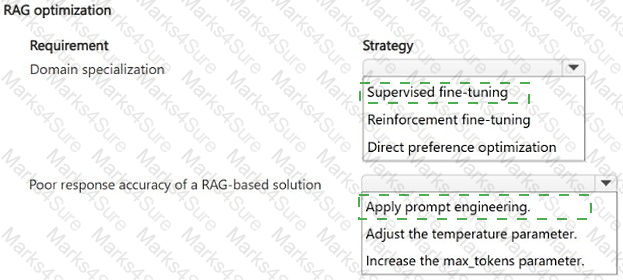
You need to configure an optimization method to meet Fabrikam Inc.’s technical requirements.
Which strategy should you apply first? To answer, select the appropriate options in the answer area.
NOTE: Each correct selection is worth one point.
You need to isolate training workloads while remaining cost-aware to address Fabrikam Inc.’s issues, constraints, and technical requirements.
What should you implement?
You need to standardize how Fabrikam Inc. manages machine learning assets.
Which action should you perform first?
You manage an Azure Machine Learning workspace named Workspace1 and an Azure Blob Storage accessed by using the URL https://storage1.blob.core.wmdows.net/data1.
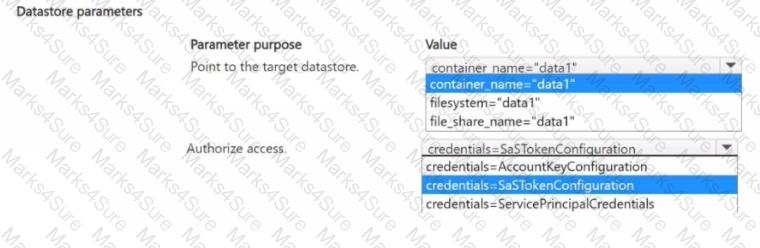
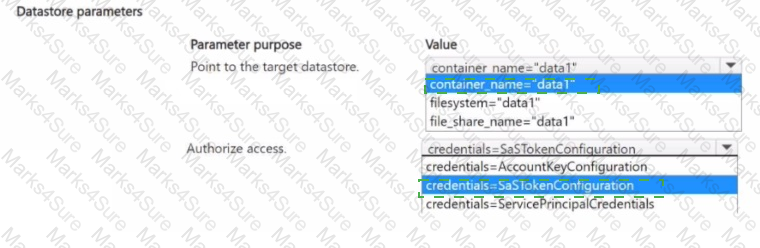
You plan to create an Azure Blob datastore in Workspace1. The datastore must target the Blob Storage by using Azure Machine Learning Python SDK v2. Access authorization to the datastore must be limited to a specific amount of time.
You need to select the parameters of the Azure Blob Datastore class that will point to the target datastore and authorize access to it.
Which parameters should you use? To answer, select the appropriate options in the answer area
NOTE: Each correct selection is worth one point.
You have an Azure Machine Learning workspace.
You have the following code:
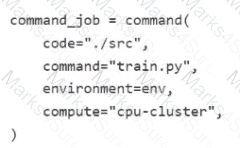
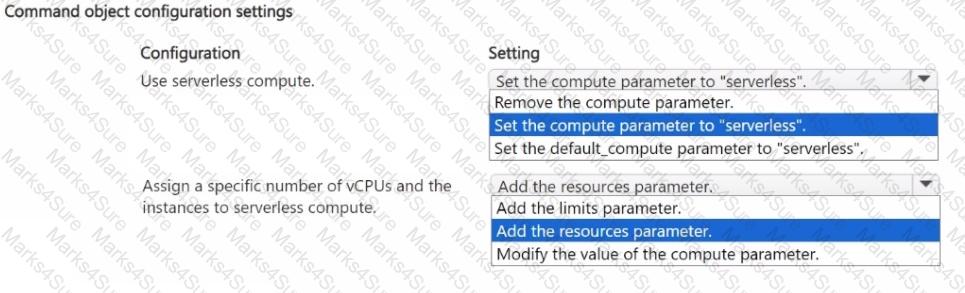
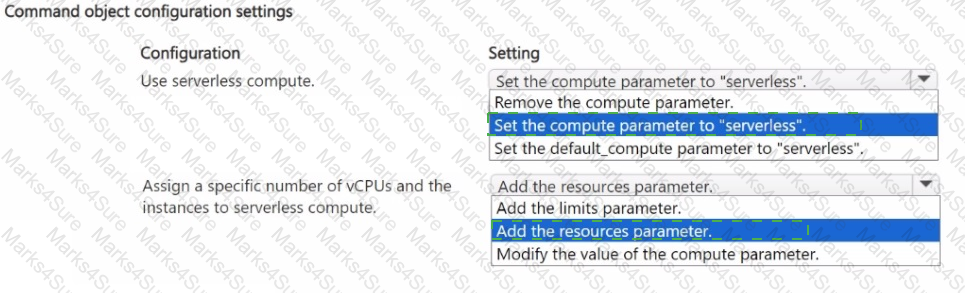
You plan to rely on serverless compute to train a model by using Azure Machine Learning Python SDK v2. The serverless compute must use a designated number of nodes of a specific virtual machine type.
You need to modify the code to run the training job according to the plan.
How should you modify the command object? To answer, select the appropriate oations in the answer area.
NOTE: Each correct selection is worth one point.
-
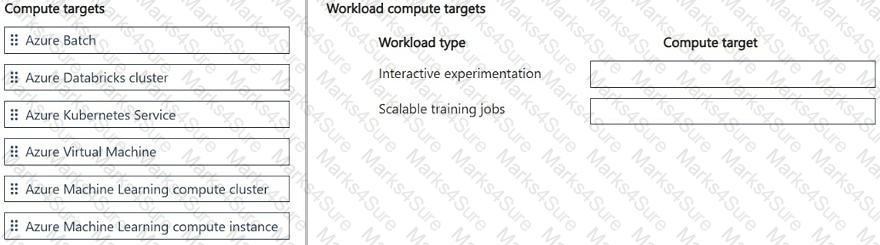
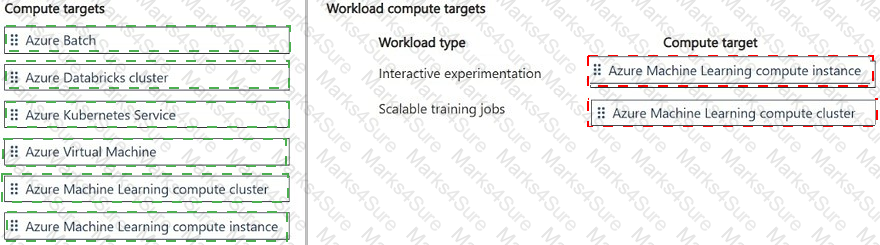
A team performs interactive experimentation during development. The team also runs scalable jobs for model training.
The team must minimize costs while ensuring compute resources scale when needed. Different workloads require different compute behaviors within the same workspace.
You need to configure compute targets that support each workload.
Which compute targets should you use? To answer, move the appropriate compute targets to the correct workload types. You may use each compute target once, more than once, or not at all. You may need to move the split bar between panes or scroll to view content.
NOTE: Each correct selection is worth one point.
-
A biomedical research company plans to enroll people in an experimental medical treatment trial.
You create and train a binary classification model to support selection and admission of patients to the trial. The model includes the following features: Age, Gender, and Ethnicity.
The model returns different performance metrics for people from different ethnic groups.
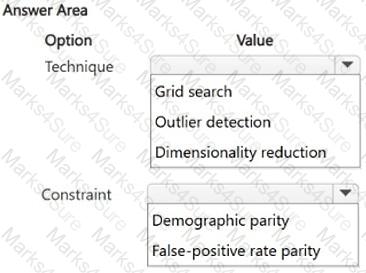
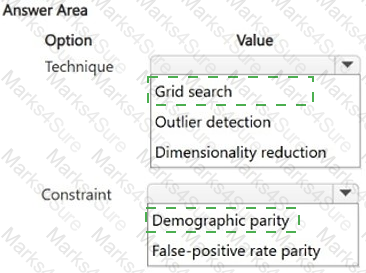
You need to use Fairlearn to mitigate and minimize disparities for each category in the Ethnicity feature.
Which technique and constraint should you use? To answer, select the appropriate options in the answer area.
NOTE: Each correct selection is worth one point.
You create an Azure Machine Learning workspace.
You plan to write an Azure Machine Learning SDK for Python v2 script that logs an image for an experiment. The logged image must be available from the images tab in Azure Machine Learning Studio.
You need to complete the script.
Which code segments should you use? To answer, select the appropriate options in the answer area.
NOTE: Each correct selection is worth one point.


An organization uses Microsoft Foundry to develop generative AI projects that access shared Azure resources such as storage accounts and vector databases.
The organization s security policy requires eliminating secret key-based authentication and enforcing least-privilege access.
You must configure identity and access so that:
Services authenticate without stored credentials.
Permissions are scoped appropriately across projects and shared resources.
You need to configure the appropriate identity or access mechanism for each requirement.
What should you configure in Microsoft Foundry to meet each requirement? To answer, move the appropriate configuration mechanisms to the correct requirements. You may use each configuration mechanism once, more than once, or not at all. You may need to move the split bar between panes or scroll to view content. NOTE: Each correct selection is worth one point.



Note: This question is part of a series of questions that present the same scenario. Each question in the series contains a unique solution that might meet the stated goals. Some question sets might have more than one correct solution, while others might not have a correct solution.
After you answer a question in this section, you will NOT be able to return to it. As a result, these questions will not appear on the review screen.
You work in Microsoft Foundry with a prompt flow.
You must manually evaluate prompts and compare results across prompt variants.
You need to capture the inputs, outputs, token usage, and latencies for each flow run for the evaluation.
Solution: Create prompt variants and compare their outputs in the Evaluation experience.
Does the solution meet the goal?
-
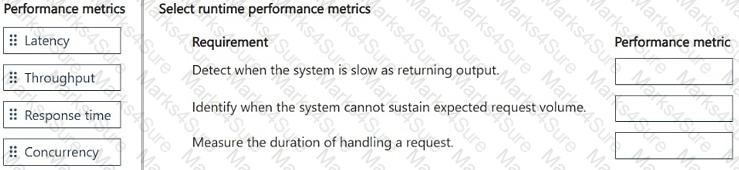
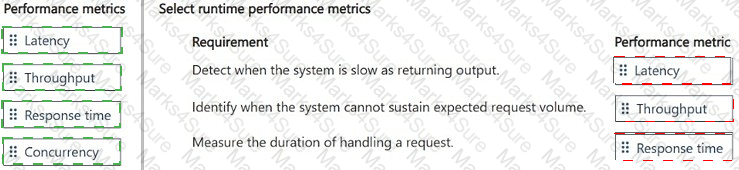
A team operates a generative AI-powered customer support assistant built on Microsoft Foundry. The application serves users globally and supports both real-time chat interactions and batch summarization jobs.
The team must ensure that the application continues to meet defined service-level objectives (SLO) as usage increases.
The team requires visibility into runtime behavior to identify performance regressions that affect the user experience and system capacity.
You need to select the performance metrics that meet the requirements.
Which performance metric should you monitor for each requirement? To answer, move the appropriate performance metrics to the correct requirements. You may use each performance metric once, more than once, or not at all. You may need to move the split bar between panes or scroll to view content.
NOTE: Each correct selection is worth one point.
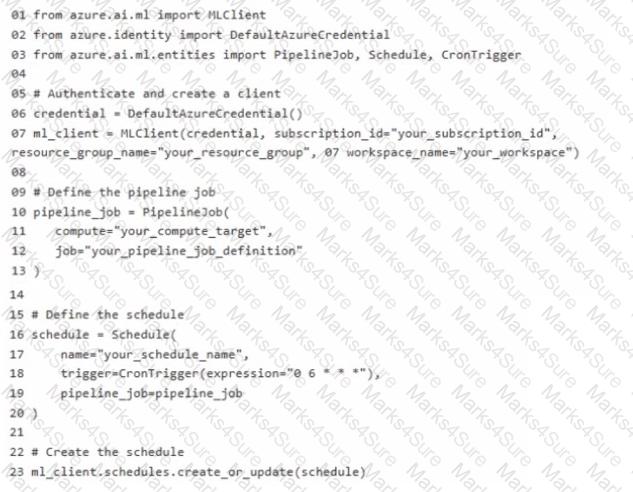
You manage an Azure Machine Learning workspace.
You schedule a pipeline job by using Azure Machine Learning Python SDK v2.
You need to decide whether the time-based schedule with cron expression is implemented correctly.
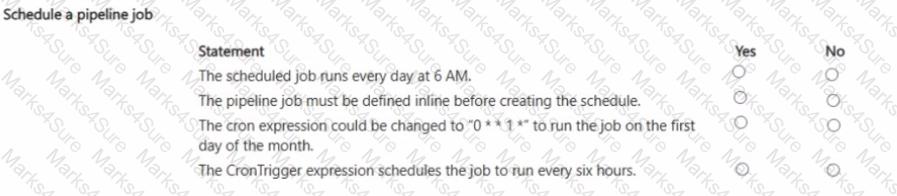
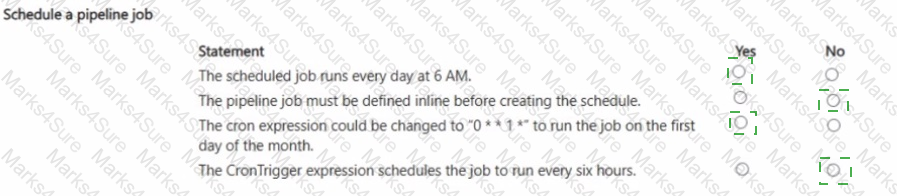
For each of the following statements, select Yes if the statement is true. Otherwise, select No.
NOTE: Each correct selection is worth one point.
You use an Azure Machine Learning workspace.
You must monitor cost at the endpoint and deployment level.
You have a trained model that must be deployed as an online endpoint. Users must authenticate by using Microsoft Entra ID.
What should you do?
You need to recommend an experiment-tracking strategy that ensures consistent experiment results.
What should you recommend?
Fabrikam Inc. must improve its deployment process because traditional machine learning models are deployed manually and the organization has limited rollback capability .
You need to recommend a deployment approach that supports staged rollout and rollback while minimizing operational overhead.
Which deployment approach should you recommend?
Fabrikam Inc. needs to improve the performance of a GPT-5 model based on the stated technical requirements.
Which action should you perform first?
You manage an Azure Machine Learning workspace.
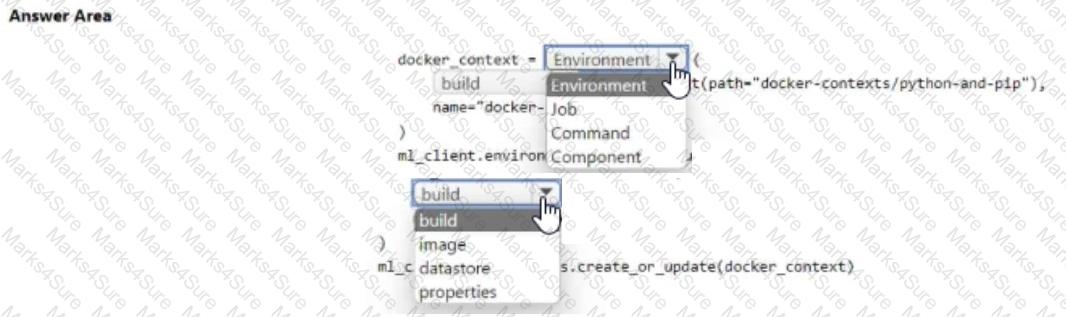
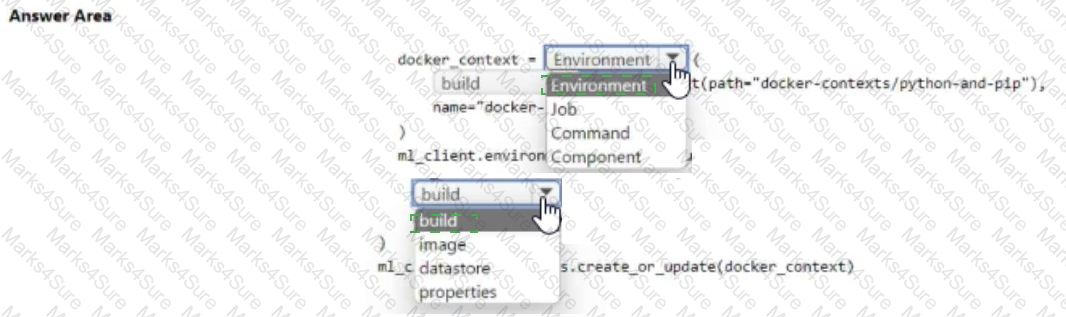
You must define the execution environments for your jobs and encapsulate the dependencies for your code.
You need to configure the environment from a Docker build context.
How should you complete the rode segment? To answer, select the appropriate option in the answer area.
NOTE: Each correct selection is worth one point.
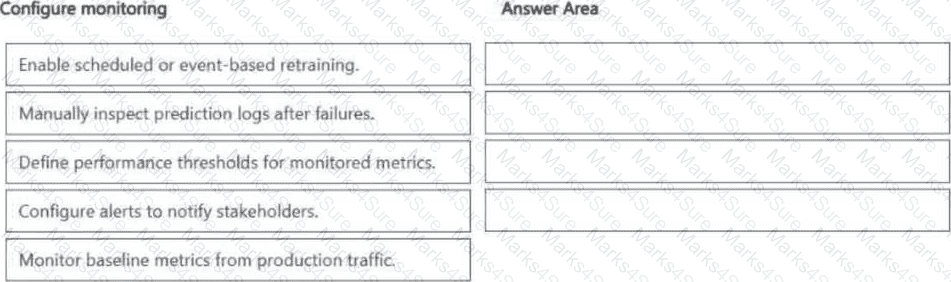
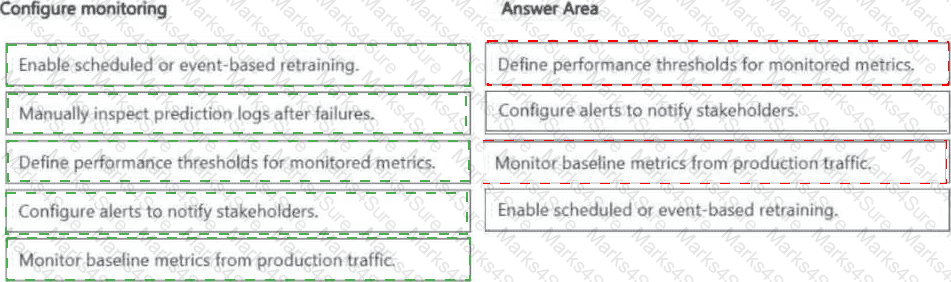
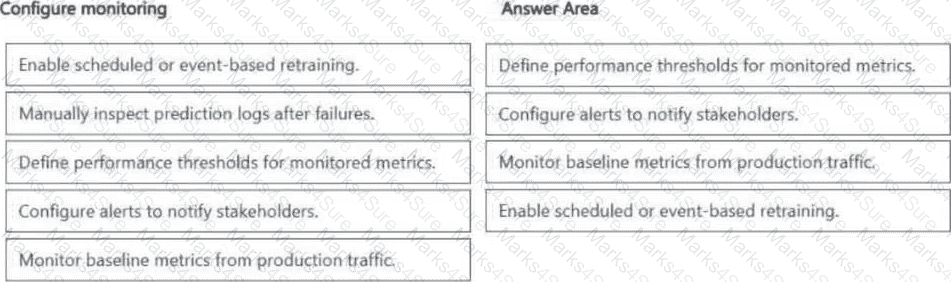
A team deploys a classification model to production and monitors performance and data changes.
The team wants to ensure that significant drops in prediction accuracy automatically trigger the following:
Stakeholders must be notified of the drops.
Retraining must be initiated when thresholds are exceeded
You need to configure monitoring to meet the requirements.
Which four actions should you perform in sequence? To answer, move the appropriate actions from the list of actions to the answer area and arrange them in the correct order.
You have an Azure Machine Learning workspace. You are running an experiment on your local computer.
You need to use MLflow Tracking to store metrics and artifacts from your local experiment runs in the workspace.
In which order should you perform the actions? To answer, move all actions from the list of actions to the answer area and arrange them in the correct order.


You create an Azure Machine Learning workspace. The workspace contains a dataset named sample.dataset, a compute instance, and a compute cluster. You must create a two-stage pipeline that will prepare data in the dataset and then train and register a model based on the prepared data. The first stage of the pipeline contains the following code:
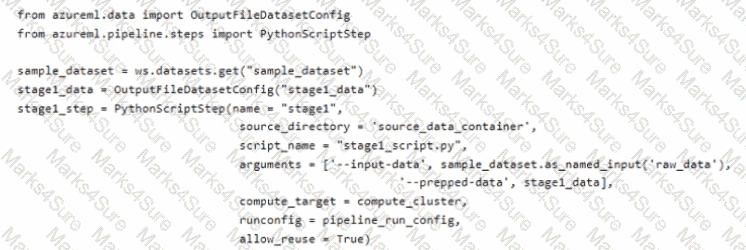
You need to identify the location containing the output of the first stage of the script that you can use as input for the second stage. Which storage location should you use?
You have a deployment of an Azure OpenAI Service base model.
You plan to fine-tune the model.
You need to prepare a file that contains training data for multi-turn chat.
Which file encoding method should you use?
You create an Azure Machine Learning workspace. You use Azure Machine Learning designer to create a pipeline within the workspace. You need to submit a pipeline run from the designer.
What should you do first?
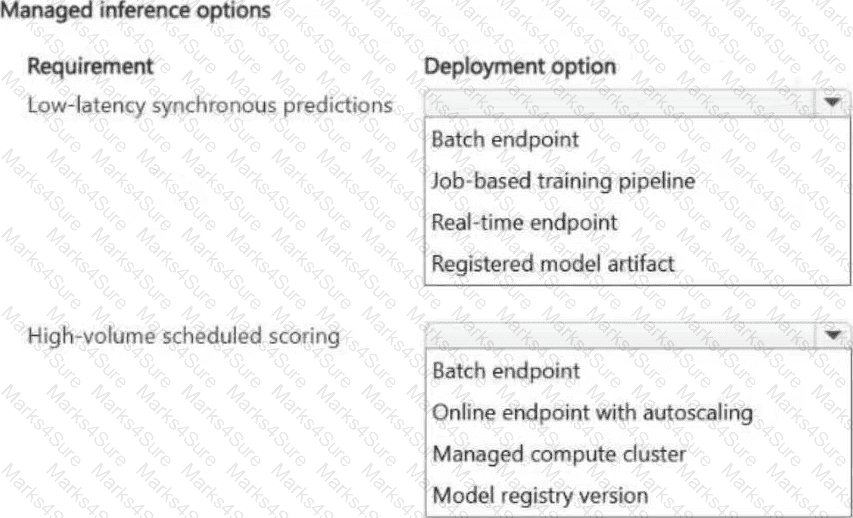
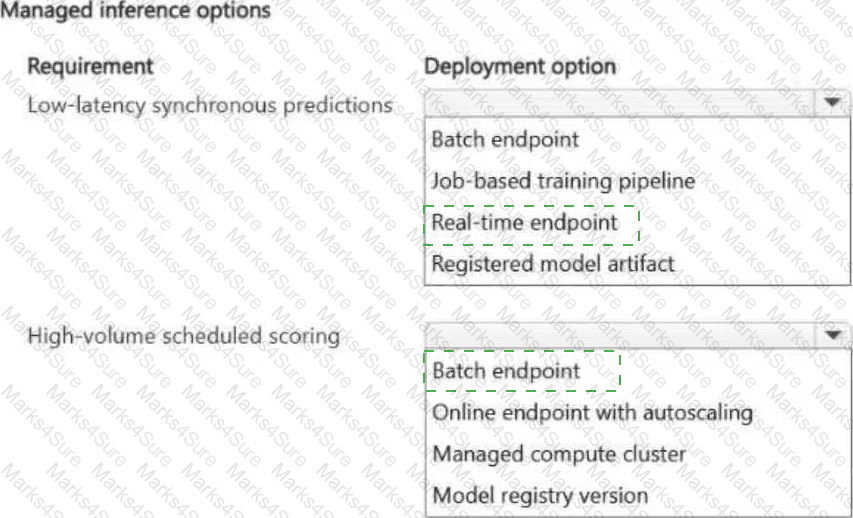
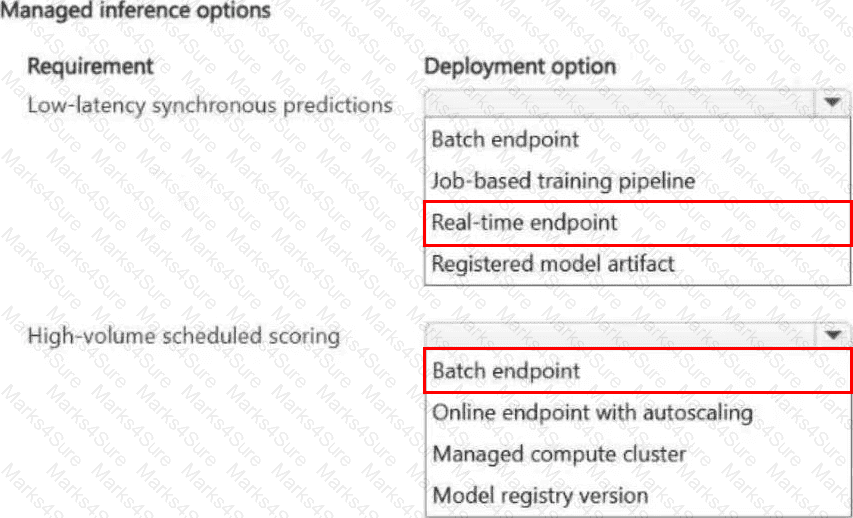
A team trains an MLflow model that scores customer churn risk. The model will be consumed by different downstream systems.
One system requests predictions synchronously during customer interactions.
Another system submits files containing millions of records for scheduled scoring.
You need to deploy the model by using managed inference options that match each usage pattern.
Which option should you use for each usage pattern? To answer, select the appropriate options in the answer area. NOTE: Each correct selection is worth one point.
You manage an Azure Machine Learning workspace by using the Azure CLI ml extension v2. You need to define a YAML schema to create a compute cluster. Which schema should you use?
You create an Azure Machine Learning workspace named workspaces. You create a Python SDK v2 notebook to perform custom model training in workspace1. You need to run the notebook from Azure Machine Learning Studio in workspace1. What should you provision first?
A team is validating a generative AI assistant for a company. The assistant generates responses by using internal knowledge sources.
The company requires assurance that responses are accurate, supported by sources, and related to the user prompts before enabling production access.
You need to implement quality metrics that confirm the assistant produces reliable and meaningful responses.
Which two evaluation metrics should you use? Each correct answer presents part of the solution.
A team develops multiple AI applications in Microsoft Foundry that rely on shared prompt templates.
The team requires a centralized way to track, version, and reuse prompt content across projects.
You need to recommend a solution to track and reuse prompt content.
Which approach should you recommend?
PDF + Testing Engine

Testing Engine
PDF (Q&A)