
Free Practice Questions for the Anthropic Claude Certified Developer CCDV-F Exam (2026 Updated)
At Marks4sure, we are dedicated to providing IT professionals with the most accurate and reliable preparation materials for the Anthropic CCDV-F exam. To support your certification journey, we have made a selection of our premium 2026 Claude Certified Developer practice questions and answers available completely free. You can take this practice test as many times as you need. Every question includes a detailed, expertly verified explanation to ensure you fully grasp the core security concepts before test day.
Your Claude agent performs database operations. A recent incident occurred where the agent ran a destructive query that affected production data. The team wants to add deterministic controls to prevent similar incidents.
How would you prevent similar incidents?
A Claude application that worked well in testing is now occasionally returning outputs that mention information not present in the input. The development team initially assumed the model was hallucinating, so they asked you to troubleshoot.
What would you do first?
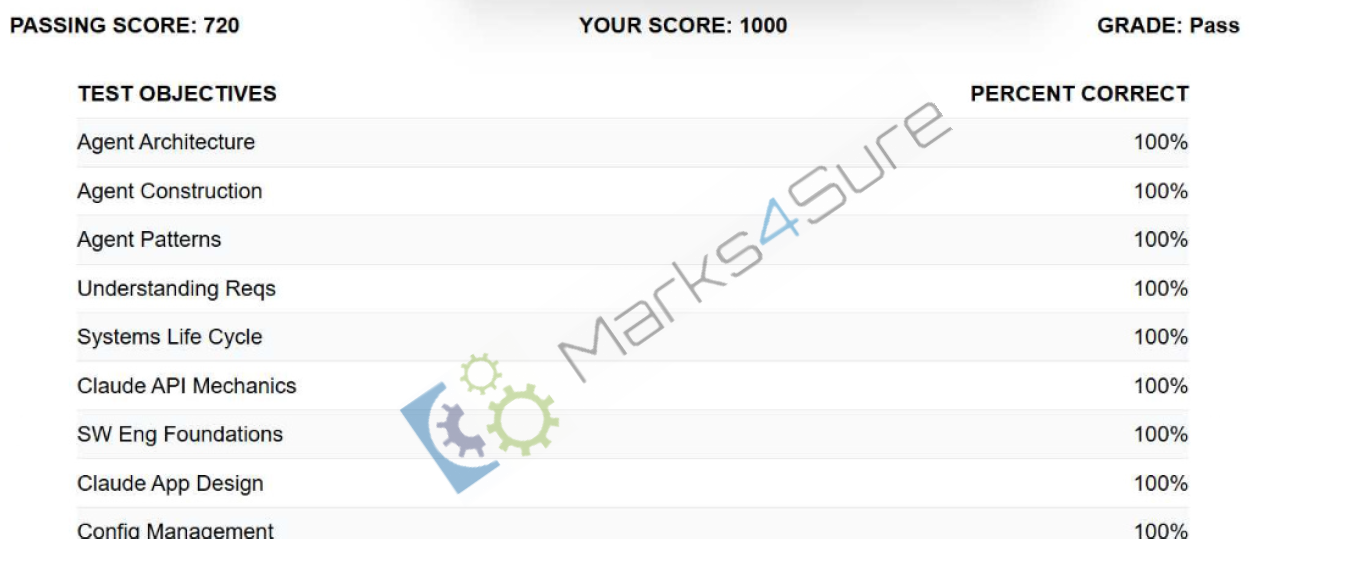
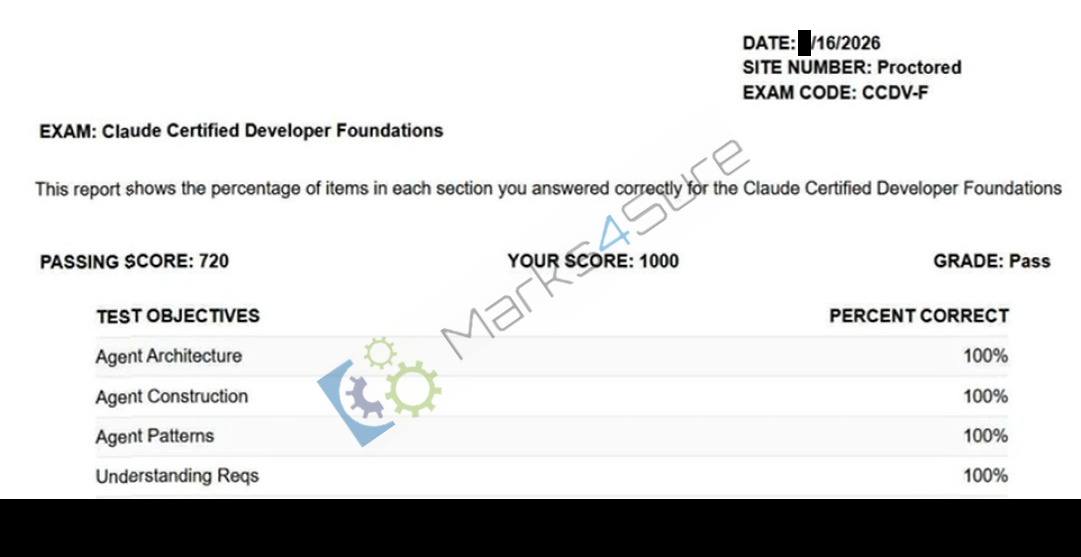
CCDV-F Report Card
You are deciding between deploying a Claude-powered agent on Anthropic's hosted infrastructure or self-hosting under a "bring your own cloud" model in your own AWS account. The agent processes customer data subject to your enterprise's data residency policies, but the team wants to ship quickly and avoid managing infrastructure.
Which deployment model would you recommend?
Your Claude application is hitting context window limits when processing long customer service transcripts. A junior developer suggests increasing the temperature parameter to fix the issue.
How would you respond?
Your team is choosing how to add a capability to a Claude application. You want to apply the appropriate option, whether built-in tool, custom tool, Skill, or MCP server, based on the use case.
You would choose the option that...
A teammate has asked how to extend Claude Code with a custom Skill that the team can invoke during sessions. The Skill consists of a set of instructions and a few support scripts the team wants Claude to be able to call when the Skill is loaded.
Where is the right place to define the Skill?
Your agent makes 10 to 15 tool calls per task, and you have noticed it sometimes loses track of earlier results by the time it reaches later steps. The agent's context window is large enough to hold all the messages, but the relevant information appears to get buried as the conversation grows.
How would you address this?
You are designing an agent that processes vendor invoices. The work involves a small number of well-understood steps, but occasionally an invoice arrives in an unexpected format that requires the system to decide between rerouting, requesting clarification, or flagging for human review.
The most appropriate architecture for this system is...
Your enterprise has a contract with AWS that requires Claude API calls to flow through Amazon Bedrock rather than the direct Anthropic API. Your team is building a new Claude application and is unfamiliar with this constraint.
How would you build the application?
Your Claude application's content policy specifies categories of content it should not produce under any circumstance. The application currently has no mechanism to enforce this policy, and content matching these categories is appearing in the application's output.
How would you enforce the content policy?
You are integrating Claude into an application written in Python. The Claude SDK provides a Python client that wraps the underlying REST API.
How would you integrate the SDK?
You are designing a Claude application that maintains user sessions across multi-turn conversations. The product team has asked how the application will handle session lifecycle: when sessions should expire, how state is reset, and how the application avoids carrying stale context into new conversations.
How would you design session lifecycle?
Your Claude application has been running for several conversation turns, and you notice the model occasionally references information that was discussed many turns ago but is no longer relevant. You suspect context drift is causing the model to weight stale content too heavily.
How would you address the drift?
Your Claude application's outputs are inconsistent in format. The team’s instructions are scattered across the system prompt and user messages, with some instructions stated only once and others repeated.
How would you fix the inconsistency?
A new Claude model release includes performance improvements for several reasoning tasks but has changed the format of its responses to system prompts that use multi-section instructions. Your application uses multi-section system prompts heavily. Initial evaluation on the application's actual workload shows the new model performs 8 percent better on reasoning tasks but produces malformed output on roughly 3 percent of requests because of the format change. The team is debating whether to upgrade.
How would you decide?
A Claude application is producing outputs that drift away from the expected JSON format after several conversation turns. The first few turns produce correctly formatted output, but later turns gradually lose structure.
How would you address the drift?
You are implementing a custom tool for your Claude agent. The tool needs to interact with an external pricing service that returns product data.
Which of the following best practices would you apply as you develop this tool?
A teammate has asked you to explain the difference between context engineering and prompt engineering. They have heard the terms used interchangeably and are unsure how each applies to a Claude application that processes long-running multi-step tasks.
How would you describe the distinction?
The team is debating whether to integrate with the Claude API directly or through a third-party abstraction layer that supports multiple LLM providers. The team has identified that all current and projected use cases run on Claude, no internal customer has requested LLM portability, and the team's product roadmap does not mention multi-provider support over the next two years. The third-party abstraction would add roughly 15 percent overhead in code complexity and introduce one additional dependency.
Which integration approach would you recommend?
You are deciding between Claude models for a task. The team has identified three relevant tradeoff dimensions: quality, latency, and cost.
The right model is the one that...
You are building a Claude application that processes 10,000 customer emails overnight to extract structured data. The work is non-interactive, runs once daily, and has a flexible completion window of several hours. Which Claude API would you use?
You are designing a Claude application that processes user-submitted text. Some of that text could include sensitive information such as account numbers or passwords that the application should not send to Claude.
How would you design the application?
Your Claude agent has access to a tool that retrieves customer records. A teammate has noticed that the agent occasionally calls the tool with arguments the schema does not declare, and the tool's downstream service returns an error each time. The teammate proposes loosening the schema so the tool accepts whatever arguments the model produces.
How would you respond?
Your Claude agent has too many tools, and many of them have overlapping functionality. The agent often picks an inappropriate tool when several could plausibly handle a request.
How would you address the tool selection problem?
Your Claude application uses tool calling to fetch patient data and generate summary reports. The flow occasionally fails because the model returns a tool_use block that references arguments not present in the schema, and your application code does not handle this case gracefully.
How would you address this?
PDF + Testing Engine

Testing Engine
PDF (Q&A)