Free Practice Questions for the Linux Foundation Kubernetes Administrator CKA Exam (2026 Updated)
At Marks4sure, we are dedicated to providing IT professionals with the most accurate and reliable preparation materials for the Linux Foundation CKA exam. To support your certification journey, we have made a selection of our premium 2026 Kubernetes Administrator practice questions and answers available completely free. You can take this practice test as many times as you need. Every question includes a detailed, expertly verified explanation to ensure you fully grasp the core security concepts before test day.
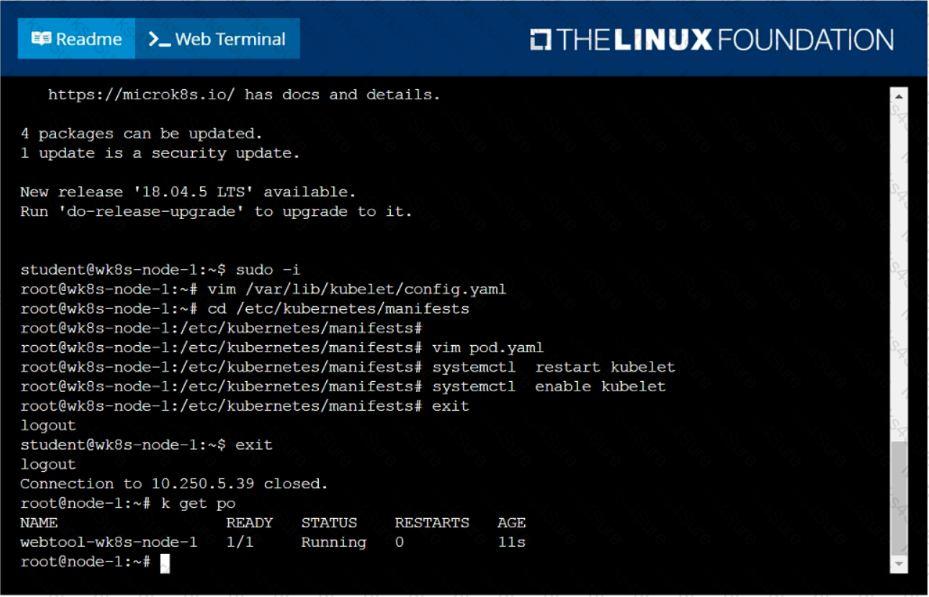
Configure the kubelet systemd- managed service, on the node labelled with name=wk8s-node-1, to launch a pod containing a single container of Image httpd named webtool automatically. Any spec files required should be placed in the /etc/kubernetes/manifests directory on the node.
You can ssh to the appropriate node using:
[student@node-1] $ ssh wk8s-node-1
You can assume elevated privileges on the node with the following command:
[student@wk8s-node-1] $ | sudo –i
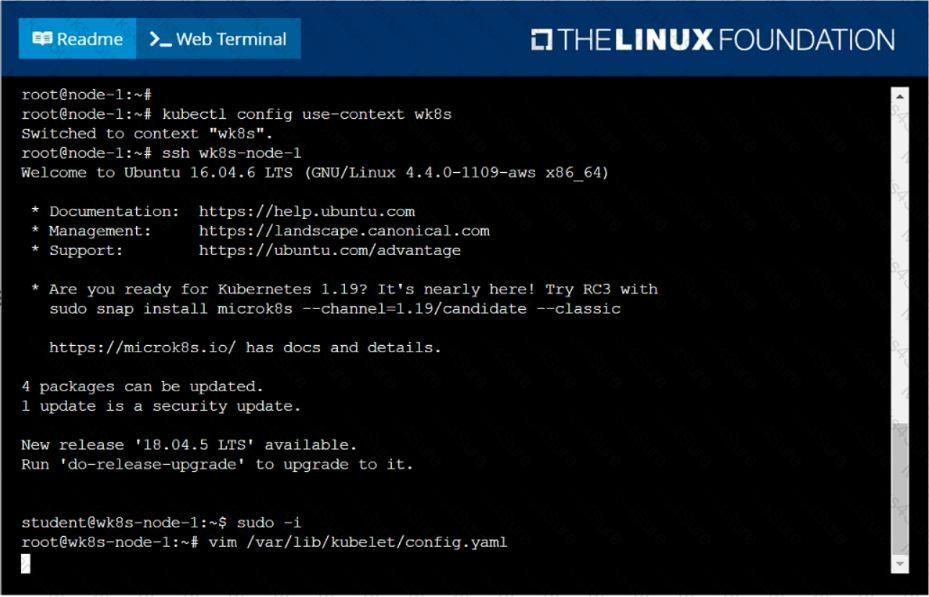 F:\Work\Data Entry Work\Data Entry\20200827\CKA\21 C.JPG
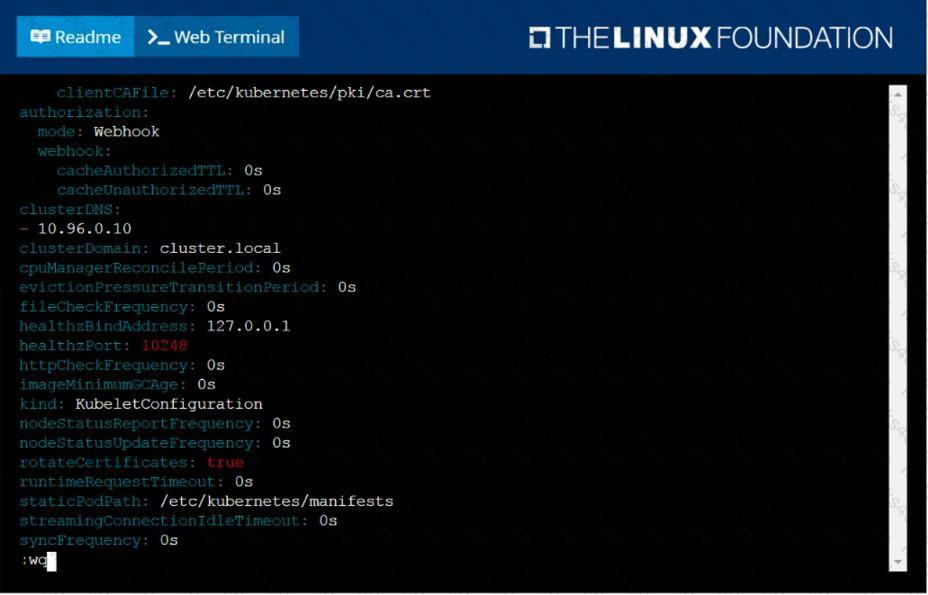 F:\Work\Data Entry Work\Data Entry\20200827\CKA\21 D.JPG
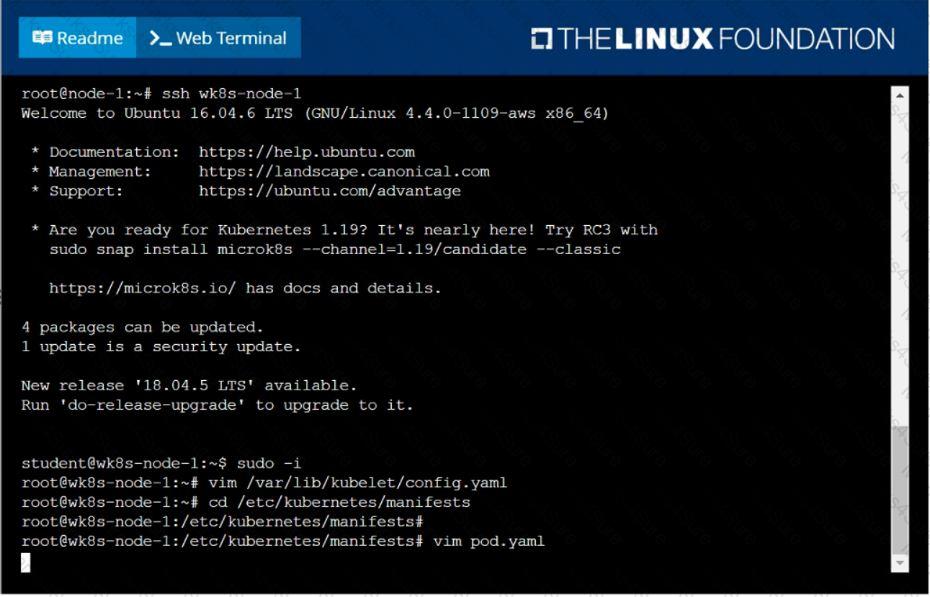 F:\Work\Data Entry Work\Data Entry\20200827\CKA\21 E.JPG
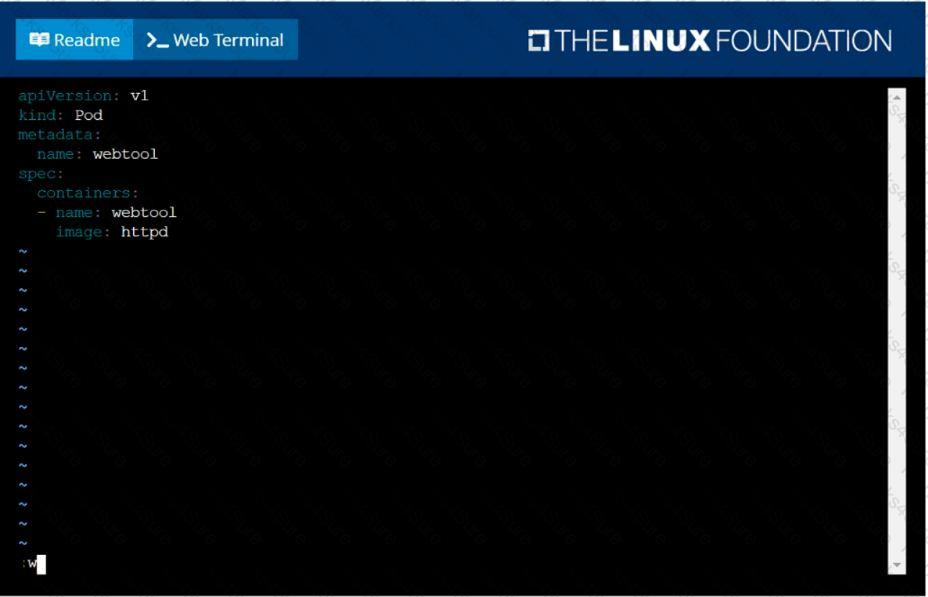 F:\Work\Data Entry Work\Data Entry\20200827\CKA\21 F.JPG
 F:\Work\Data Entry Work\Data Entry\20200827\CKA\21 G.JPG
You must connect to the correct host.
Failure to do so may result in a zero score.
[candidate@base] $ ssh Cka000054
Context:
Your cluster ' s CNI has failed a security audit. It has been removed. You must install a new CNI
that can enforce network policies.
Task
Install and set up a Container Network Interface (CNI ) that meets these requirements:
Pick and install one of these CNI options:
· Flannel version 0.26.1
Manifest:
https://github.com/flannel-io/flannel/releases/download/v0.26.1/kube-flannel.yml
· Calico version 3.28.2
Manifest:
https://raw.githubusercontent.com/project calico/calico/v3.28.2/manifests/tigera-operator.yaml
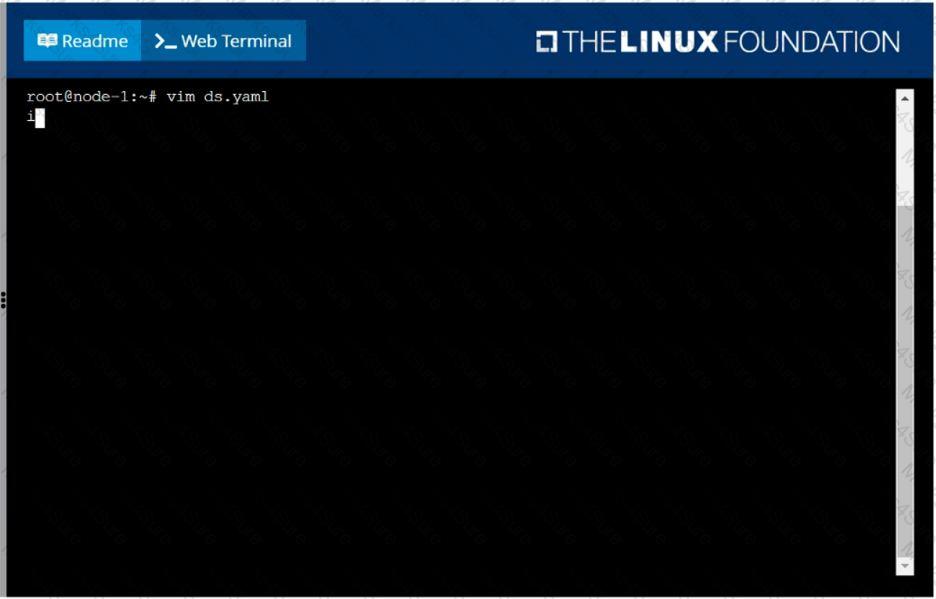
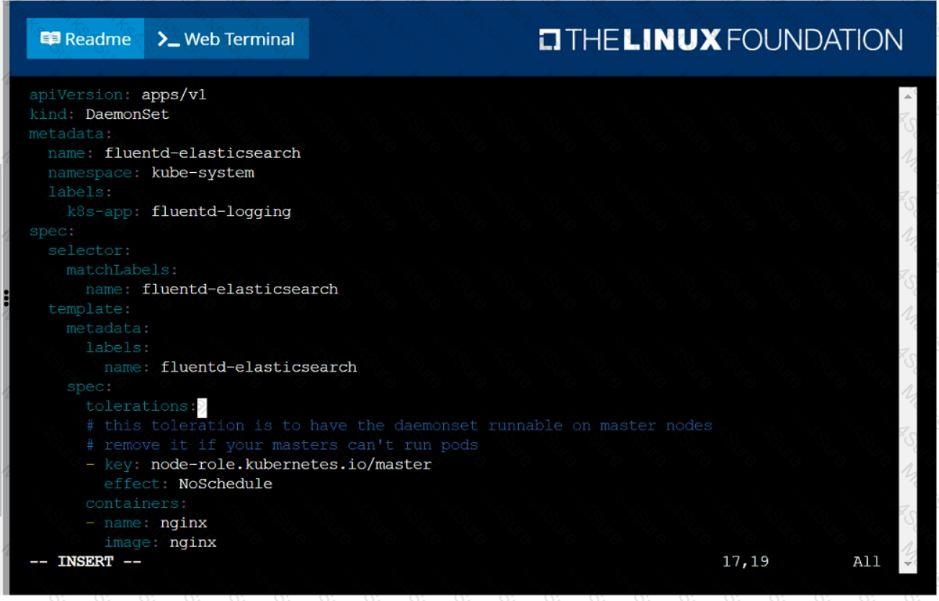
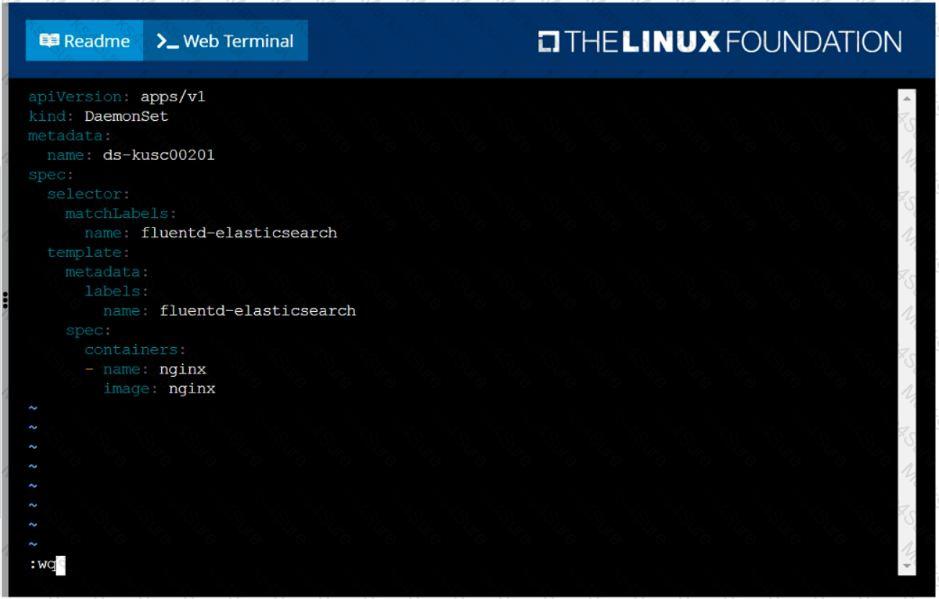
Ensure a single instance of pod nginx is running on each node of the Kubernetes cluster where nginx also represents the Image name which has to be used. Do not override any taints currently in place.
Use DaemonSet to complete this task and use ds-kusc00201 as DaemonSet name.
 F:\Work\Data Entry Work\Data Entry\20200827\CKA\3 B.JPG
 F:\Work\Data Entry Work\Data Entry\20200827\CKA\3 C.JPG
 F:\Work\Data Entry Work\Data Entry\20200827\CKA\3 D.JPG
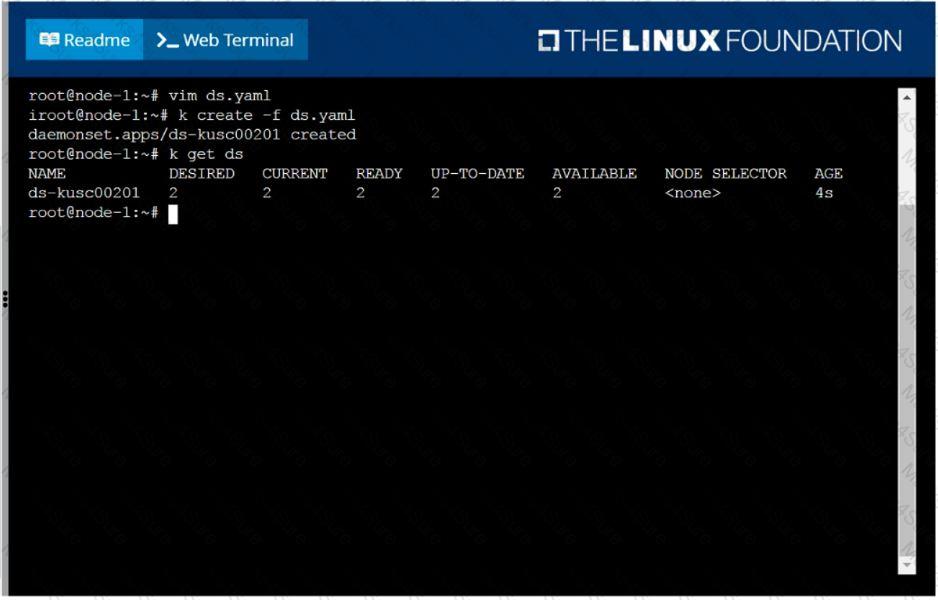 F:\Work\Data Entry Work\Data Entry\20200827\CKA\3 E.JPG
For this item, you will have to ssh to the nodes ik8s-master-0 and ik8s-node-0 and complete all tasks on these nodes. Ensure that you return to the base node (hostname: node-1) when you have completed this item.
Context
As an administrator of a small development team, you have been asked to set up a Kubernetes cluster to test the viability of a new application.
Task
You must use kubeadm to perform this task. Any kubeadm invocations will require the use of the --ignore-preflight-errors=all option.
Configure the node ik8s-master-O as a master node. .
Join the node ik8s-node-o to the cluster.
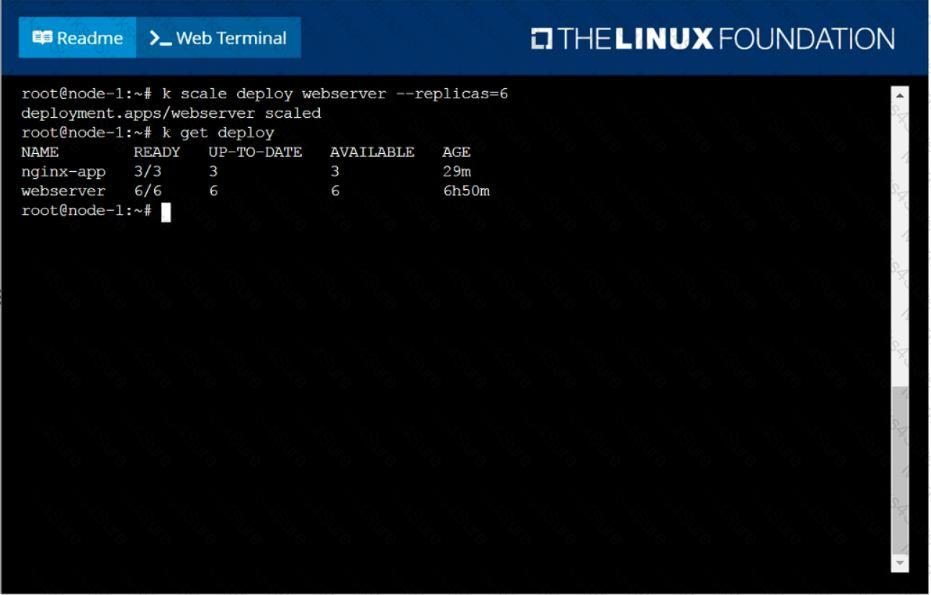 F:\Work\Data Entry Work\Data Entry\20200827\CKA\14 B.JPG
Create a deployment spec file that will:
Launch 7 replicas of the nginx Image with the labelapp_runtime_stage=dev
deployment name: kual00201
Save a copy of this spec file to /opt/KUAL00201/spec_deployment.yaml
(or /opt/KUAL00201/spec_deployment.json).
When you are done, clean up (delete) any new Kubernetes API object that you produced during this task.
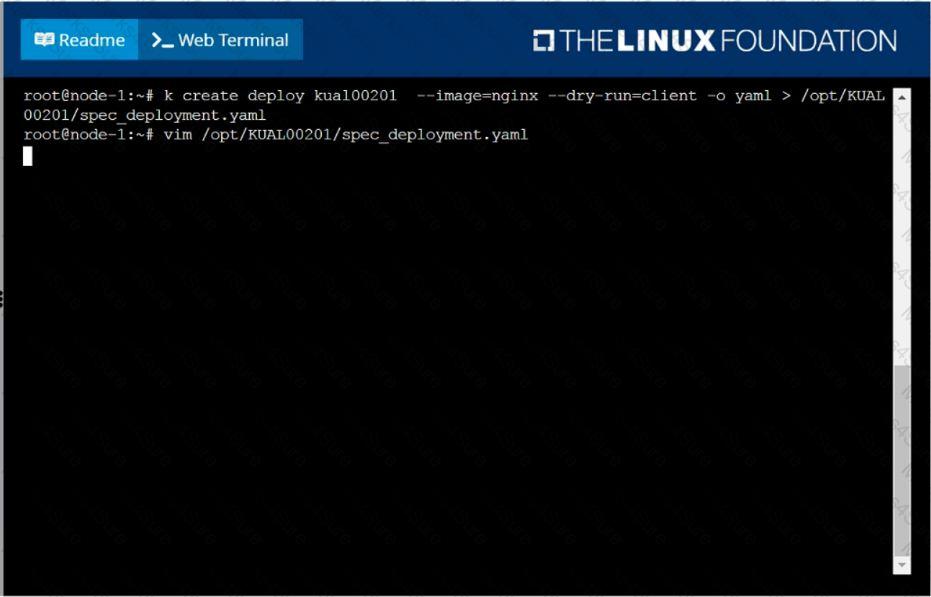 F:\Work\Data Entry Work\Data Entry\20200827\CKA\10 B.JPG
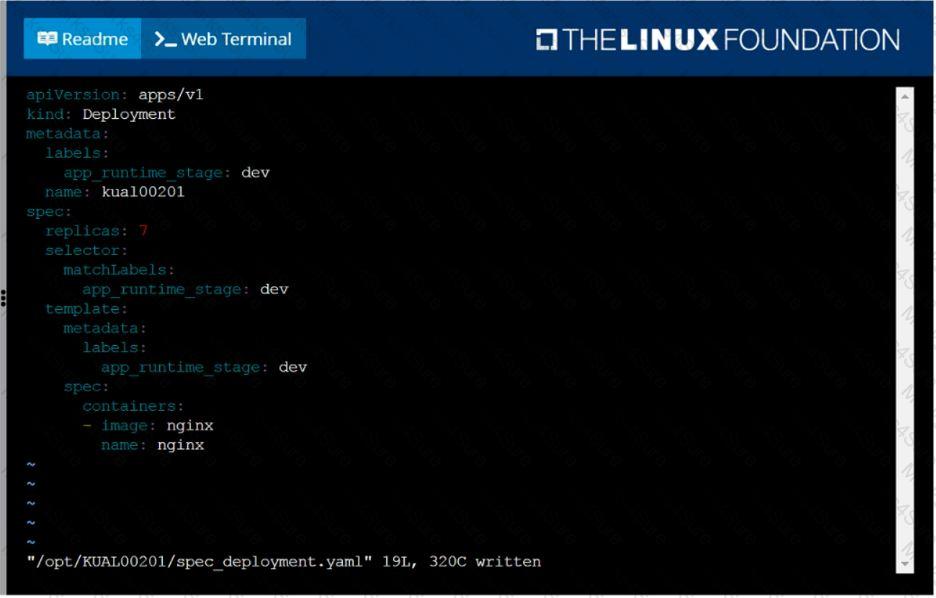 F:\Work\Data Entry Work\Data Entry\20200827\CKA\10 C.JPG
Task
Create a new Ingress resource as follows:
. Name: echo
. Namespace : sound-repeater
. Exposing Service echoserver-service on
http://example.org/echo using Service port 8080
The availability of Service
echoserver-service can be checked
i
using the following command, which should return 200 :
[candidate@cka000024] $ curl -o /de v/null -s -w " %{http_code}\n " http://example.org/echo
Create a Kubernetes secret as follows:
Name: super-secret
password: bob
Create a pod named pod-secrets-via-file, using the redis Image, which mounts a secret named super-secret at /secrets.
Create a second pod named pod-secrets-via-env, using the redis Image, which exports password as CONFIDENTIAL
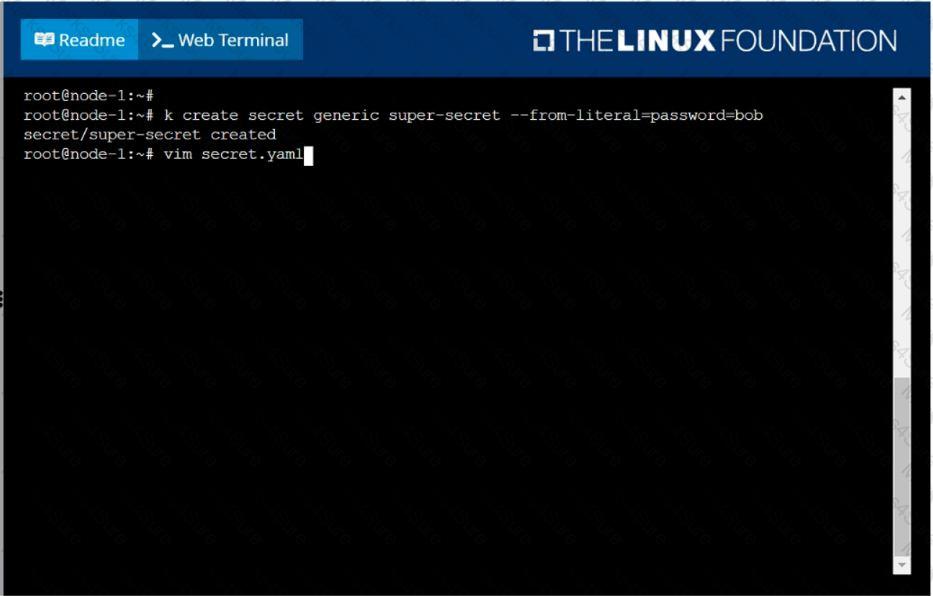 F:\Work\Data Entry Work\Data Entry\20200827\CKA\12 B.JPG
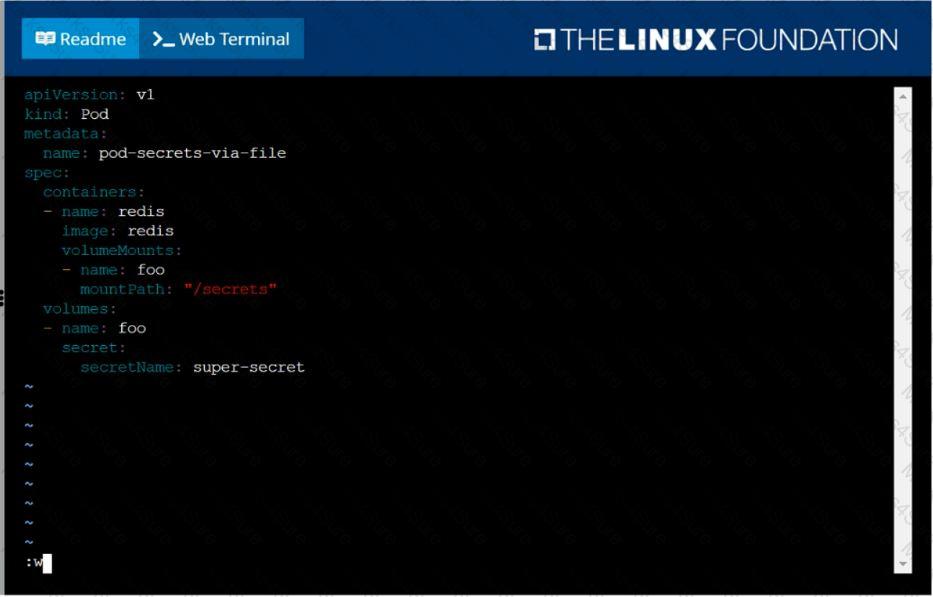 F:\Work\Data Entry Work\Data Entry\20200827\CKA\12 C.JPG
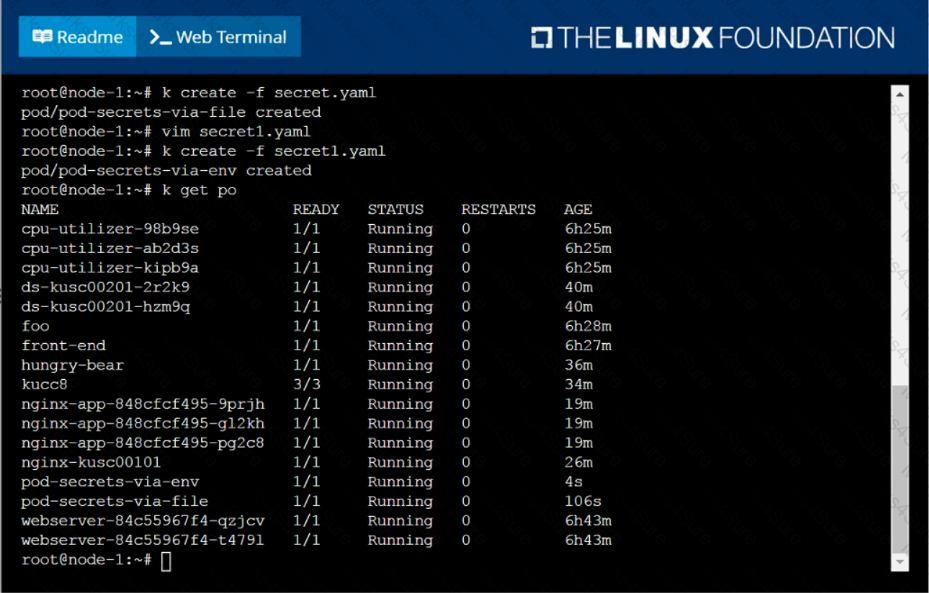 F:\Work\Data Entry Work\Data Entry\20200827\CKA\12 D.JPG
Score: 4%
Task
Create a pod named kucc8 with a single app container for each of the following images running inside (there may be between 1 and 4 images specified): nginx + redis + memcached .
Score: 7%
Task
Reconfigure the existing deployment front-end and add a port specification named http exposing port 80/tcp of the existing container nginx.
Create a new service named front-end-svc exposing the container port http.
Configure the new service to also expose the individual Pods via a NodePort on the nodes on which they are scheduled.
List pod logs named “frontend” and search for the pattern “started” and write it to a file “/opt/error-logs”
Create 2 nginx image pods in which one of them is labelled with env=prod and another one labelled with env=dev and verify the same.
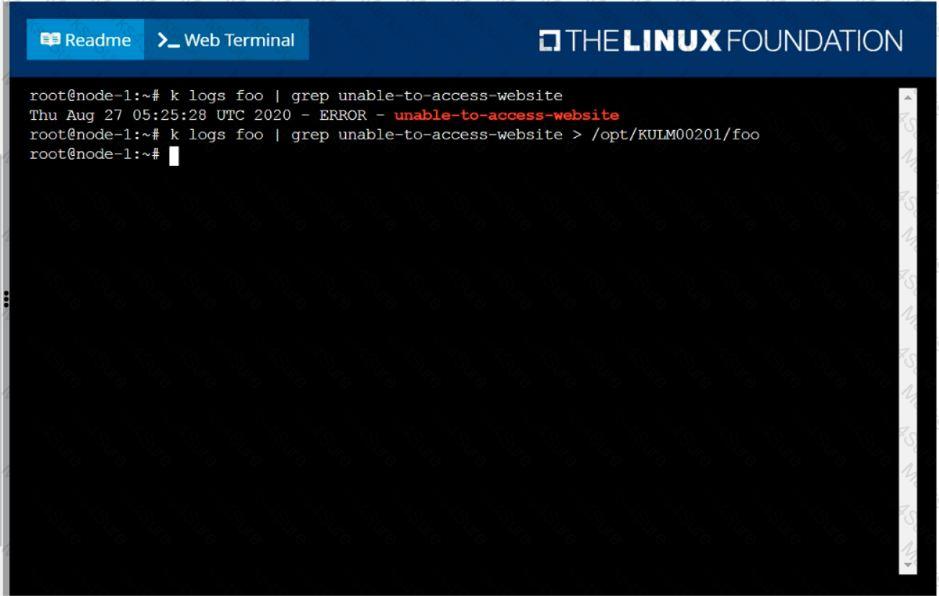
Monitor the logs of pod foo and:
Extract log lines corresponding to error
unable-to-access-website
Write them to/opt/KULM00201/foo
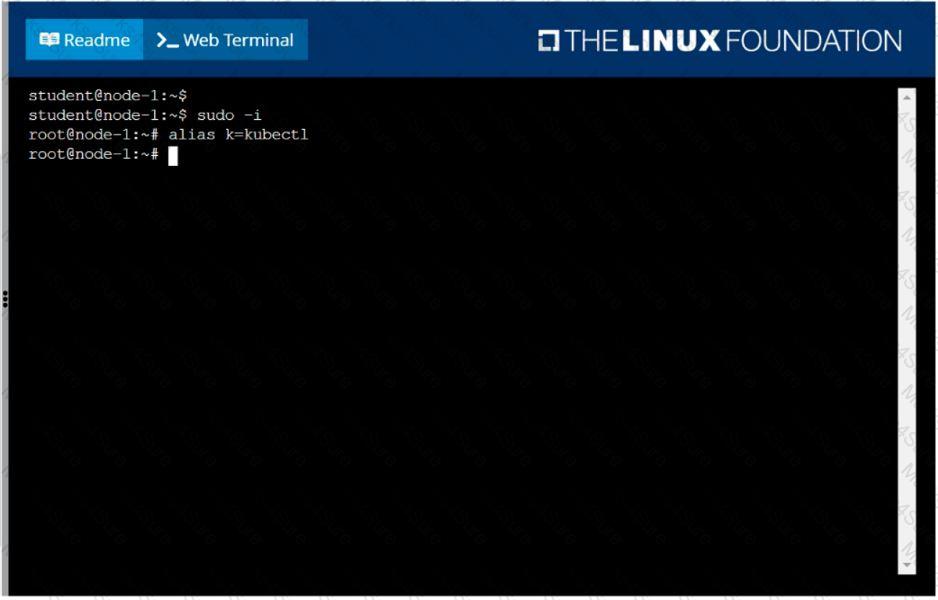 F:\Work\Data Entry Work\Data Entry\20200827\CKA\1 B.JPG
 F:\Work\Data Entry Work\Data Entry\20200827\CKA\1 C.JPG
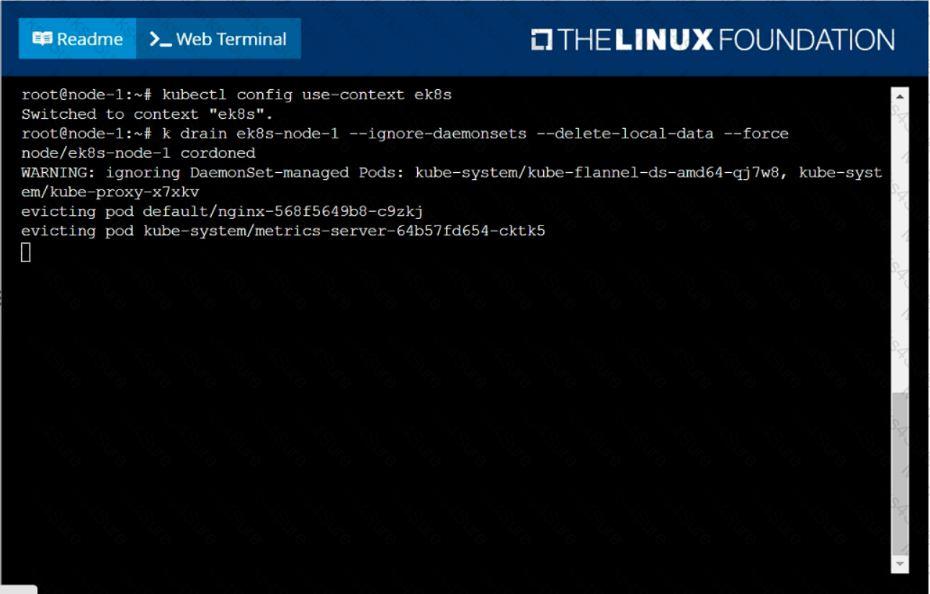
Set the node named ek8s-node-1 as unavailable and reschedule all the pods running on it.
 F:\Work\Data Entry Work\Data Entry\20200827\CKA\19 B.JPG
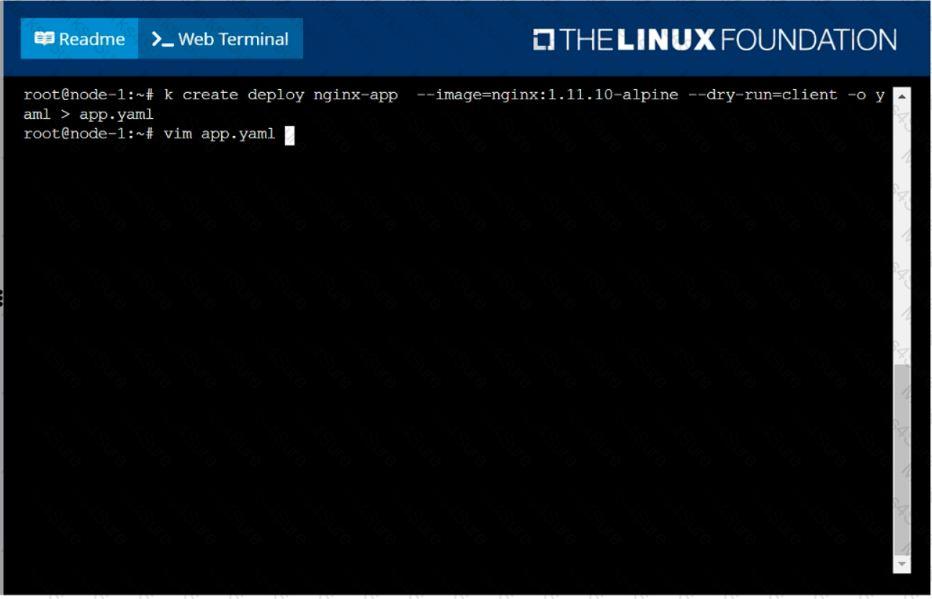
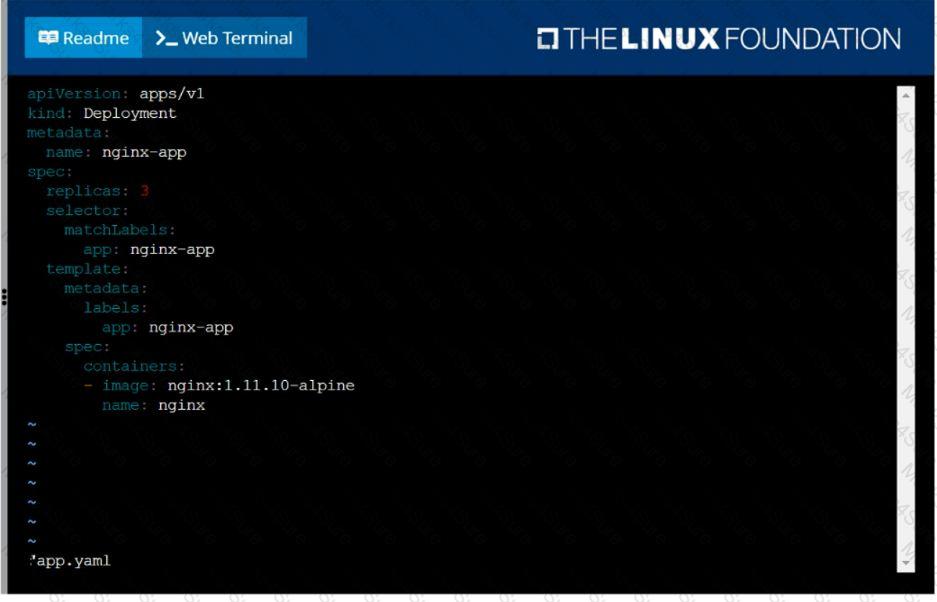
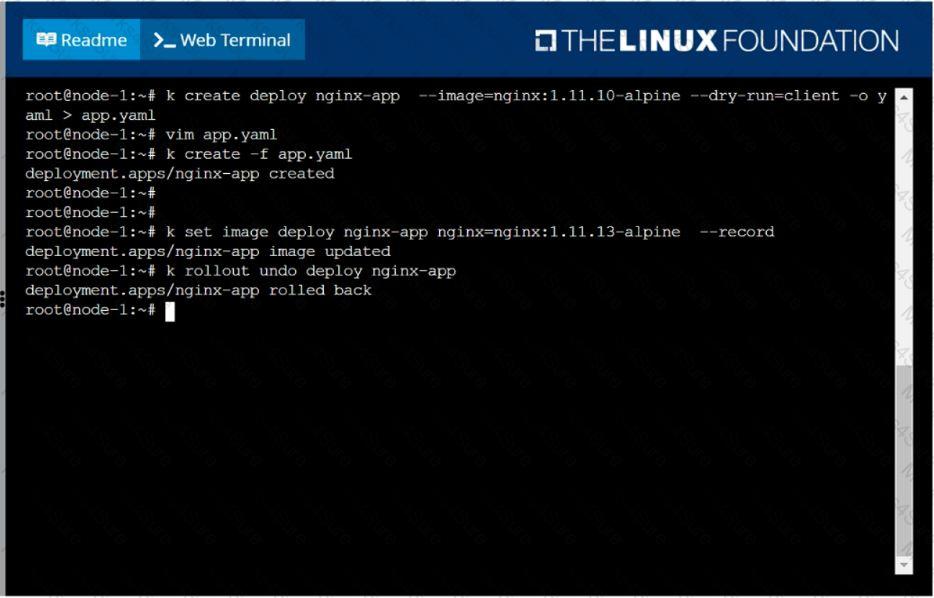
Create a deployment as follows:
Name: nginx-app
Using container nginx with version 1.11.10-alpine
The deployment should contain 3 replicas
Next, deploy the application with new version 1.11.13-alpine, by performing a rolling update.
Finally, rollback that update to the previous version 1.11.10-alpine.
 F:\Work\Data Entry Work\Data Entry\20200827\CKA\7 B.JPG
 F:\Work\Data Entry Work\Data Entry\20200827\CKA\7 C.JPG
 F:\Work\Data Entry Work\Data Entry\20200827\CKA\7 D.JPG
PDF + Testing Engine

Testing Engine
PDF (Q&A)