
Free Practice Questions for the Linux Foundation Kubernetes Application Developer CKAD Exam (2026 Updated)
At Marks4sure, we are dedicated to providing IT professionals with the most accurate and reliable preparation materials for the Linux Foundation CKAD exam. To support your certification journey, we have made a selection of our premium 2026 Kubernetes Application Developer practice questions and answers available completely free. You can take this practice test as many times as you need. Every question includes a detailed, expertly verified explanation to ensure you fully grasp the core security concepts before test day.
Context
An existing web application must be exposed externally.
You must connect to the correct host . Failure to do so may result in a zero score.
[candidate@base] $ ssh ckad00025
An application externally using the URL external.sterling-bengal.local . Any requests starting with / must be routed to the application web-app.
To test the web application ' s external reachability, run
[candidate@ckad00025] $ curl http://external.sterling-bengal.local/
or open this URL in the remote desktop ' s browser.
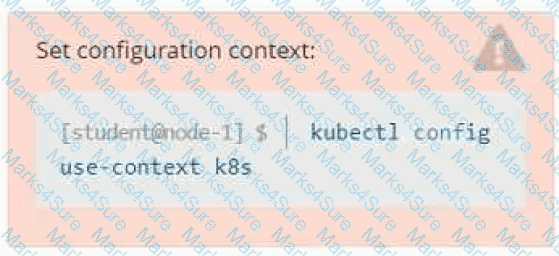
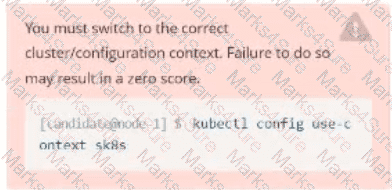
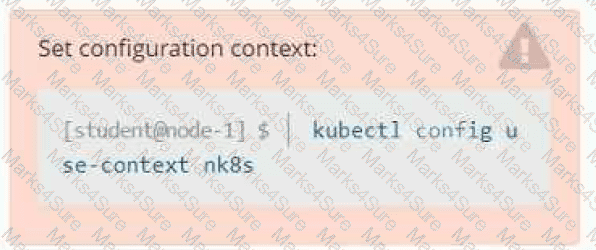
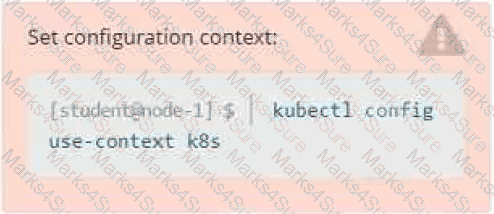
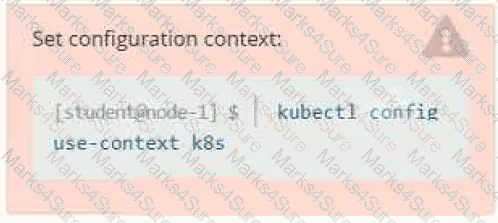
Set Configuration Context:
[student@node-1] $ | kubectl
Config use-context k8s
Context
A container within the poller pod is hard-coded to connect the nginxsvc service on port 90 . As this port changes to 5050 an additional container needs to be added to the poller pod which adapts the container to connect to this new port. This should be realized as an ambassador container within the pod.
Task
• Update the nginxsvc service to serve on port 5050.
• Add an HAproxy container named haproxy bound to port 90 to the poller pod and deploy the enhanced pod. Use the image haproxy and inject the configuration located at /opt/KDMC00101/haproxy.cfg, with a ConfigMap named haproxy-config, mounted into the container so that haproxy.cfg is available at /usr/local/etc/haproxy/haproxy.cfg. Ensure that you update the args of the poller container to connect to localhost instead of nginxsvc so that the connection is correctly proxied to the new service endpoint. You must not modify the port of the endpoint in poller ' s args . The spec file used to create the initial poller pod is available in /opt/KDMC00101/poller.yaml
Task:
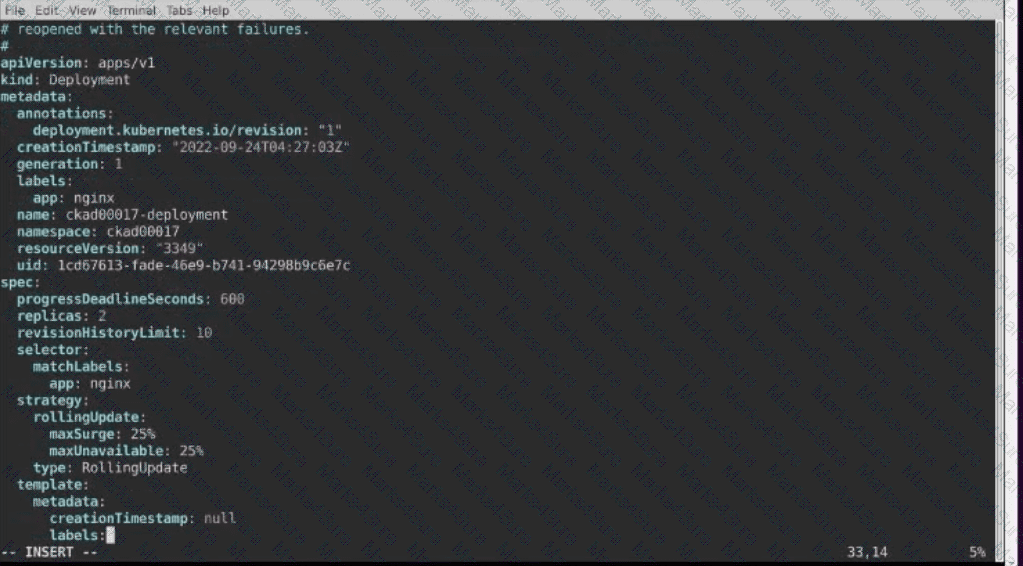
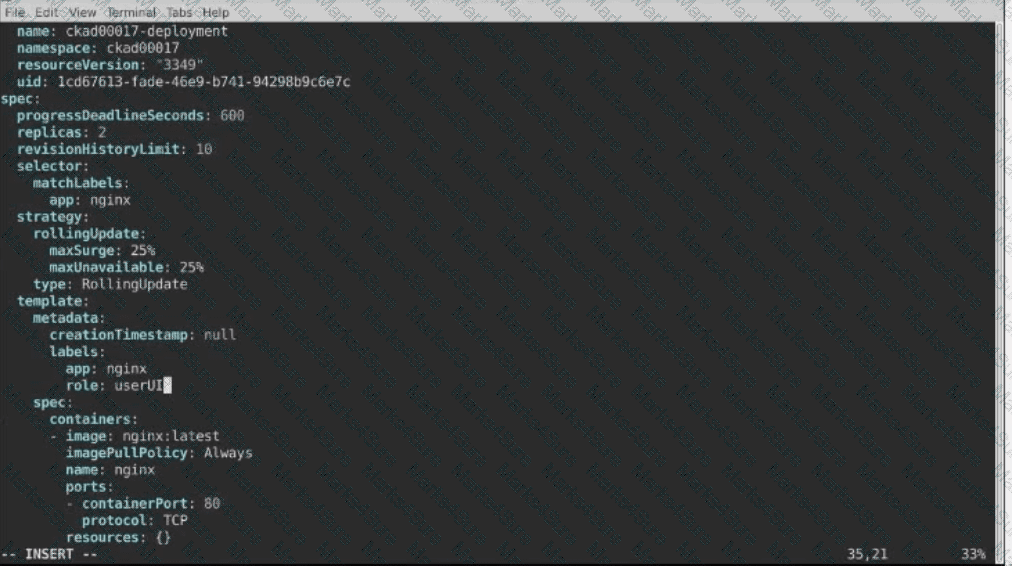
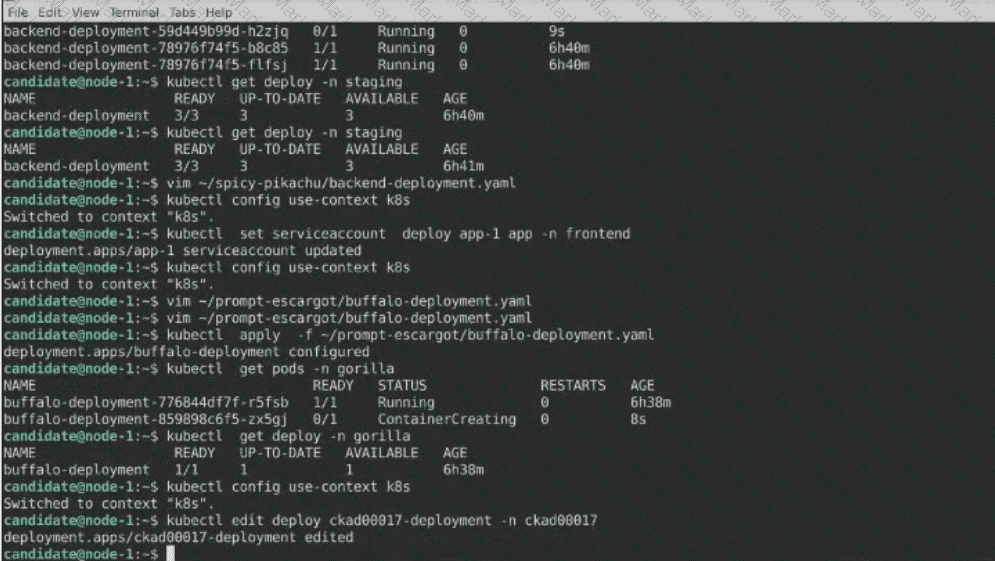
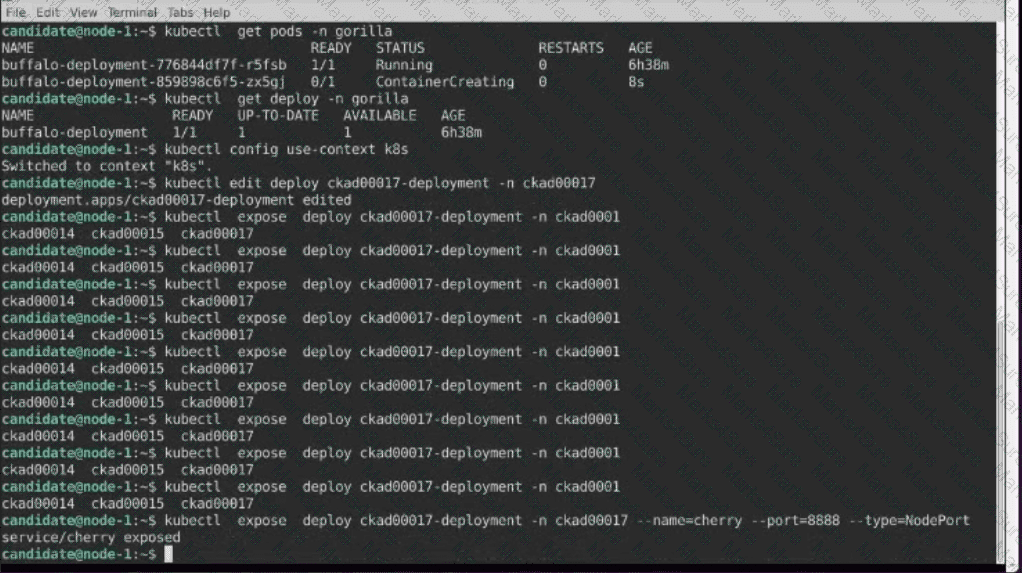
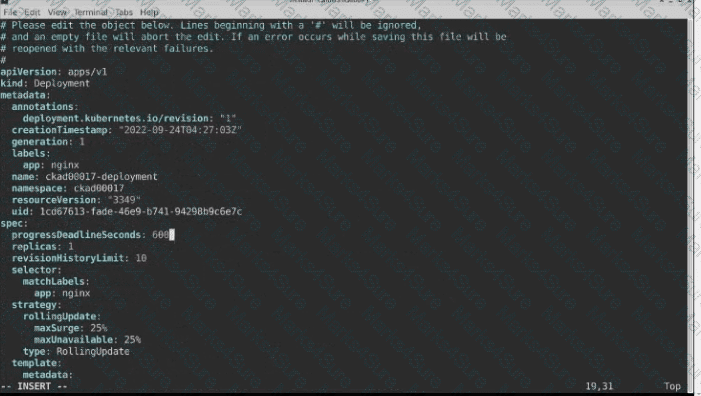
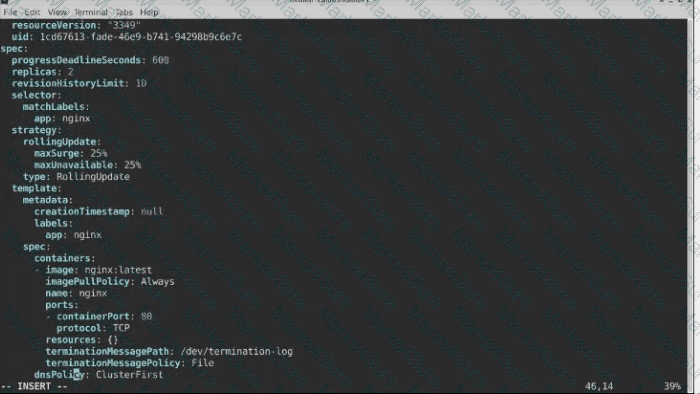
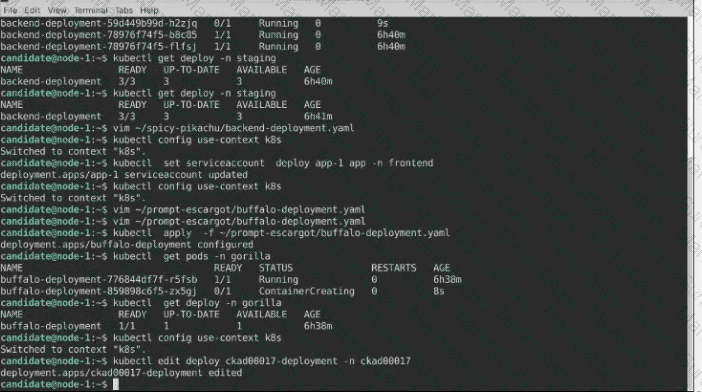
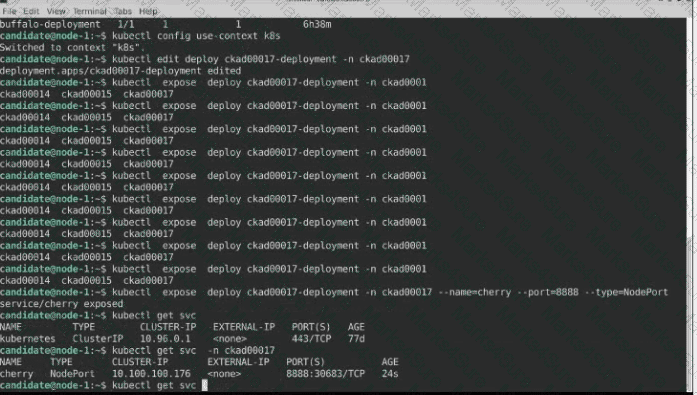
1) First update the Deployment cka00017-deployment in the ckad00017 namespace:
*To run 2 replicas of the pod
*Add the following label on the pod:
Role userUI
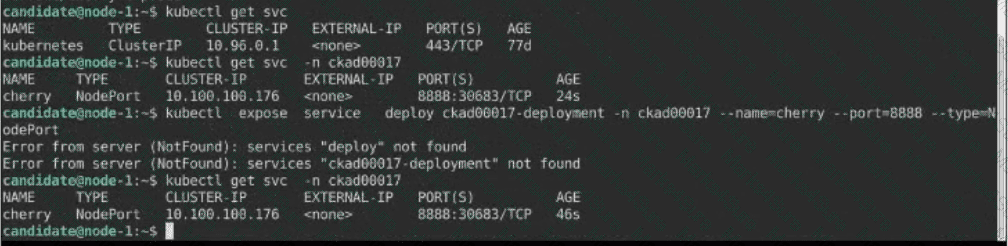
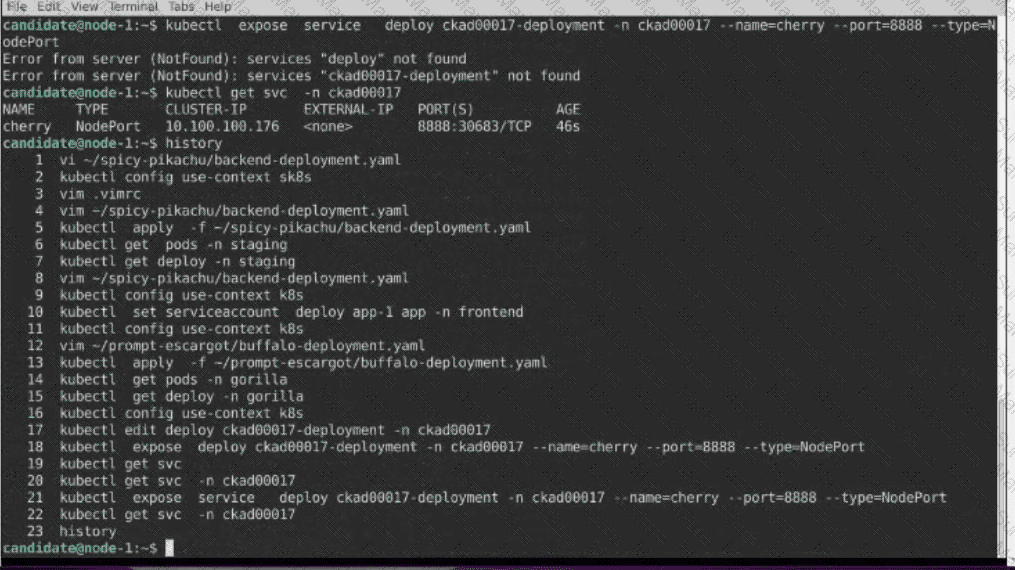
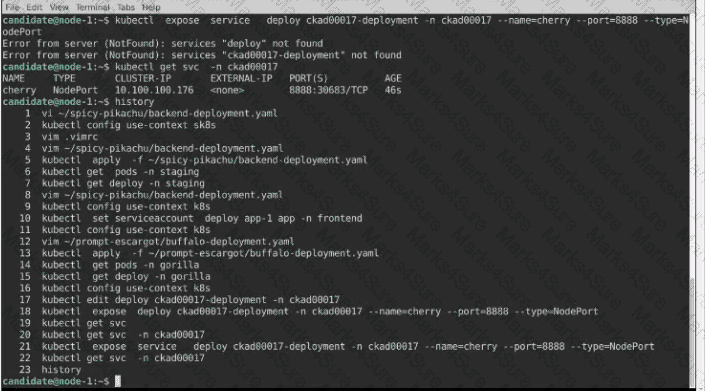
2) Next, Create a NodePort Service named cherry in the ckad00017 nmespace exposing the ckad00017-deployment Deployment on TCP port 8888
Task:
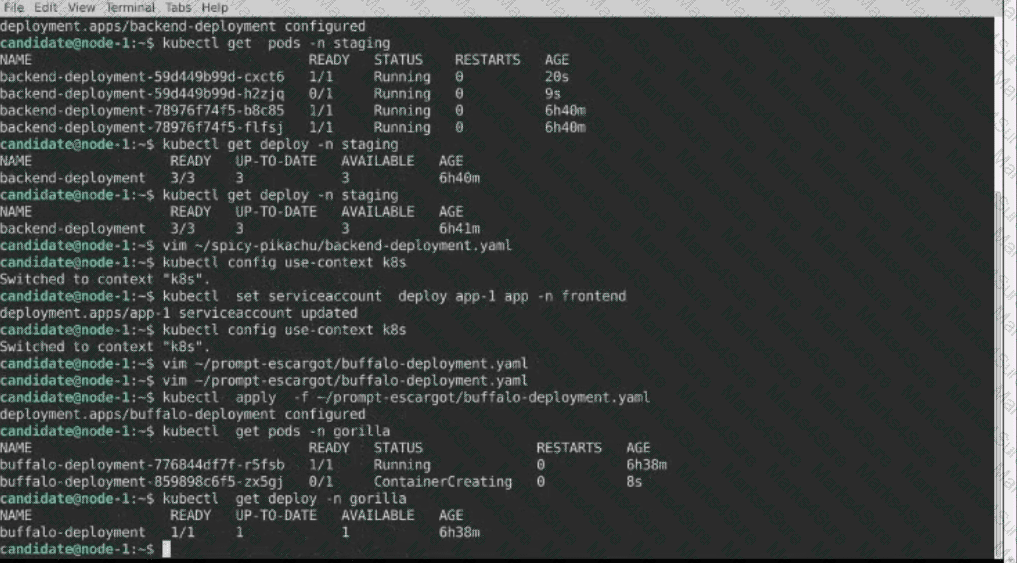
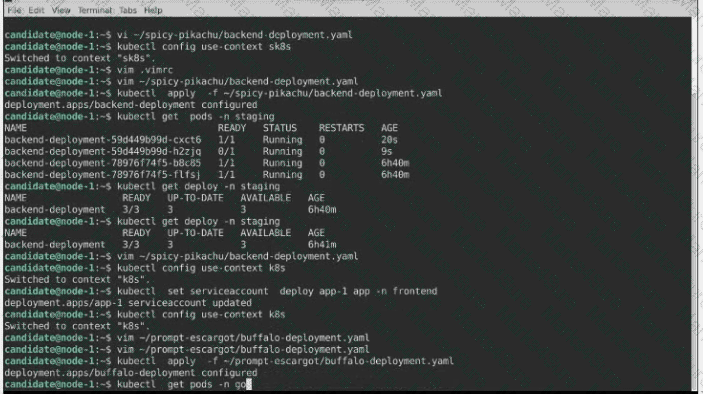
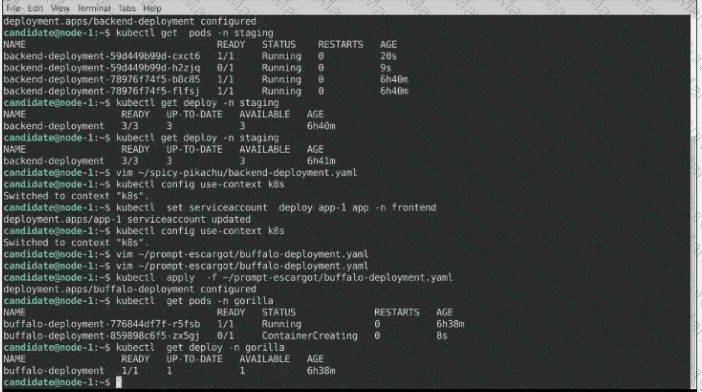
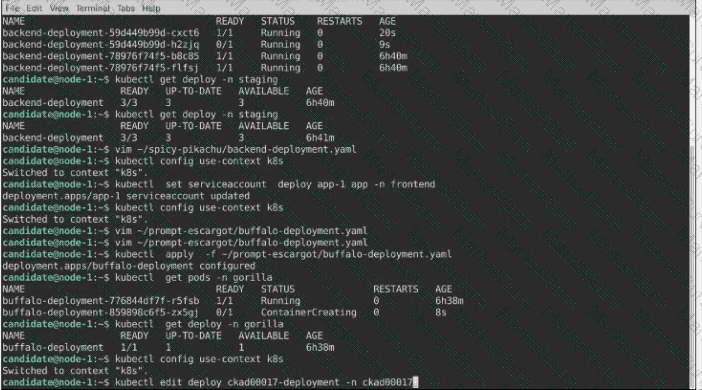
A pod within the Deployment named buffale-deployment and in namespace gorilla is logging errors.
1) Look at the logs identify errors messages.
Find errors, including User “system:serviceaccount:gorilla:default” cannot list resource “deployment” […] in the namespace “gorilla”
2) Update the Deployment buffalo-deployment to resolve the errors in the logs of the Pod.
The buffalo-deployment ‘S manifest can be found at -/prompt/escargot/buffalo-deployment.yaml
Task:
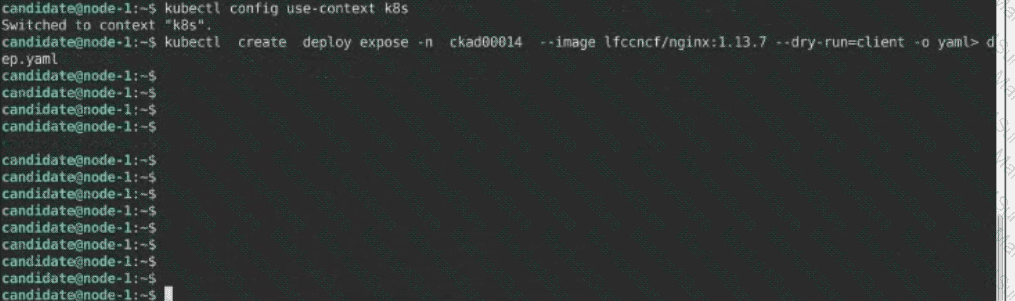
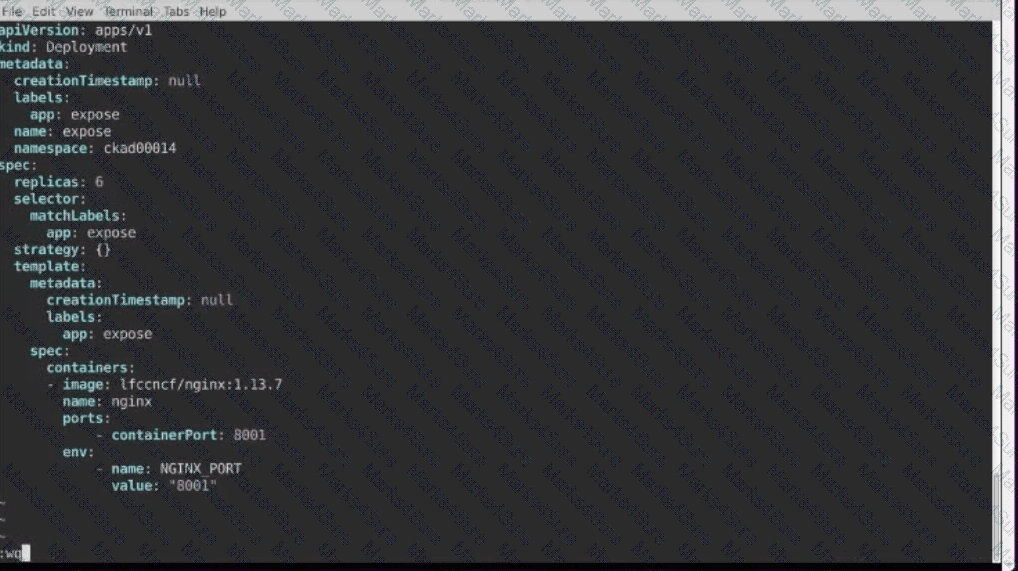
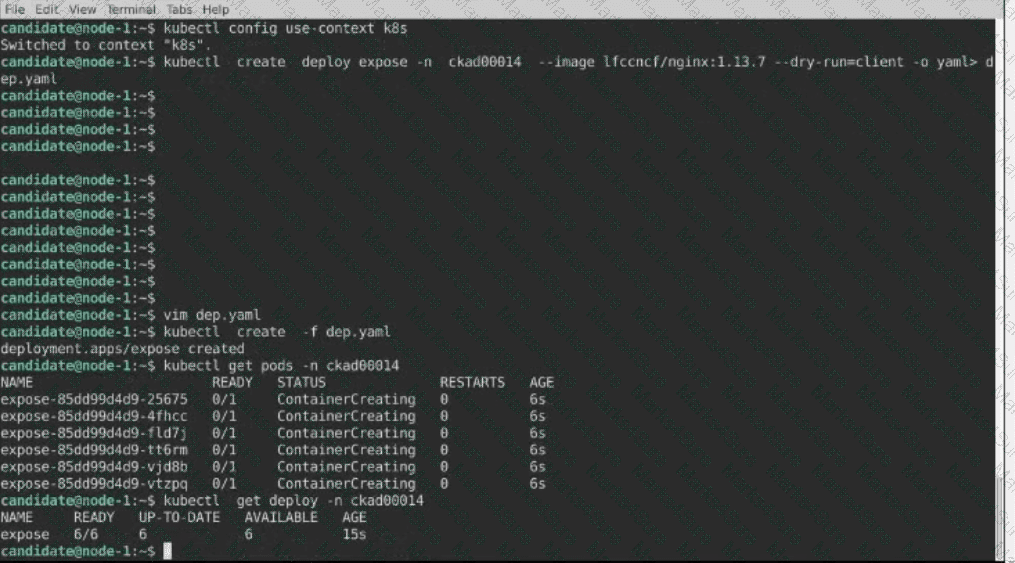
Create a Deployment named expose in the existing ckad00014 namespace running 6 replicas of a Pod. Specify a single container using the ifccncf/nginx: 1.13.7 image
Add an environment variable named NGINX_PORT with the value 8001 to the container then expose port 8001
Task
A deployment is falling on the cluster due to an incorrect image being specified. Locate the deployment, and fix the problem.
You must connect to the correct host . Failure to do so may result in a zero score.
[candidate@base] $ ssh ckad00034c
Task
A Deployment named content-marlin-deployment , running in namespace content-marlin is exposed via Ingress content-marlin-ingress .
The manifest files for the Deployment, Service and Ingress can be found at /home/candidate/content-marlin/.
The Deployment is supposed to be reachable at
http://content-marlin.local/content-marlin , but requesting this URL is currently returning an error.
You must connect to the correct host . Failure to do so may result in a zero score.
[candidate@base] $ ssh ckad00032
The Pod for the Deployment named nosql in the haddock namespace fails to start because its Container runs out of resources.
Update the nosql Deployment so that the Container :
requests 128Mi of memory
limits the memory to half the maximum memory constraint set for the haddock namespace
Task
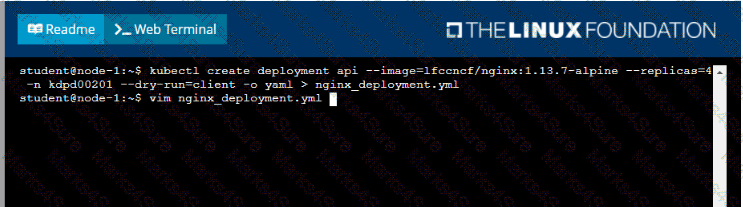
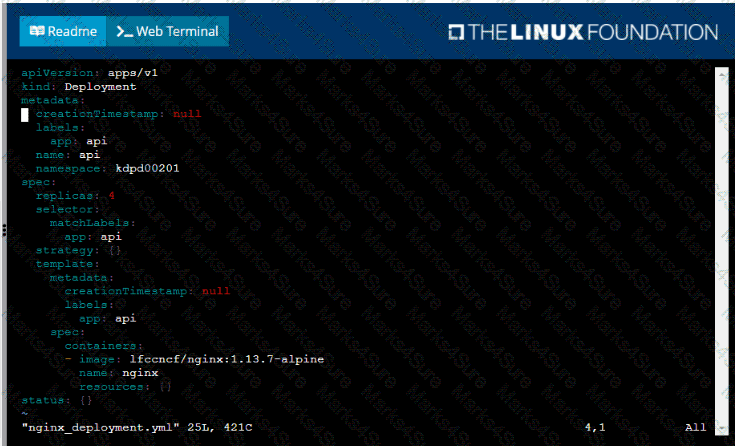
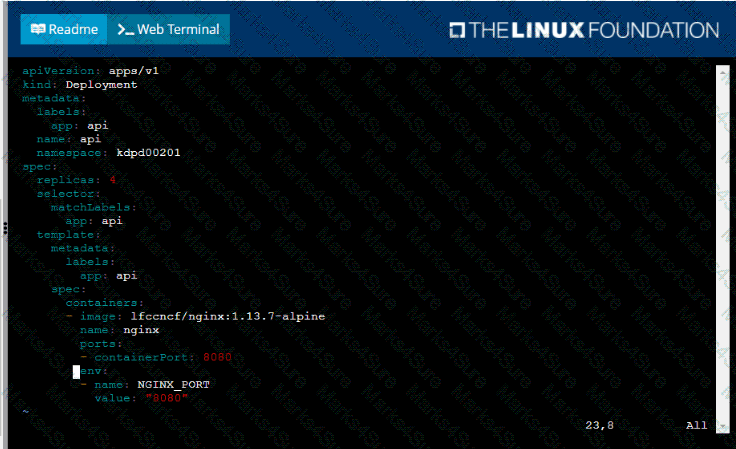
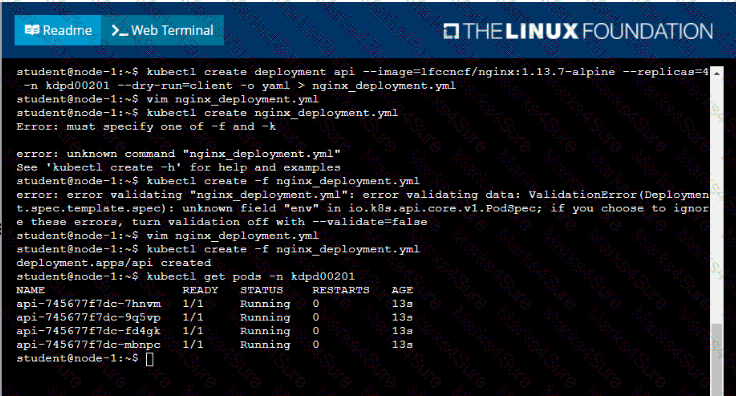
Create a new deployment for running.nginx with the following parameters;
• Run the deployment in the kdpd00201 namespace. The namespace has already been created
• Name the deployment frontend and configure with 4 replicas
• Configure the pod with a container image of lfccncf/nginx:1.13.7
• Set an environment variable of NGINX__PORT=8080 and also expose that port for the container above
Task
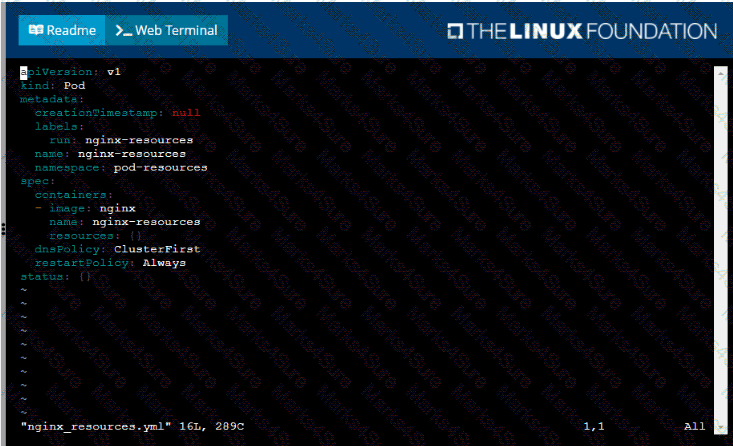
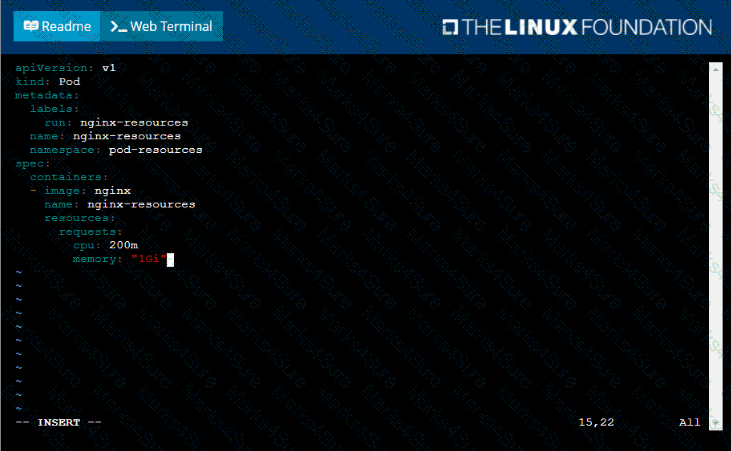
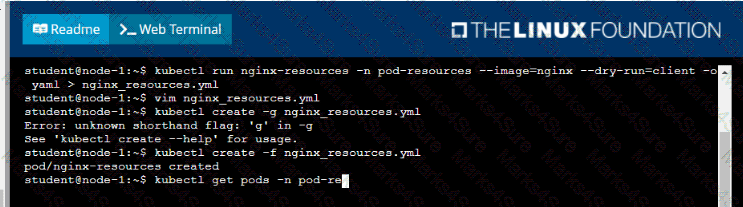
You are required to create a pod that requests a certain amount of CPU and memory, so it gets scheduled to-a node that has those resources available.
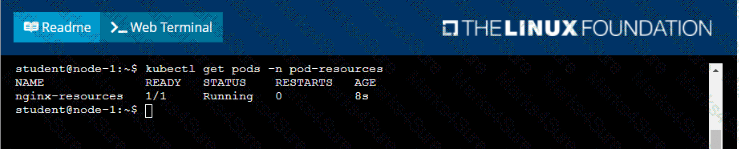
• Create a pod named nginx-resources in the pod-resources namespace that requests a minimum of 200m CPU and 1Gi memory for its container
• The pod should use the nginx image
• The pod-resources namespace has already been created

Context
It is always useful to look at the resources your applications are consuming in a cluster.
Task
• From the pods running in namespace cpu-stress , write the name only of the pod that is consuming the most CPU to file /opt/KDOBG030l/pod.txt, which has already been created.

PDF + Testing Engine

Testing Engine
PDF (Q&A)