
Free Practice Questions for the GED Reading GED-Reading Exam (2026 Updated)
At Marks4sure, we are dedicated to providing IT professionals with the most accurate and reliable preparation materials for the GED GED-Reading exam. To support your certification journey, we have made a selection of our premium 2026 GED Reading practice questions and answers available completely free. You can take this practice test as many times as you need. Every question includes a detailed, expertly verified explanation to ensure you fully grasp the core security concepts before test day.
-- Exhibit –
-- Exhibit --
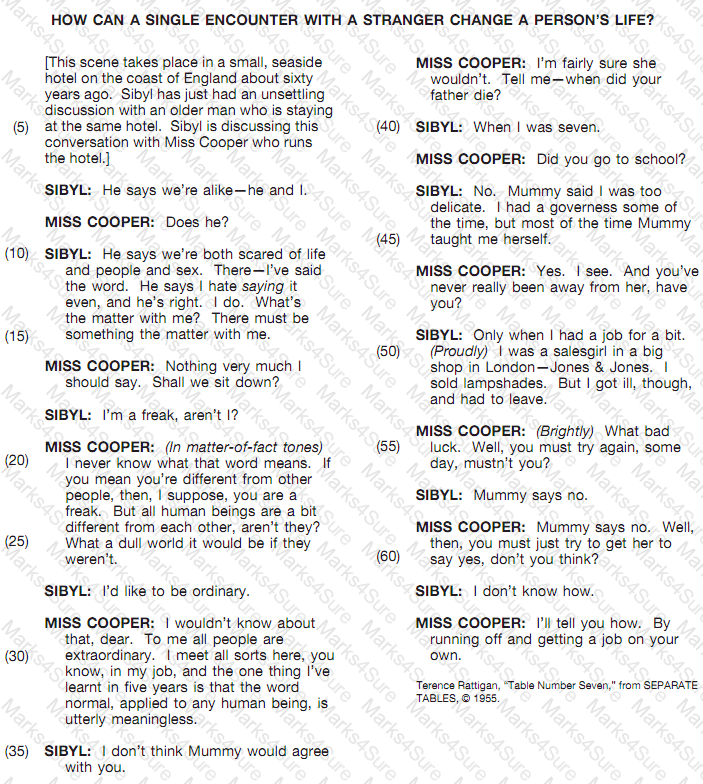
At the end of the play, Sibyl directly disobeys her mother’s wishes and refuses to leave the dining room when her mother orders her to leave.
Although this seems like a minor event, why does the play end with this scene?
-- Exhibit –
-- Exhibit --
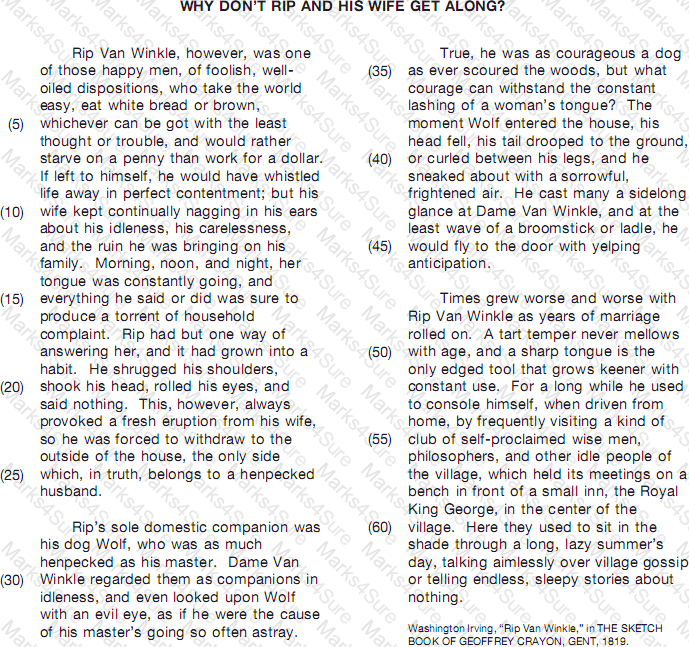
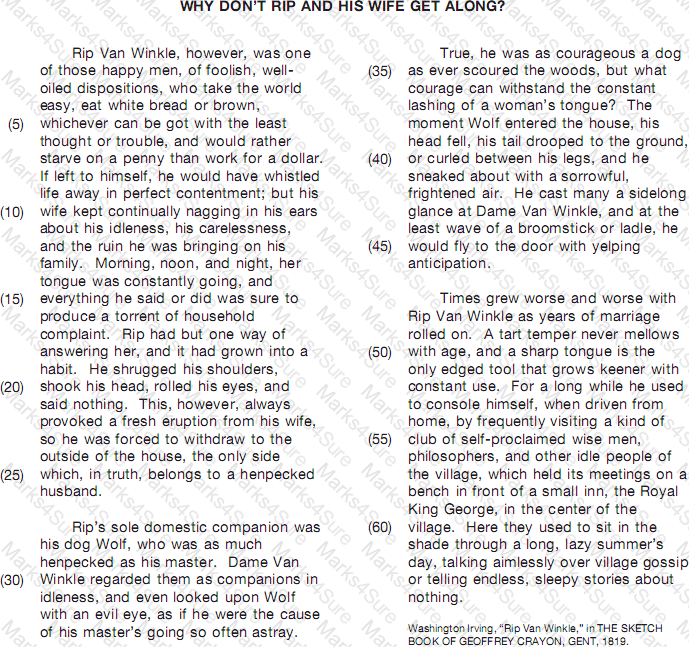
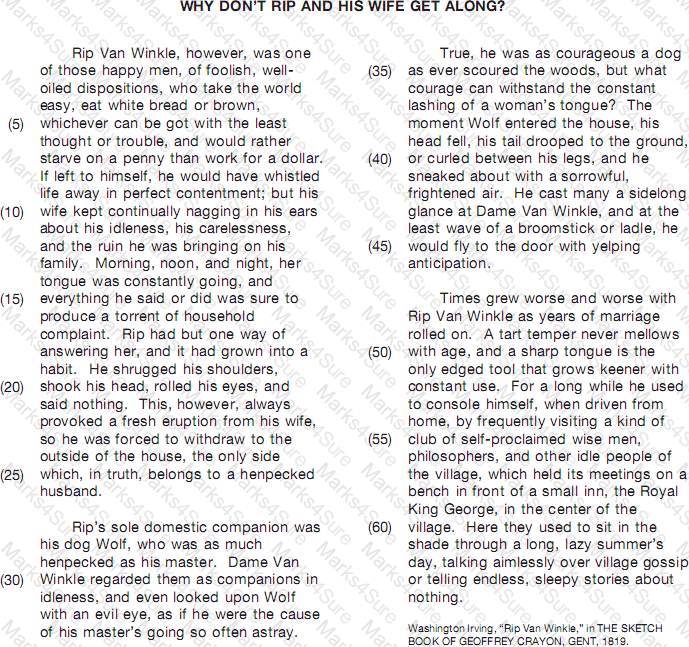
When Wolf perceives “the least wave of a broomstick or ladle, he would fly to the door with yelping anticipation” (lines 43–46).
What is Wolf doing?
-- Exhibit –
-- Exhibit --
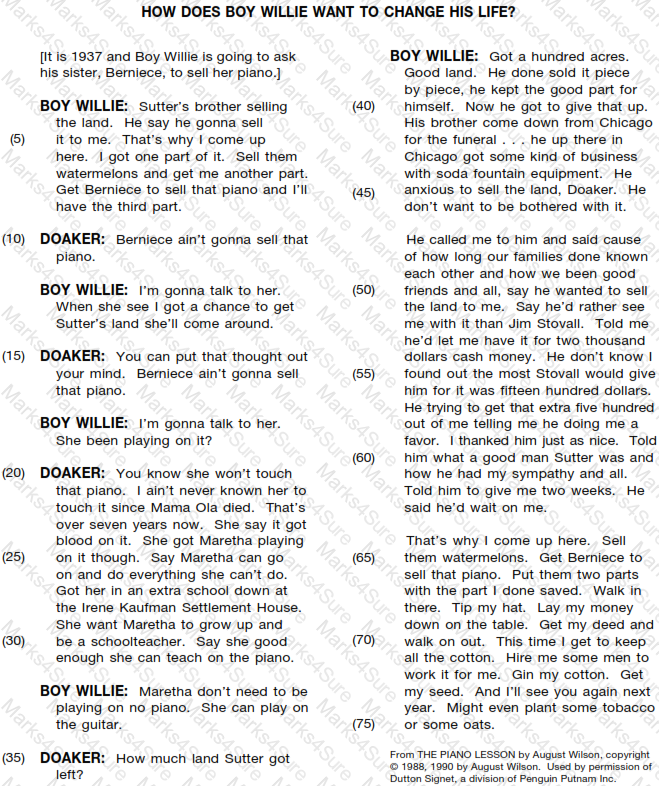
Based on this excerpt, what is driving Boy Willie to scrape together the money to buy Sutter’s land?
-- Exhibit –
-- Exhibit --
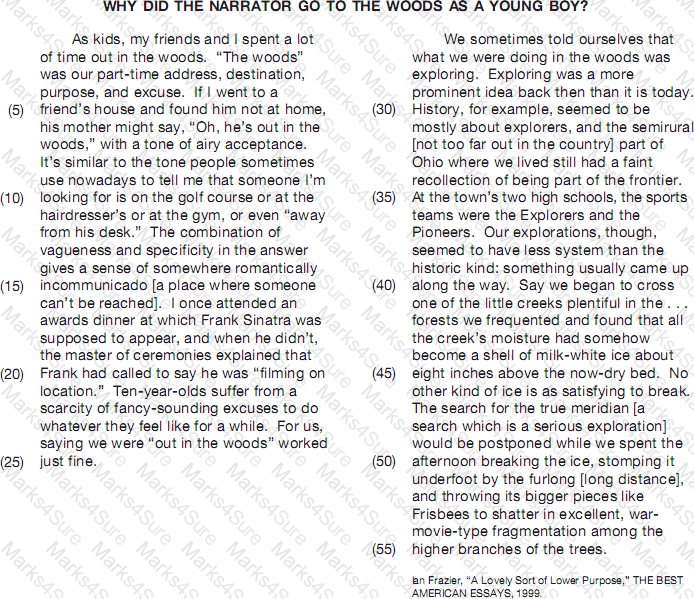
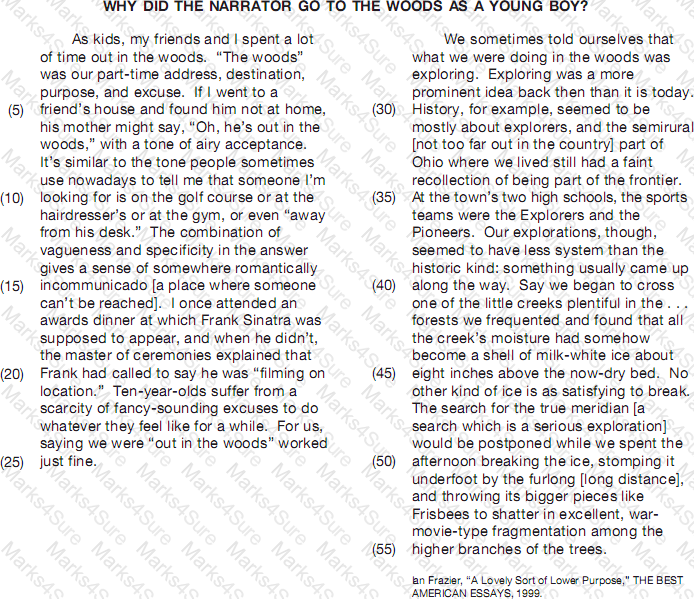
The frozen little creek in the woods is described as having “a shell of milk-white ice” (line 44). What does this description suggest about the ice?
-- Exhibit –
-- Exhibit --
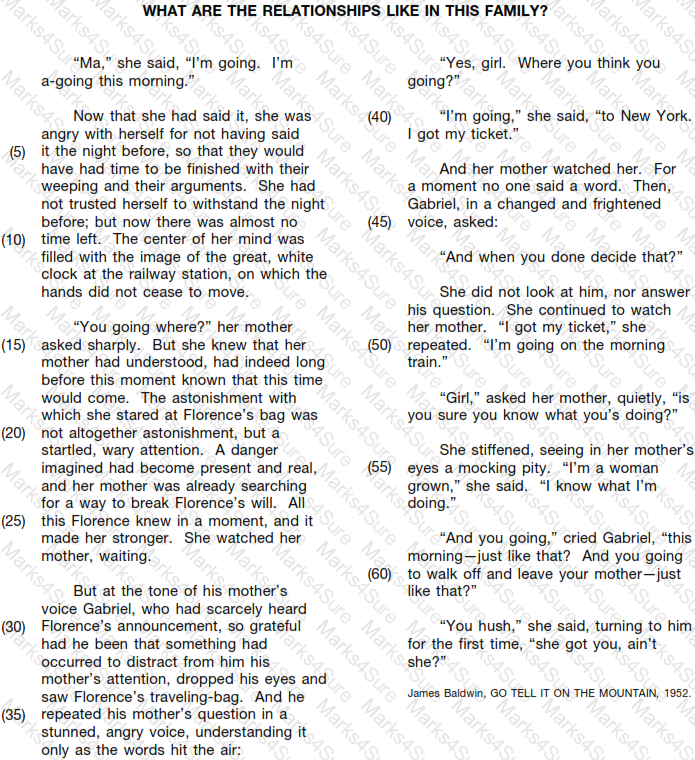
Which one of the following pairs of ideas does the passage contrast?
-- Exhibit –
-- Exhibit --
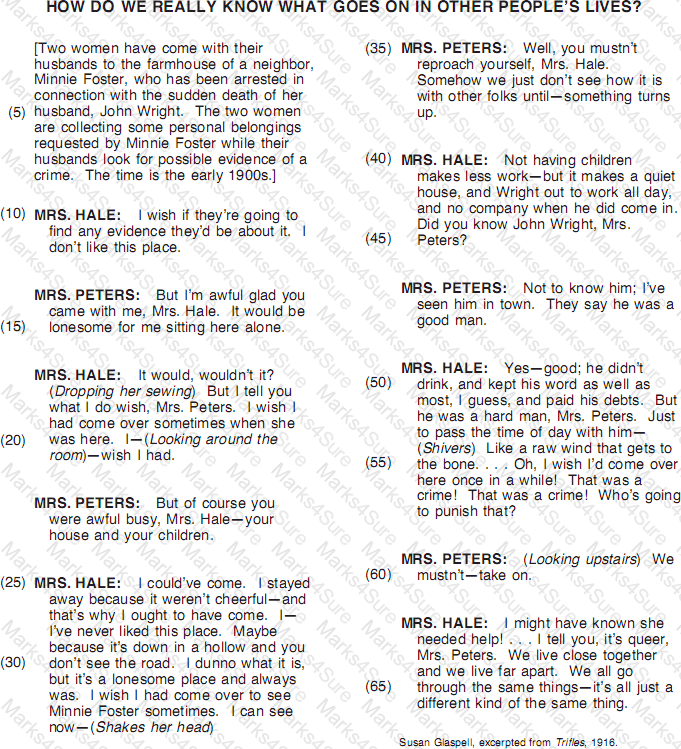
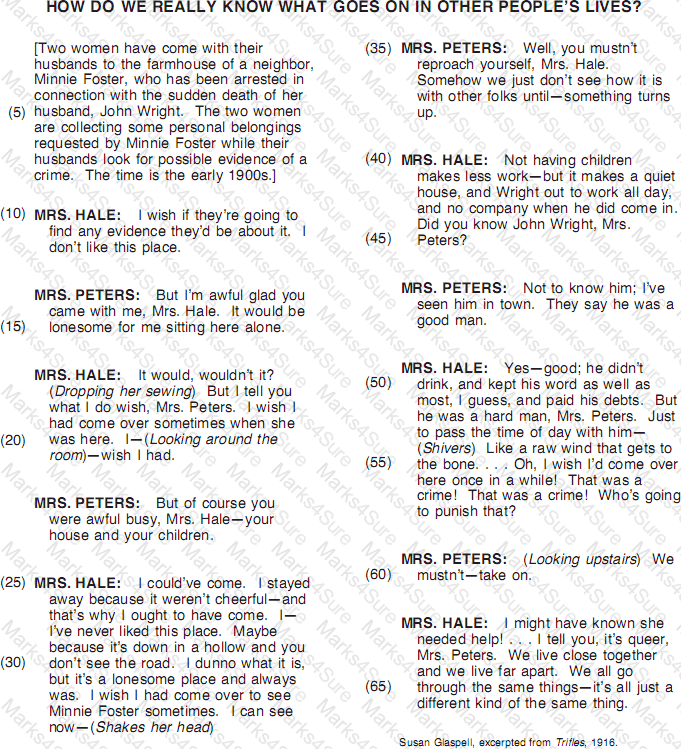
Because of this experience with Minnie Foster, Mrs. Hale will likely, in the future, be more aware of which one of the following?
Exhibit:
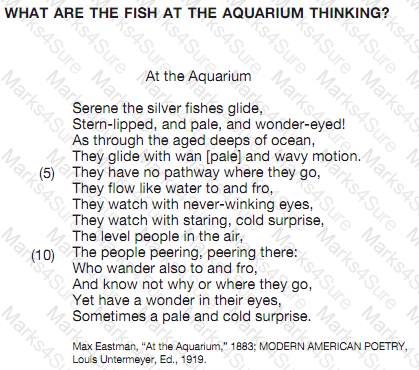
What feeling does the speaker attribute to the fish by calling them "wonder-eyed" (line 2)?
-- Exhibit –
-- Exhibit --
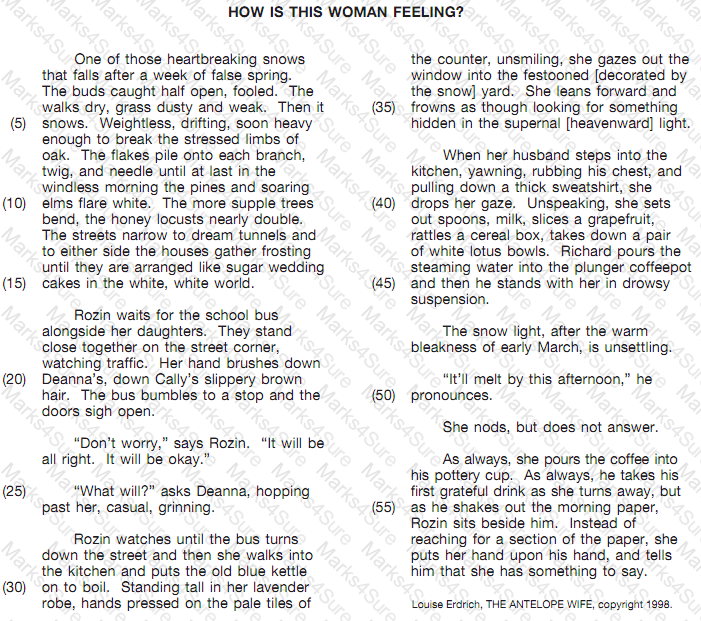
Later in the novel from which this excerpt is taken, Rozin leaves her family to nurse a former lover who is dying of cancer. Which detail from the excerpt suggests how Rozin feels about this decision?
-- Exhibit –
-- Exhibit --
Which one of the following phrases best describes Emma’s character as revealed in this excerpt?
-- Exhibit –
-- Exhibit --
The narrator says that the newspapers are using "small print" (line 13) and are "getting farther and farther away when I hold them" (lines 14–15). What is actually the cause of the problem?
-- Exhibit –
-- Exhibit --
Why does the editor (line 27) of a newspaper hedge about the changes in an opinion essay the author has written?
-- Exhibit –
-- Exhibit --
Based on Vera’s reaction to Maggie and what the reader can guess about Maggie from her last words in this excerpt, what is Maggie’s goal?
-- Exhibit –
-- Exhibit --
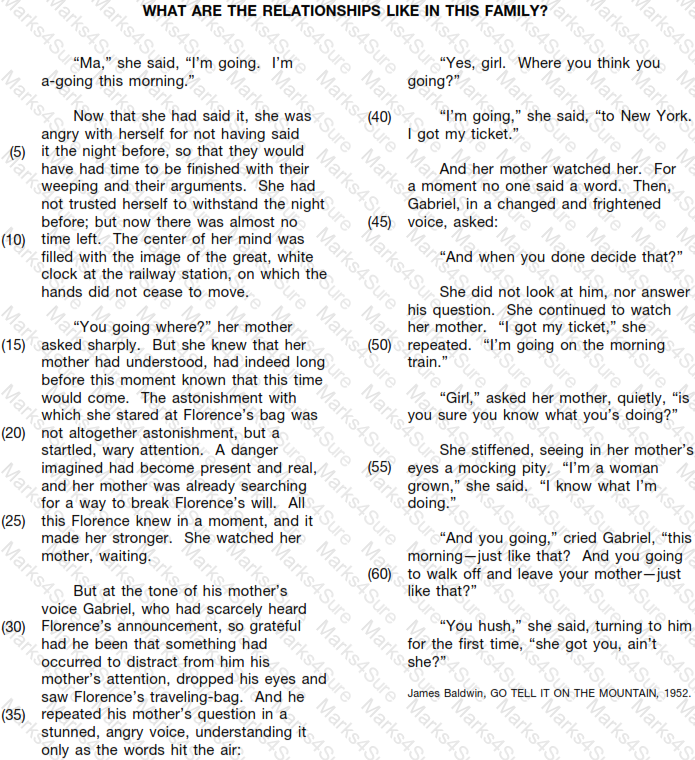
Suppose one day Florence becomes a mother and her own children want to leave home. Based on her character as revealed in this excerpt, how might she react?
-- Exhibit –
-- Exhibit --
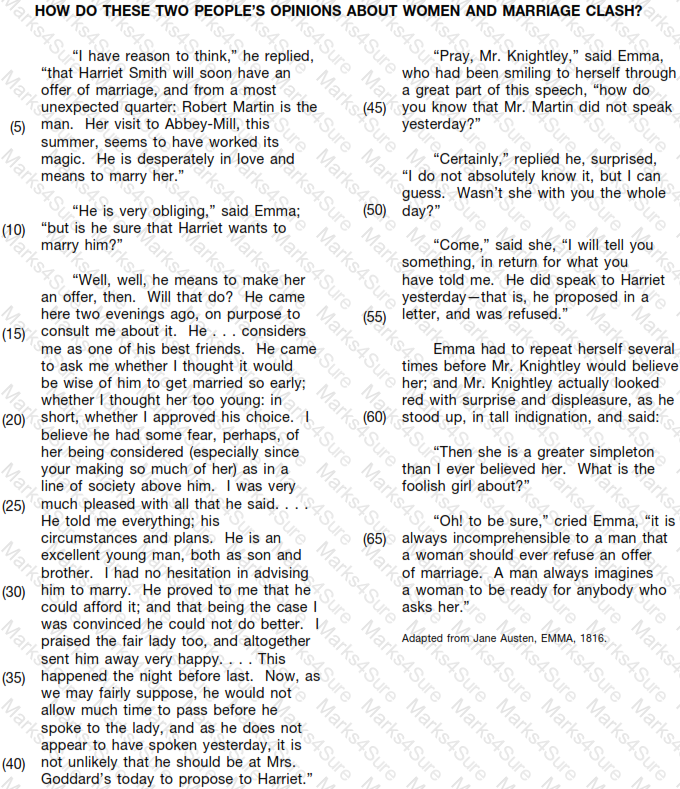
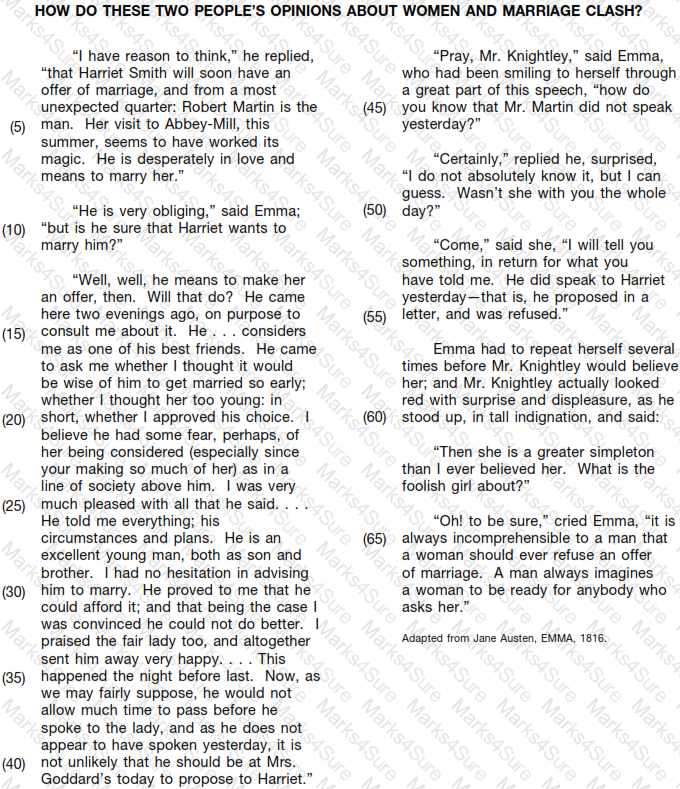
How does Mr. Knightley treat the prospect of a marriage between Robert Martin and Harriet?
-- Exhibit –
-- Exhibit --
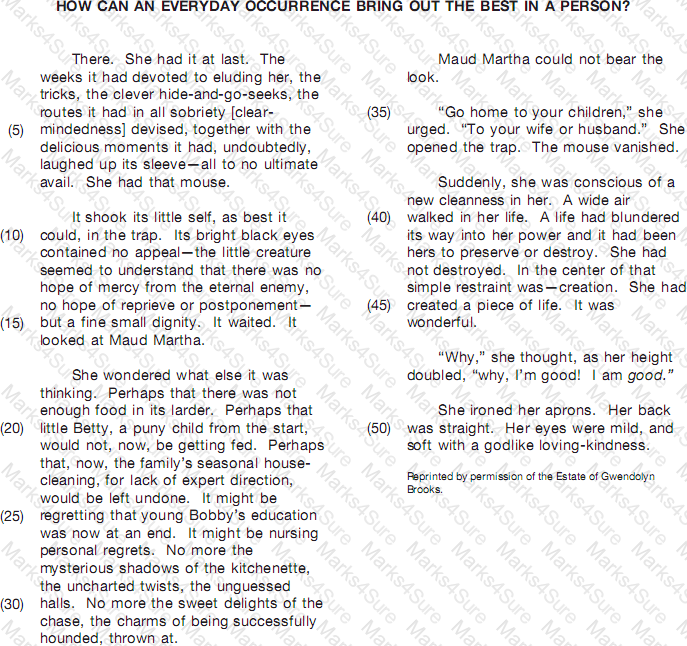
After reading this excerpt, when might a reader go back to it for inspiration and guidance?
-- Exhibit –
-- Exhibit --
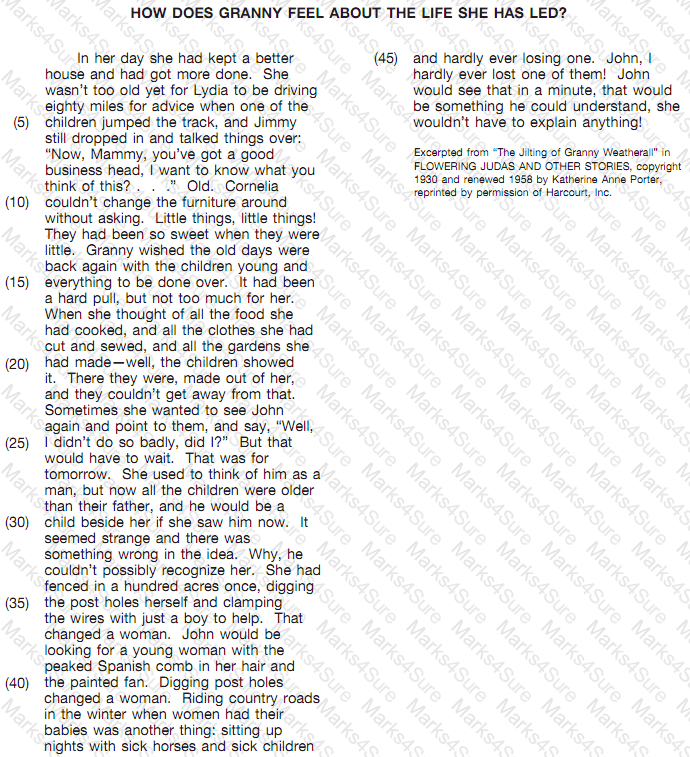
Based on the information in lines 2–9, what do Granny’s children think of her?
-- Exhibit –
-- Exhibit --
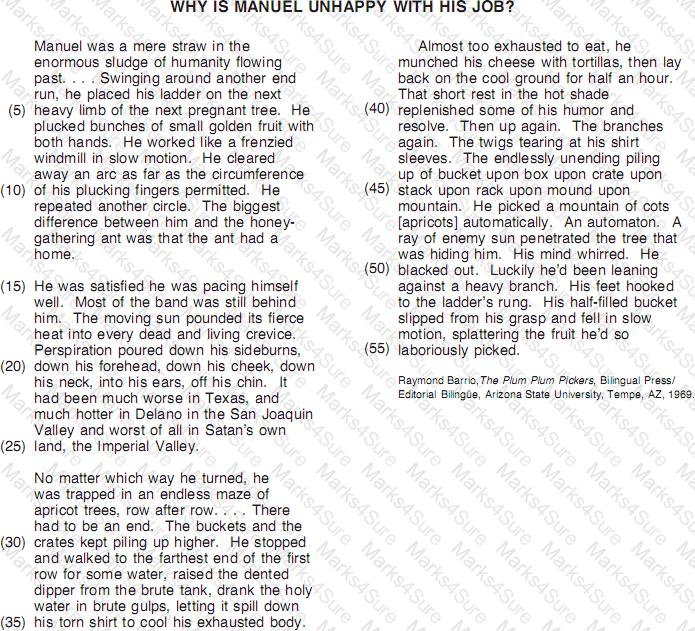
What does the author imply by the phrase “A ray of enemy sun” (lines 47–48)?
-- Exhibit –
-- Exhibit --
Later in the story, Rip wakes up from a twenty-year nap and returns to the village. On the basis of the information in this excerpt, what will probably be his greatest hope?
-- Exhibit –
-- Exhibit --
Who is Mrs. Hale blaming when she says, “That was a crime! That was a crime” (lines 56–57)?
-- Exhibit –
-- Exhibit --
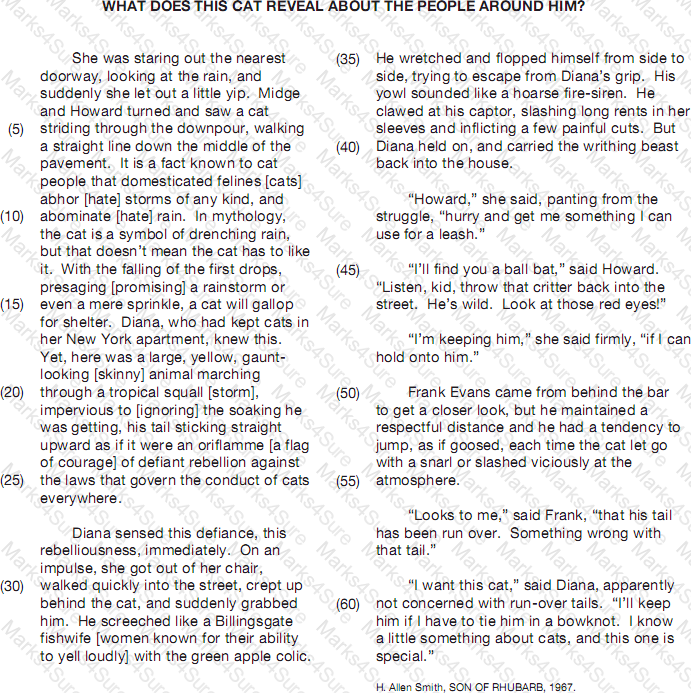
When Diana asks for a leash, Howard says he’ll get her a baseball bat. What is Howard’s opinion of what Diana should do with the cat she catches?
-- Exhibit –
-- Exhibit --
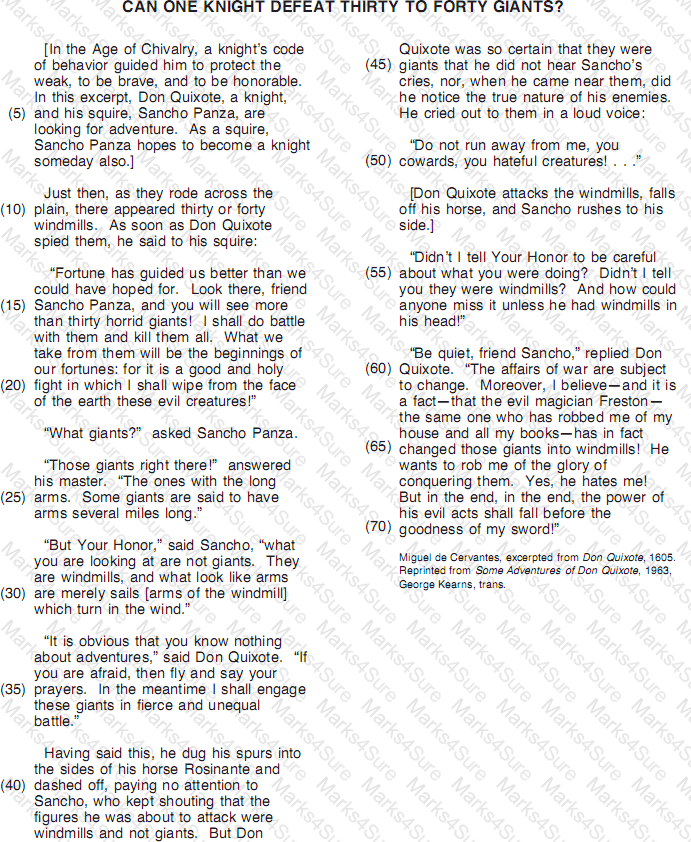
According to the excerpt, how is a knight’s honor confirmed?
-- Exhibit –
-- Exhibit --
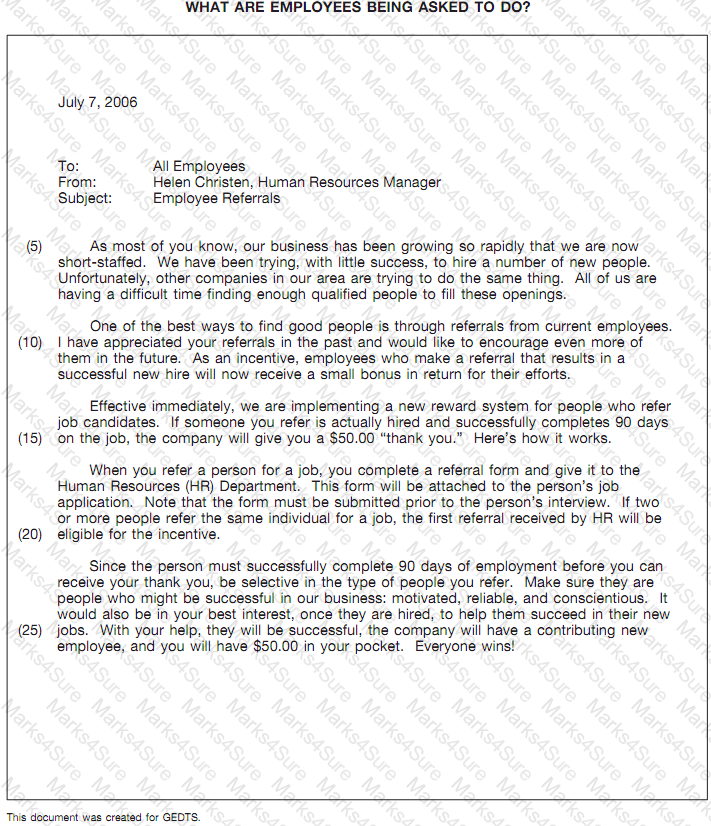
Which statement reveals the encouraging tone the Human Resources Manager wants to convey?
-- Exhibit –
-- Exhibit --
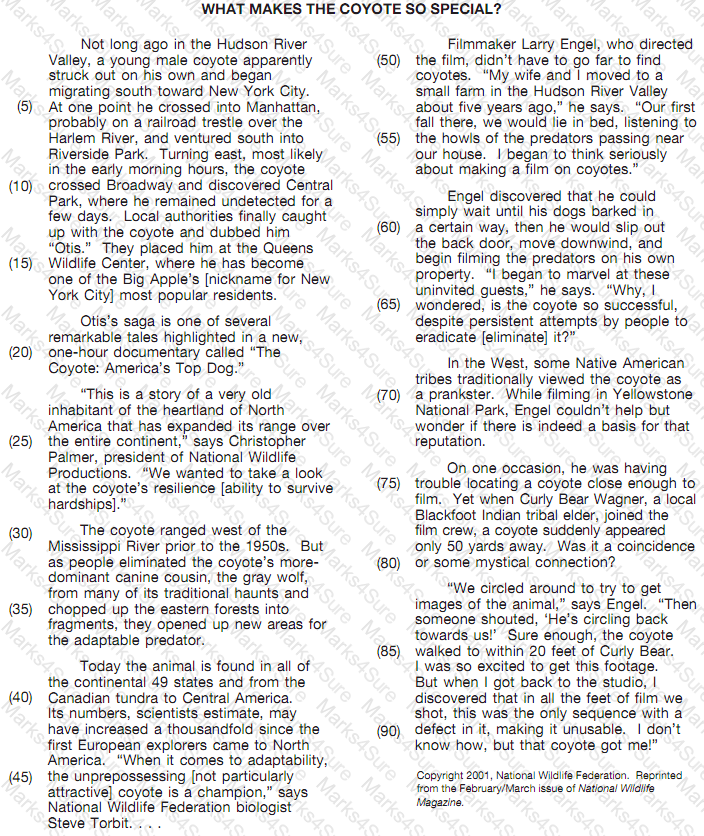
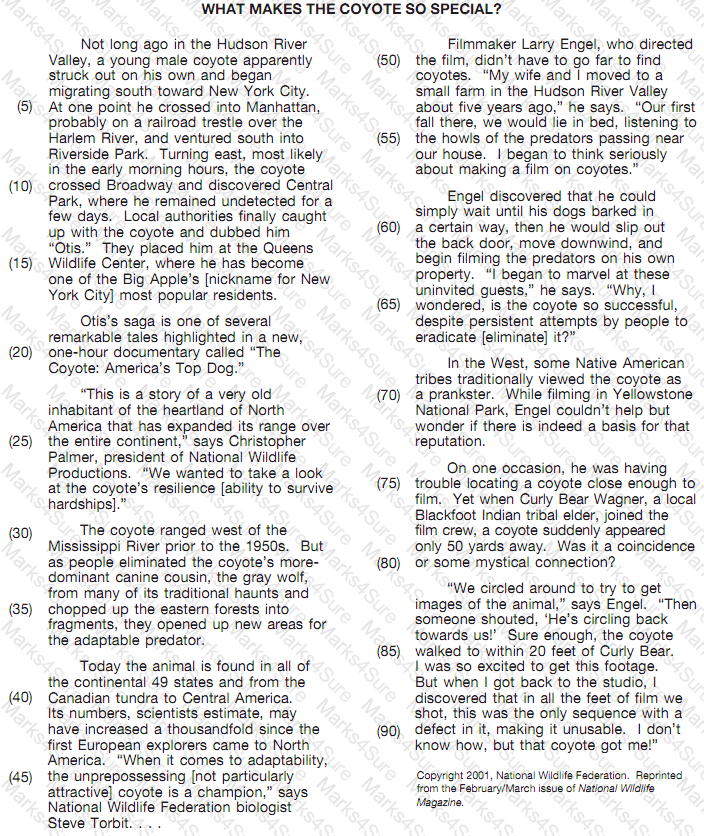
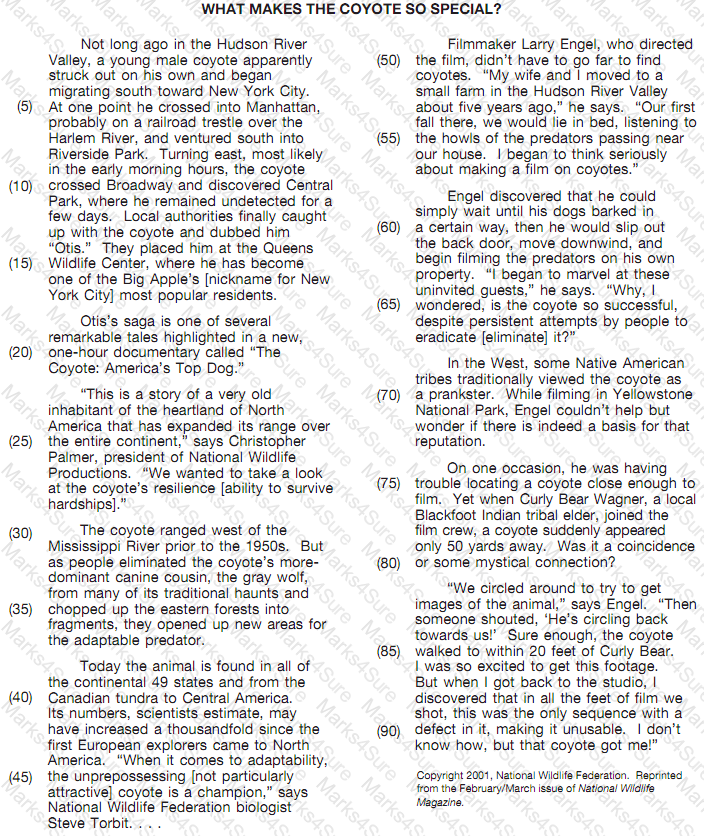
This documentary film includes several other stories about coyotes besides the ones related here. Based on the stories in this excerpt, what are the probable topics of the other stories?
-- Exhibit –
-- Exhibit --
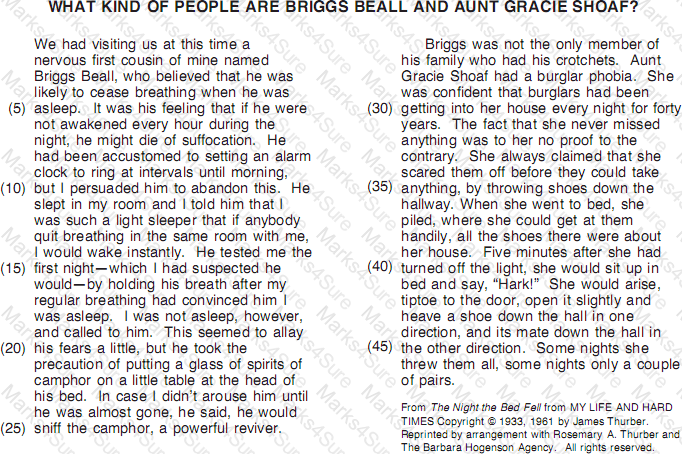
As used in line 27, what does the word “crotchets” mean?
-- Exhibit –
-- Exhibit --
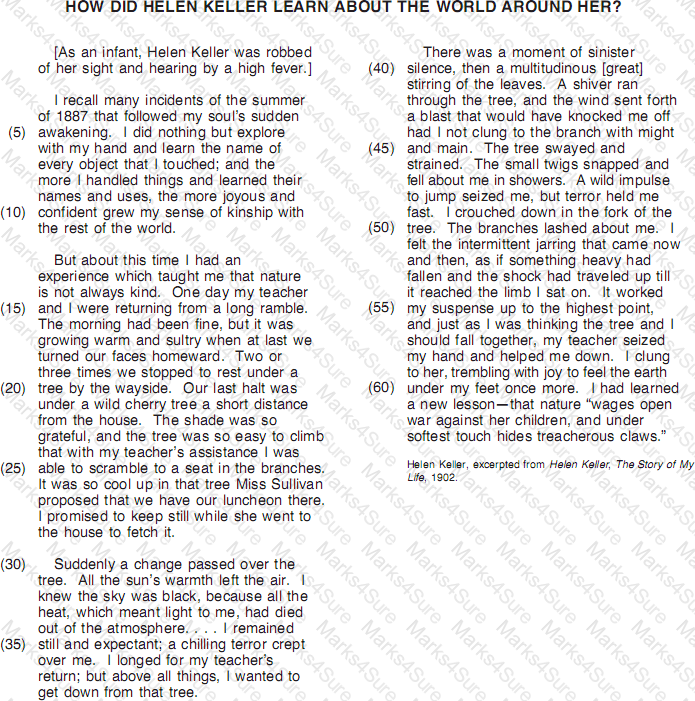
What mood does the writer create with her description of the storm?
-- Exhibit –
-- Exhibit --
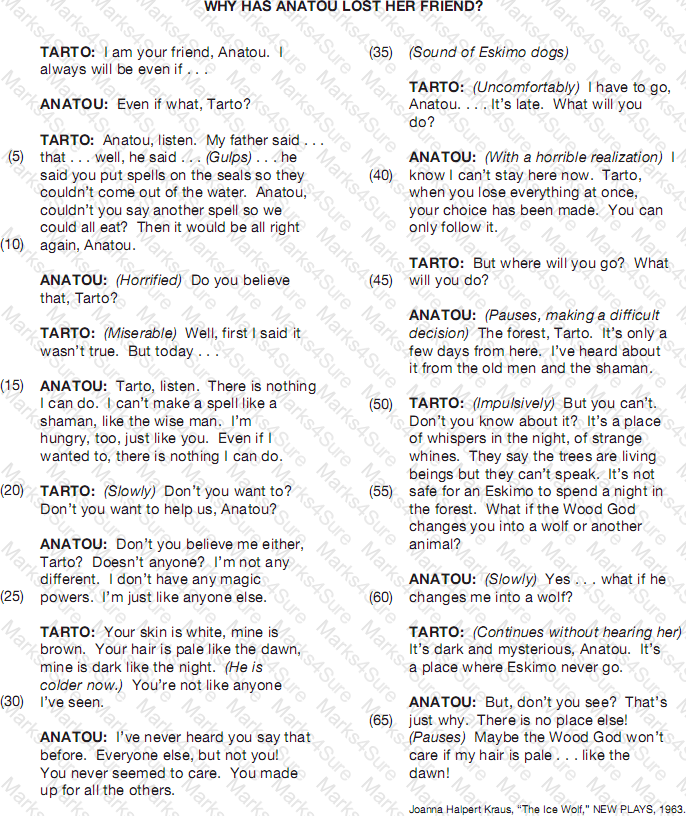
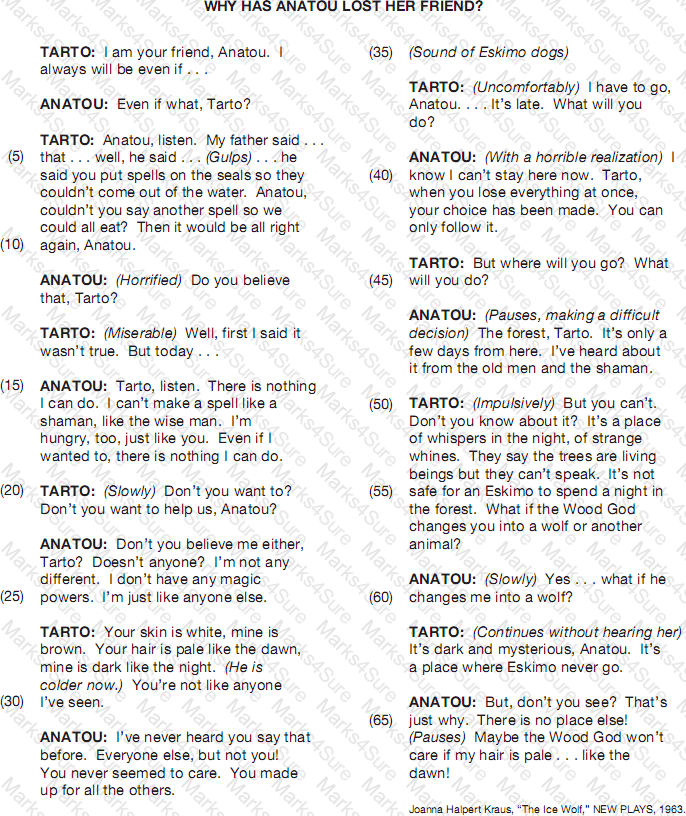
Anatou says that Tarto’s indifference to her pale skin and light hair “made up for all the others” (lines 33–34). What does she mean?
-- Exhibit –
-- Exhibit --
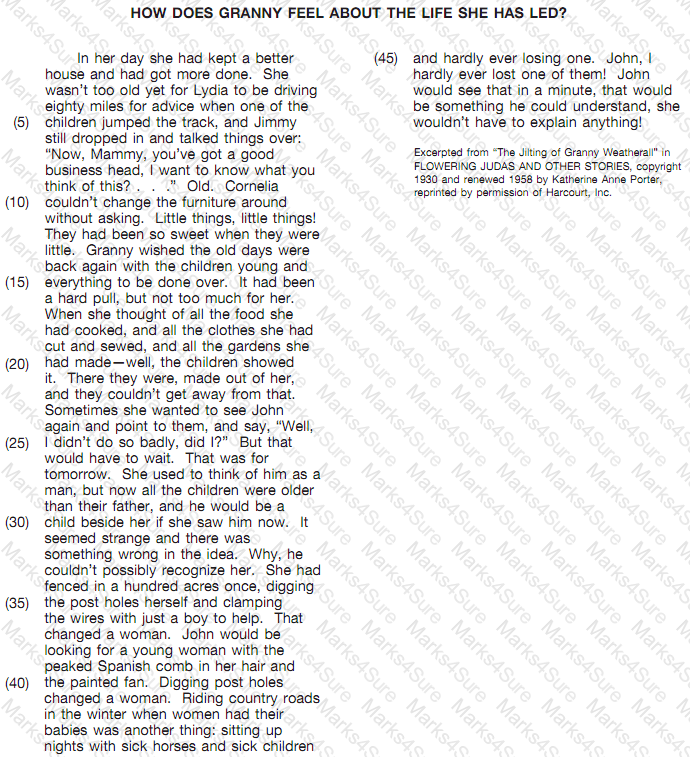
Granny says that "the children showed it" (line 20). What does she think the children show?
-- Exhibit –
-- Exhibit --
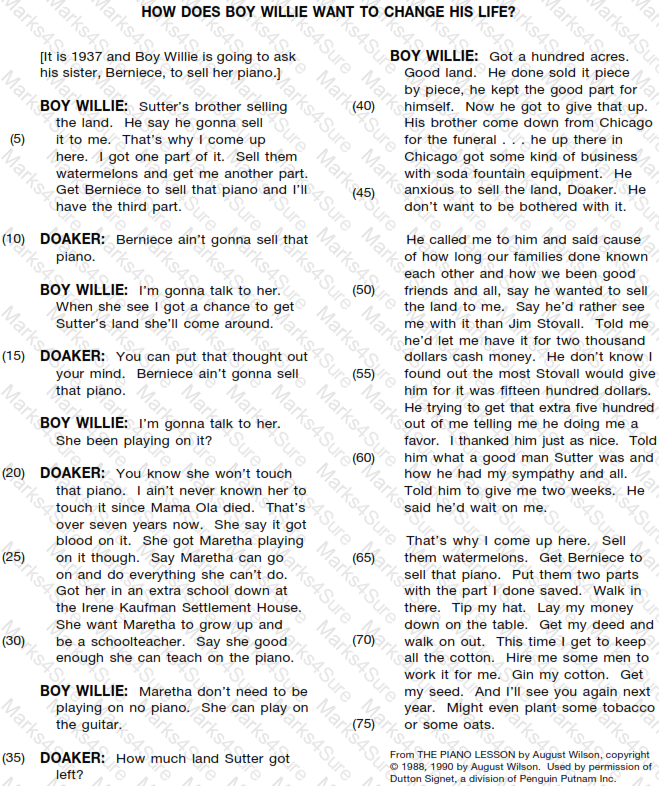
Later in the play, it is revealed that the piano has carvings on it of Boy Willie’s and Berniece’s enslaved ancestors. Why might this affect Willie’s plans?
-- Exhibit –
-- Exhibit --
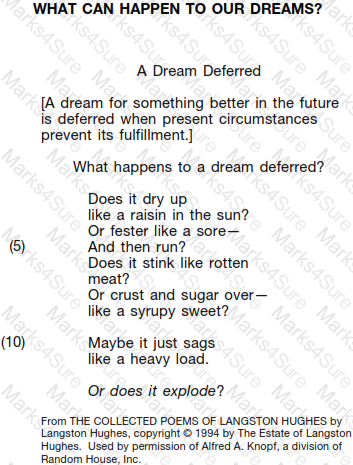
The poem opens with a question that it never answers directly. Several possible answers are supplied, but these are also questions. What effect do all these questions create?
-- Exhibit –
-- Exhibit --
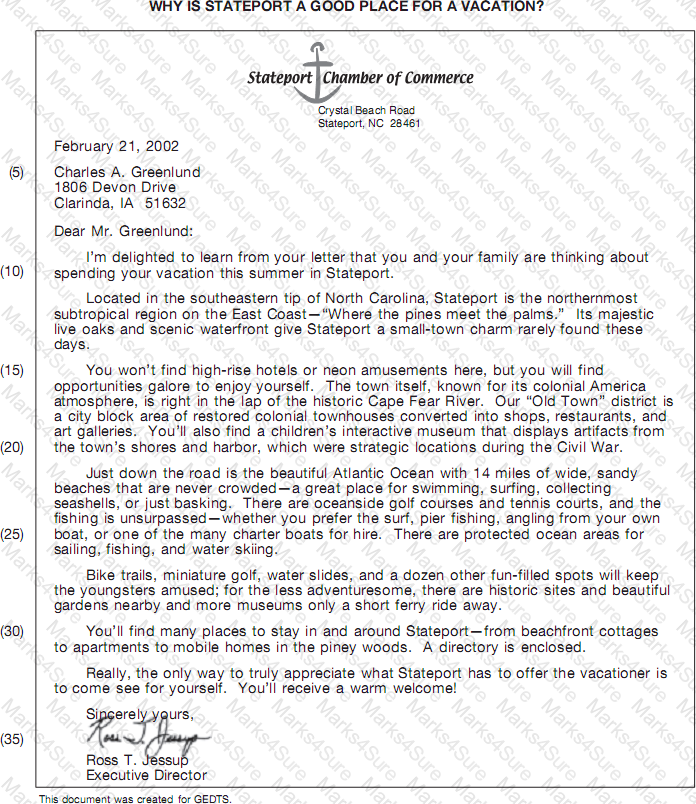
What does Mr. Jessup mean when he says, “There are protected ocean areas for sailing, fishing, and water skiing” (lines 25–26)?
-- Exhibit –
-- Exhibit --
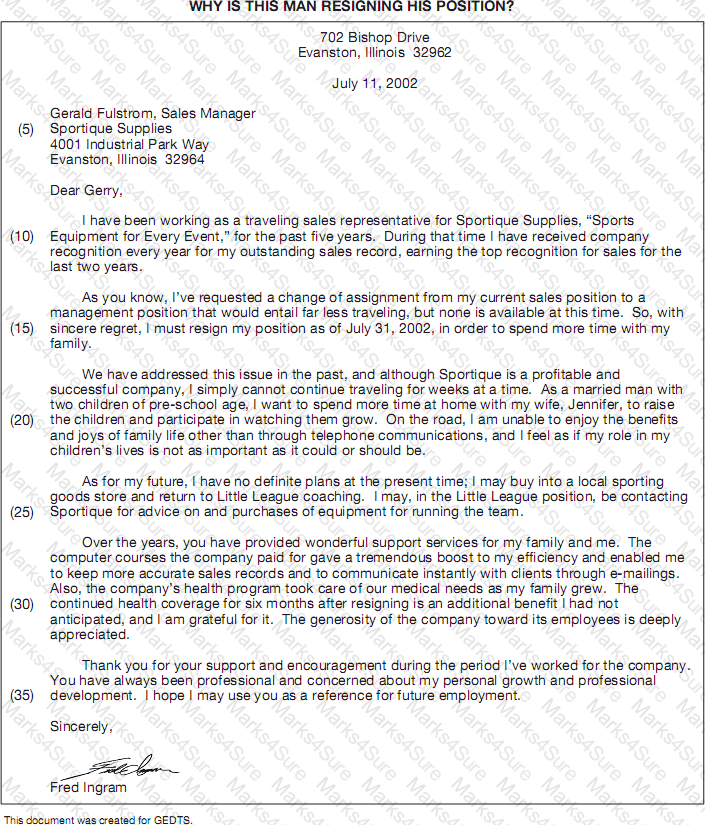
Based on the information in this letter, what is Fred Ingram’s opinion of Gerald Fulstrom as a boss?
-- Exhibit –
-- Exhibit --
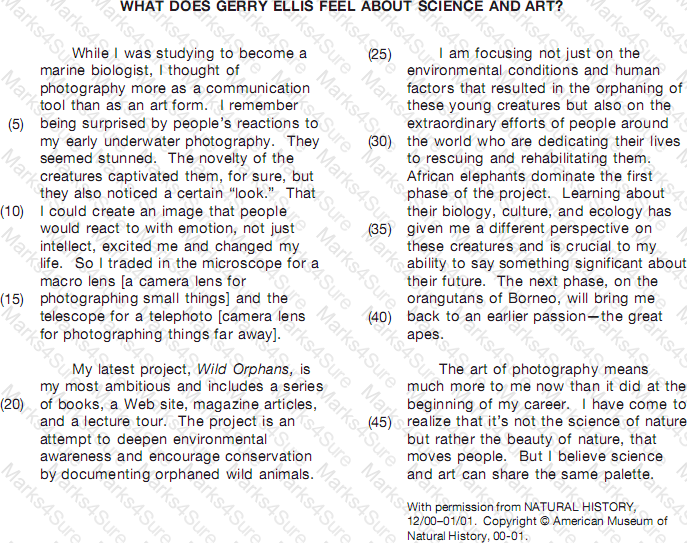
Which statement expresses the main idea of this article?
-- Exhibit –
-- Exhibit --
Gerry Ellis was originally studying to become a “marine biologist” (line 2). What is a marine biologist?
-- Exhibit –
-- Exhibit --
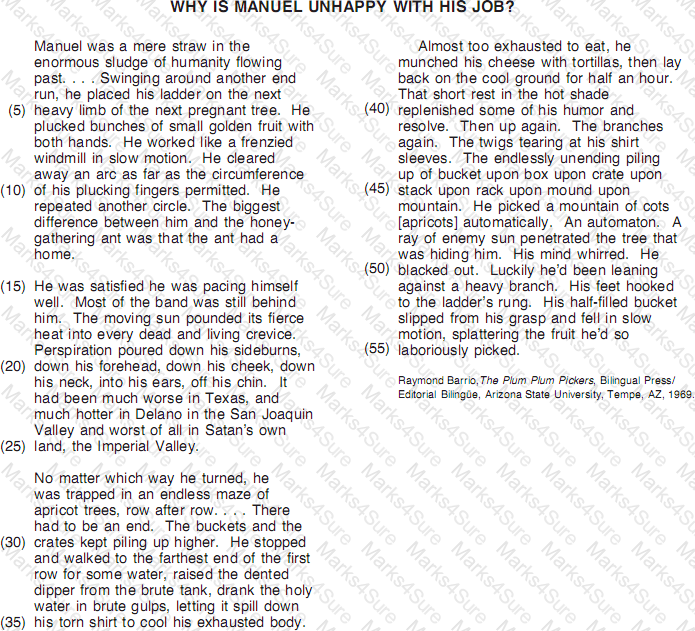
From this excerpt, what can we assume is the author’s purpose in writing this story?
-- Exhibit –
-- Exhibit --
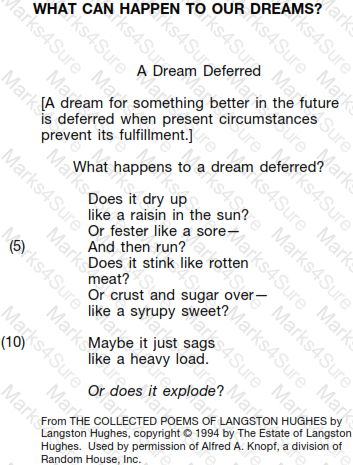
Harlem is an area of New York City known for its African American and Latino cultures. Langston Hughes knew this area well.
How might a teacher in Harlem today use this poem to inspire young children?
-- Exhibit –
-- Exhibit --
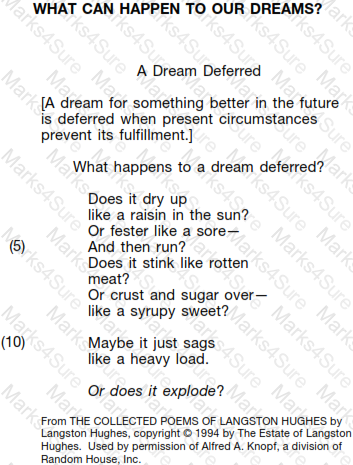
The final comparison in the poem "Or does it explode?" (line 12) is in italics and separated from the rest of the poem. What special meaning does this treatment give the last line?
-- Exhibit –
-- Exhibit --
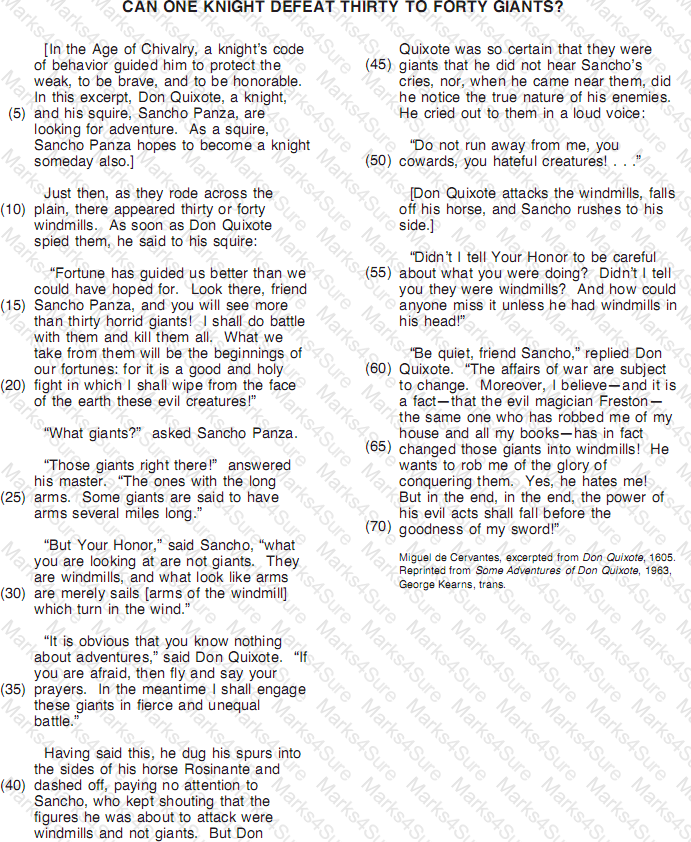
If Sancho Panza were working in a contemporary office setting, how might he respond to a boss who made a mistake?
-- Exhibit –
-- Exhibit --
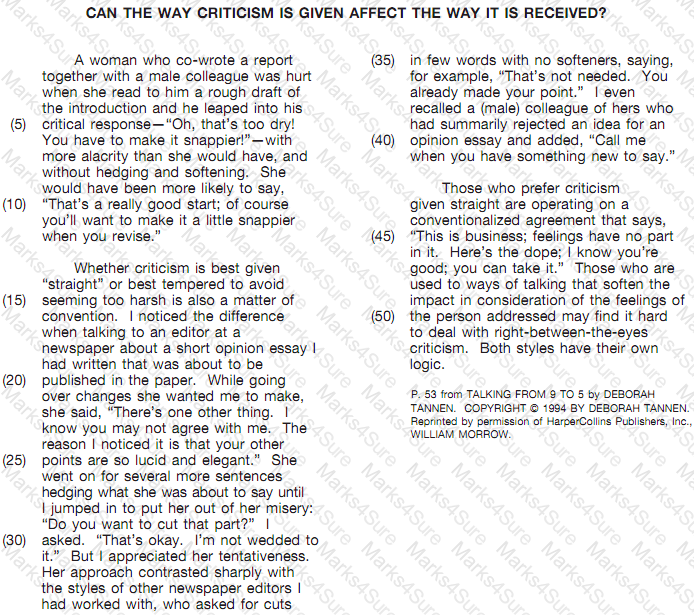
How might an individual who believes in "straight" criticism best be characterized?
-- Exhibit –
-- Exhibit --
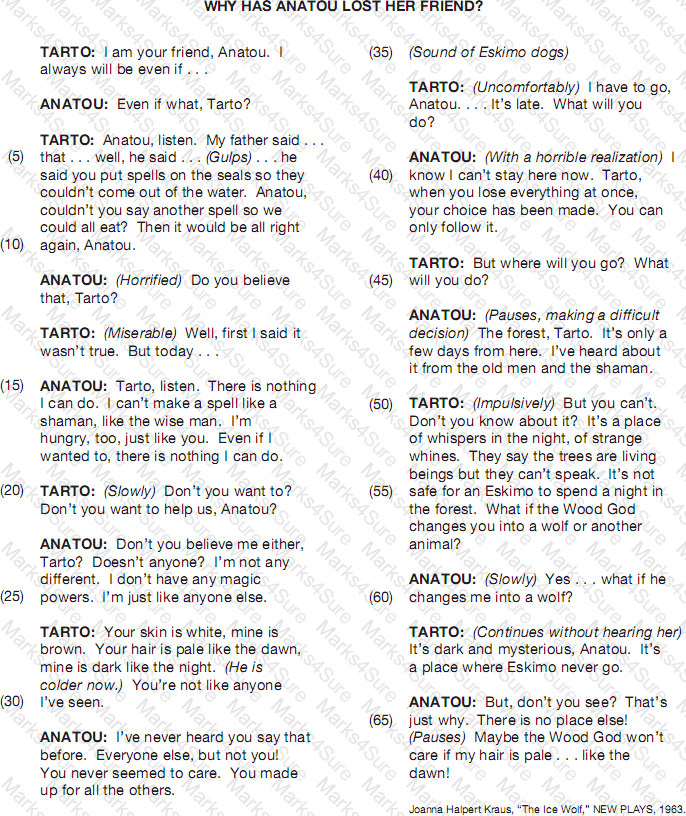
By the end of this excerpt, Tarto and Anatou are no longer listening to each other. What does this indicate about the change in their relationship?
-- Exhibit –
-- Exhibit --
In her book THE ARGUMENT OFCULTURE, the author claims that "the modern culture is far too critical—many prefer to shout down . . . the opposition points of view rather than listen to them."
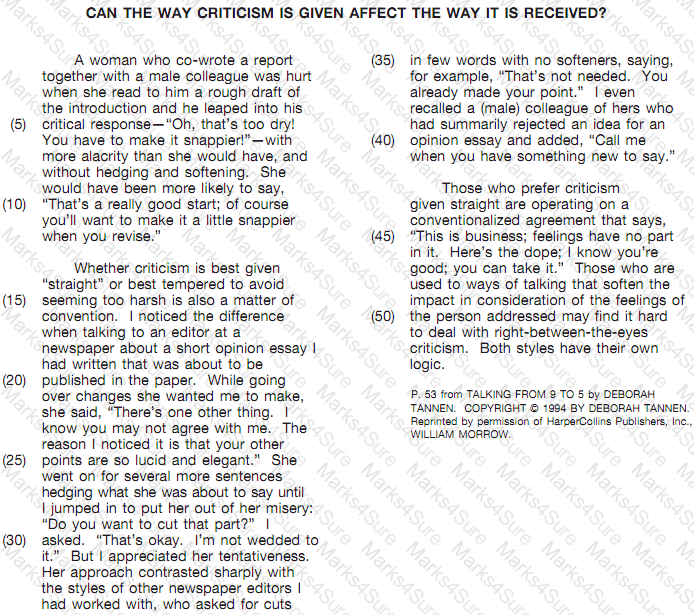
Based on the information above and the information in the passage, which of the following best summarizes the author’s view about criticism?
-- Exhibit –
-- Exhibit --
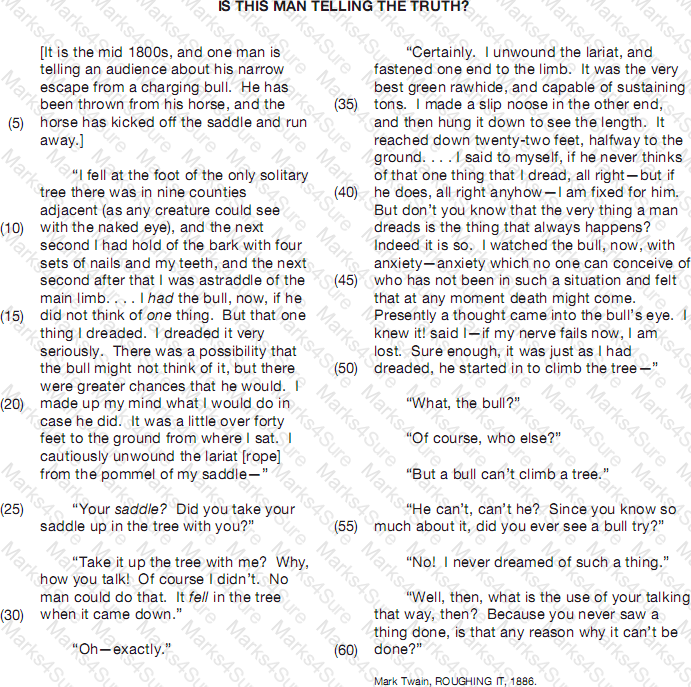
Later in the story, a member of the audience says, “I made up my mind that if this man was not a liar he only missed it by the skin of his teeth.”
Judging from this information and the character of the narrator as revealed in this excerpt, which one of the following is probably the narrator’s greatest talent?
-- Exhibit –
-- Exhibit --
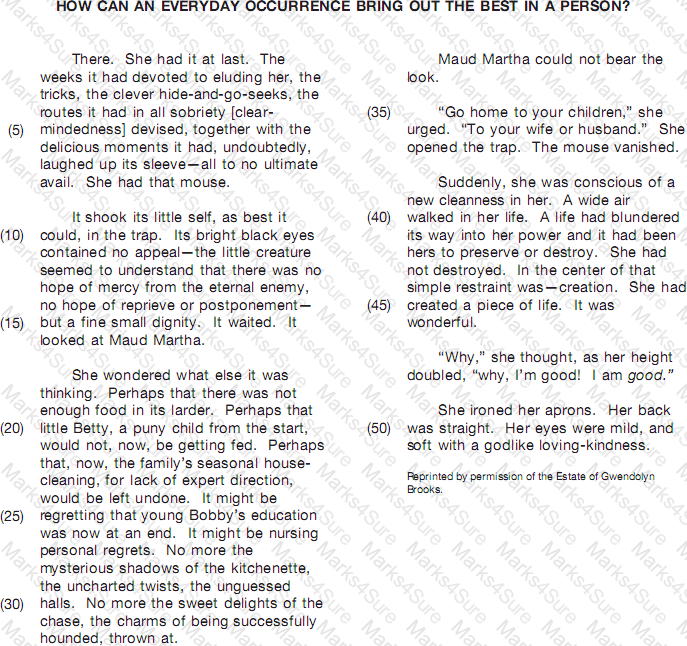
Based on how she behaves in this excerpt, what kind of person is Maud Martha?
-- Exhibit –
-- Exhibit --
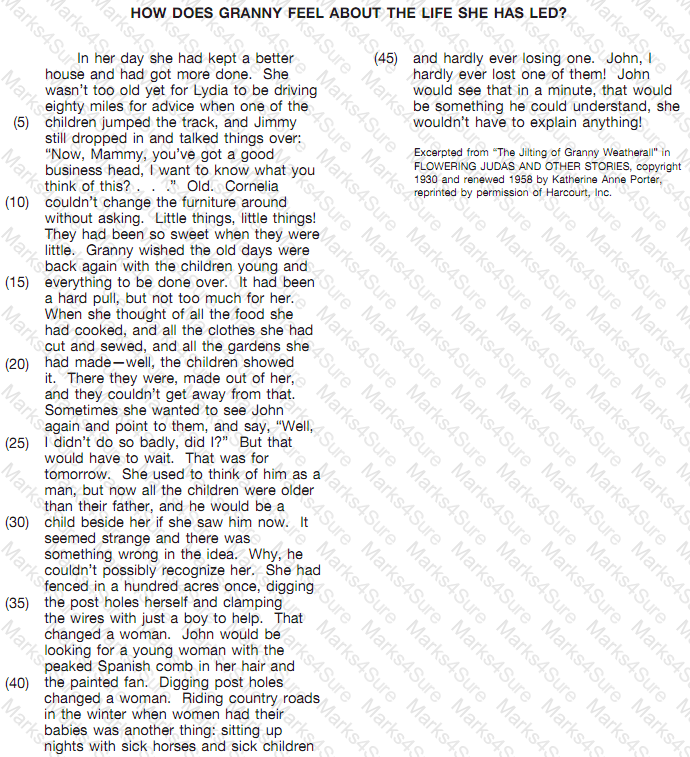
Based on Granny’s character as revealed in this excerpt, how might Granny react if her children tried to put her in a retirement home?
-- Exhibit –
-- Exhibit --
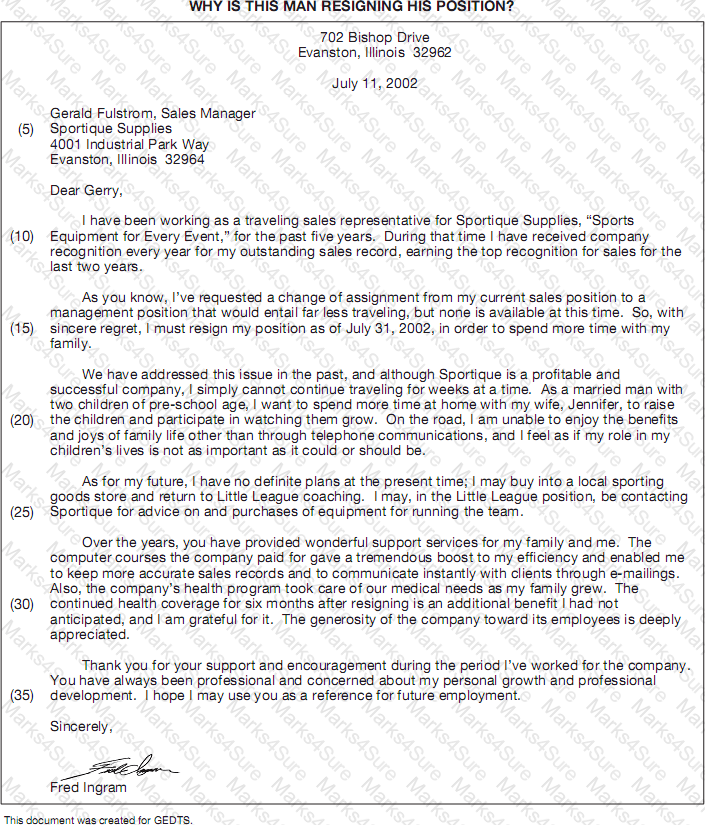
According to Fred Ingram’s letter, which benefit is he likely to need in the near future?
-- Exhibit –
-- Exhibit –
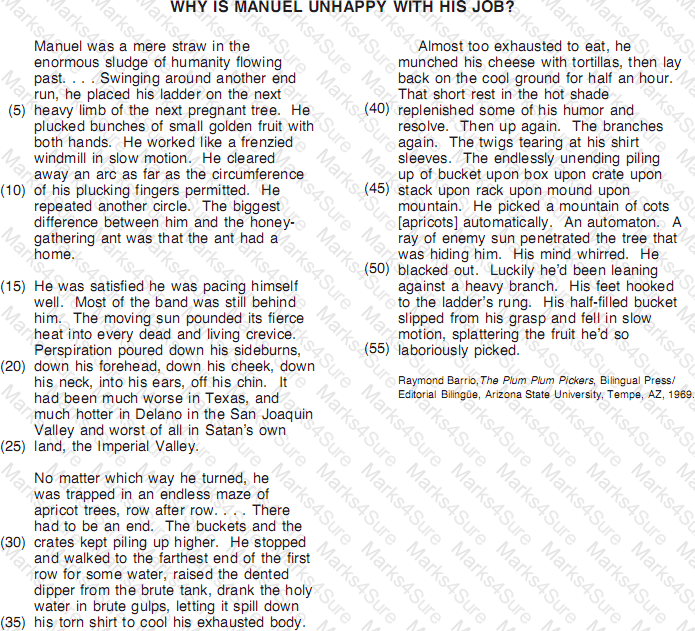
Why does the author use the phrase “Satan’s own land” (lines 24–25)?
-- Exhibit –
-- Exhibit --
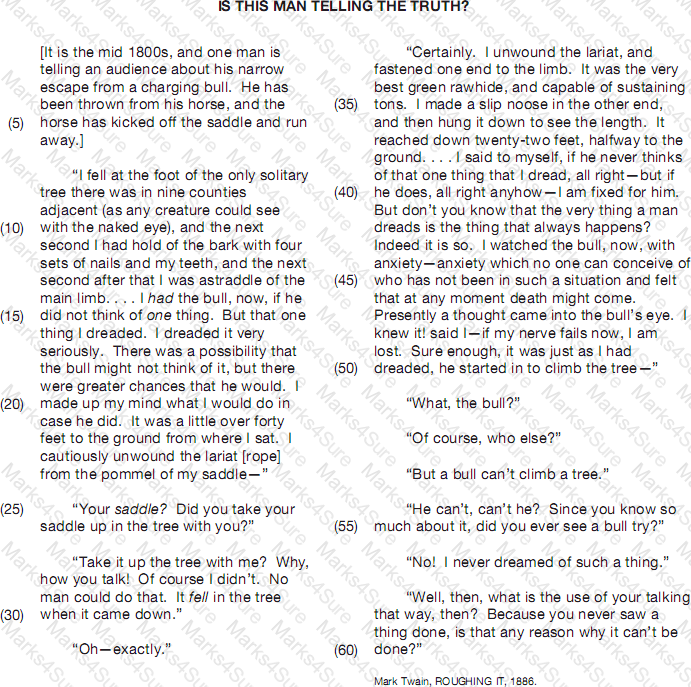
The narrator says that he “fell at the foot of the only solitary tree there was in nine counties adjacent” (lines 7–9). How is the narrator creating humor in this line?
-- Exhibit –
-- Exhibit --
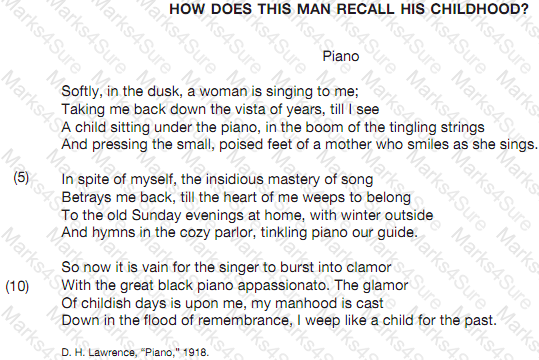
In the second stanza, the speaker says that "the insidious mastery of song / Betrays me back" (lines 5–6). What do these lines mean?
-- Exhibit –
-- Exhibit --
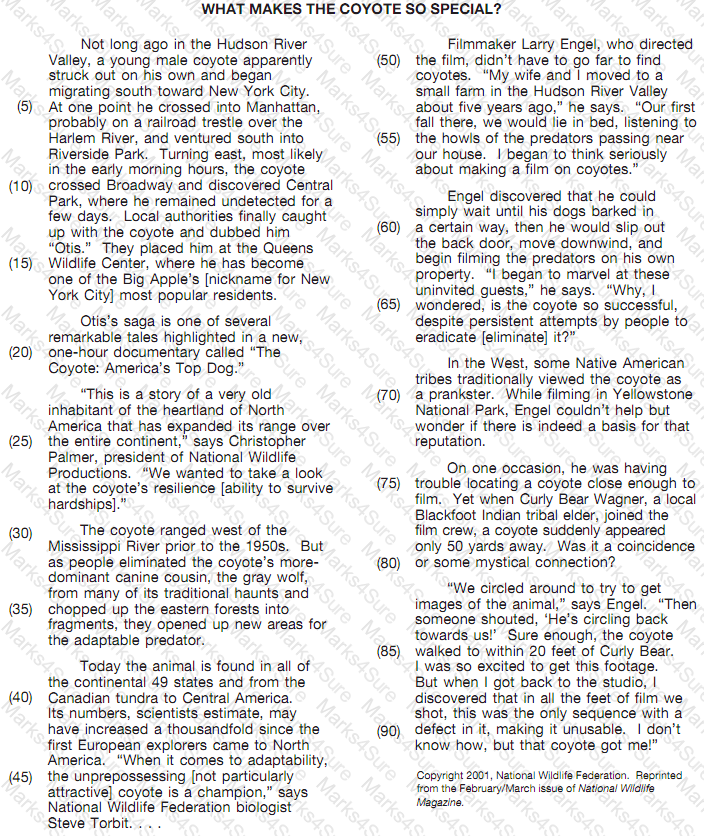
According to this article, what do some Native Americans believe about coyotes (lines 68–70)?
Exhibit:
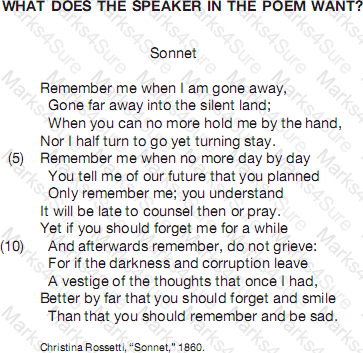
What is revealed about the quality of the speaker’s love when she says, “Better by far that you should forget and smile / Than that you should remember and be sad” (lines 13–14)?
-- Exhibit –
-- Exhibit --
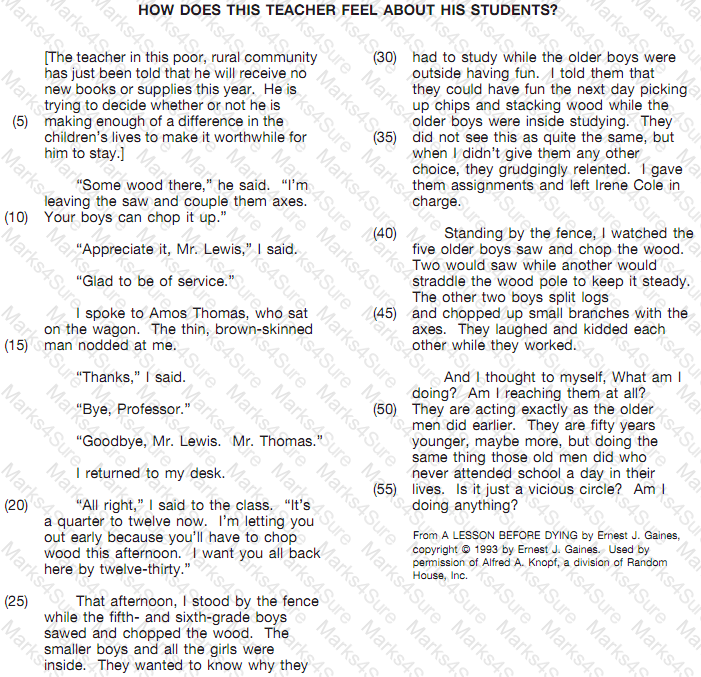
The concern of which one of the following people is closest to the concern felt by the teacher for the students in the excerpt?
-- Exhibit –
-- Exhibit --
When Anatou protests that she has no magical power, Tarto answers by saying, “Don’t you want to? Don’t you want to help us, Anatou?” (lines 20–21). What do Tarto’s words reveal?
-- Exhibit –
-- Exhibit --
How does Helen Keller characterize herself at the beginning of the excerpt?
-- Exhibit –
-- Exhibit --
Why does the narrator include details of Theobald’s dislike of music and pictures and books?
-- Exhibit –
-- Exhibit --
Helen Christen, the Human Resources Manager, is relatively new at her job and has already implemented several new policies to support employees, such as child-care leave and GED classes.
How might this additional information affect how employees receive this memo?
-- Exhibit –
-- Exhibit --
The narrator tries to appease her friend by saying, "It’s only make-believe," but her friend cries out, "No! It isn’t! You know it isn’t!" (lines 39–42). With what are the girls wrestling?
-- Exhibit –
-- Exhibit --
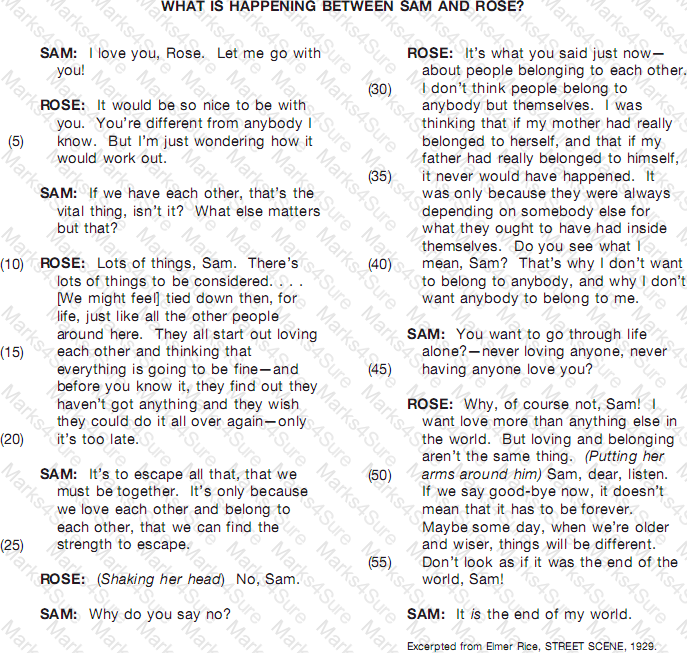
Which character trait does Rose’s decision about her future indicate?
-- Exhibit –
-- Exhibit --
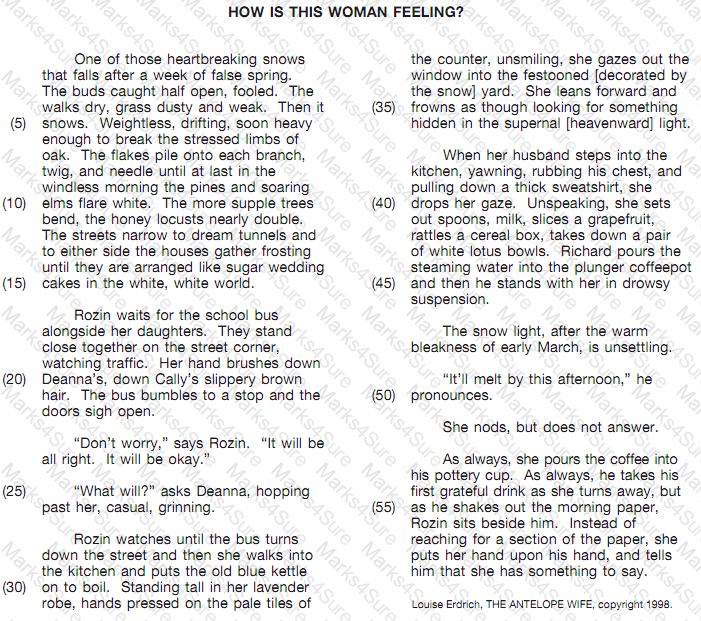
What kind of relationship do Rozin and her husband Richard seem to have based on the way they interact with each other in this excerpt?
-- Exhibit –
-- Exhibit --
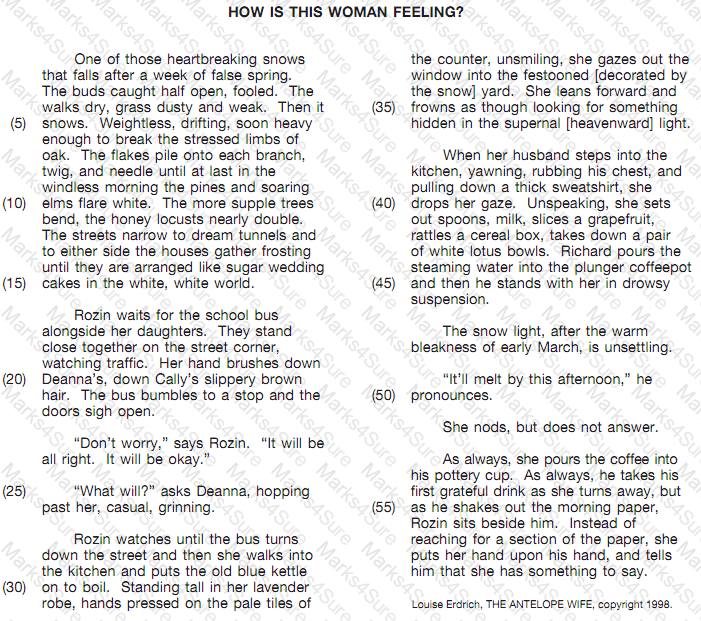
Based on Rozin’s character as revealed in this excerpt, if Rozin has to tell her daughters that she is leaving the family for a while, how would she probably do it?
-- Exhibit –
-- Exhibit --
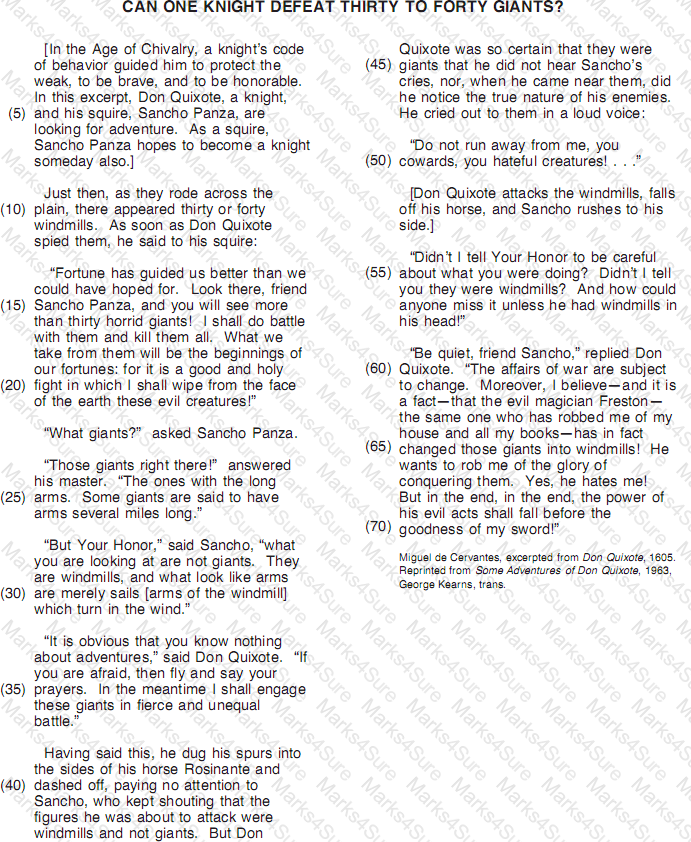
In the musical, The Man of La Mancha, loosely based on the novel Don Quixote, one of the show’s most popular songs, “The Impossible Dream,” includes these lyrics:
To dream the impossible dream,
To fight the unbeatable foe,
To bear with unbearable sorrow,
To run where the brave dare not go.
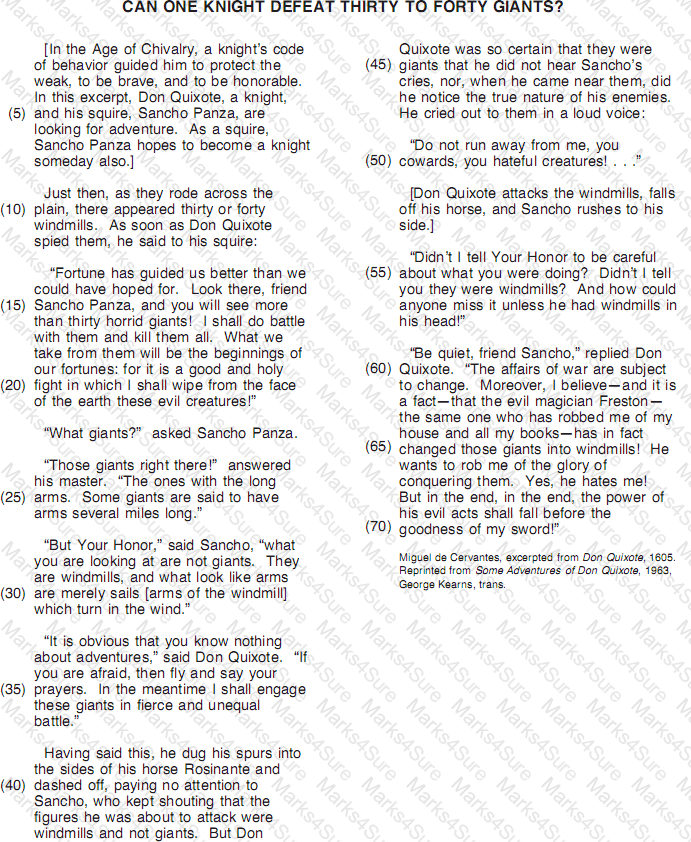
How does this song capture the characterization of Don Quixote that is revealed in this excerpt?
-- Exhibit –
-- Exhibit --
Although Don Quixote is a somewhat comic figure, he is nevertheless characterized as a man who is devoted to duty and faithful to his sworn cause of helping others. Given this background information and the excerpt, why might readers be deeply moved by the character of Don Quixote?
-- Exhibit –
-- Exhibit --
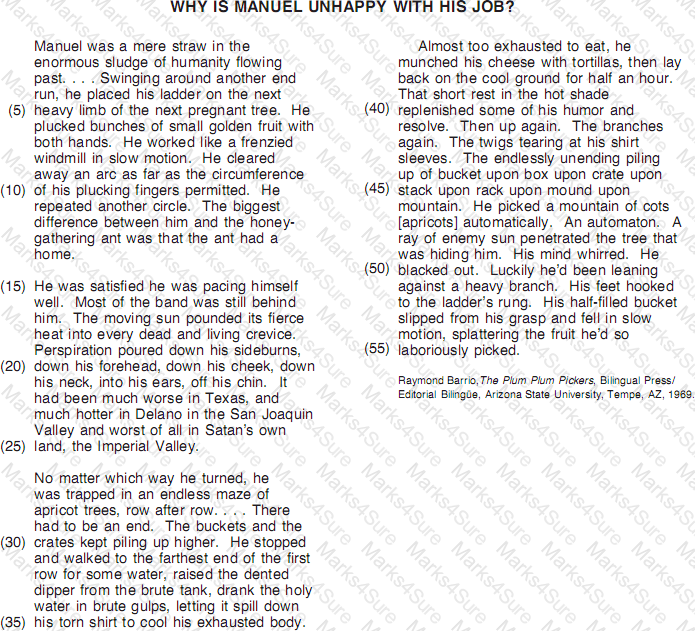
In this excerpt, Manuel’s actions are most like those of what other kind of person?
-- Exhibit –
-- Exhibit --
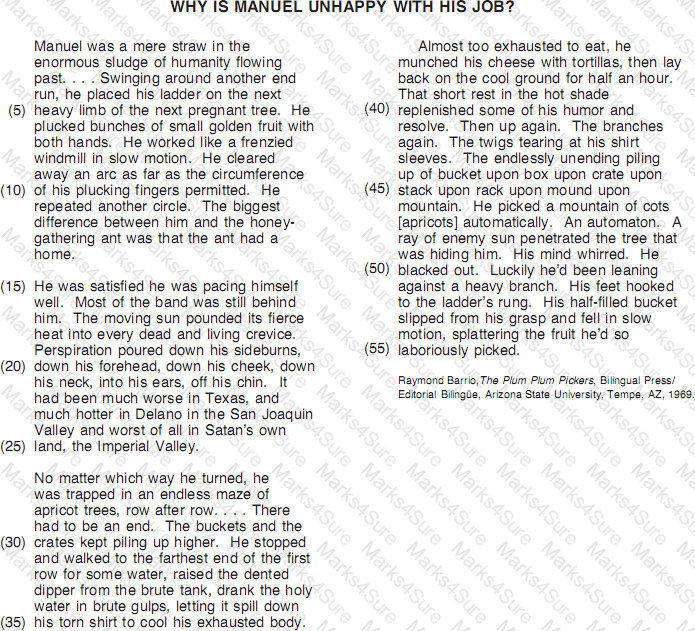
If the author were to rewrite this excerpt for television, his writing would be most suited to what kind of TV show?
-- Exhibit –
-- Exhibit --
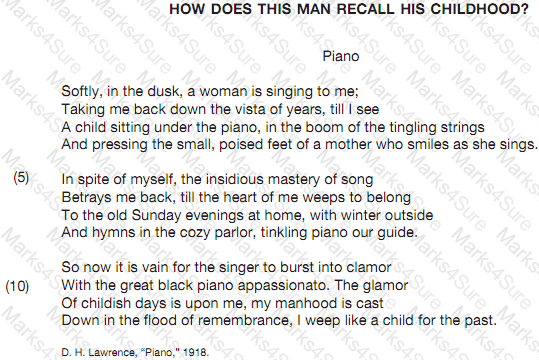
The mother is described in two places in the poem: "Softly, in the dusk, a woman is singing to me" (line 1) and "pressing the small, poised feet of a mother who smiles as she sings" (line 4). What quality of the mother is emphasized in these lines?
-- Exhibit –
-- Exhibit --
What did the narrator and his friends like the most about throwing ice when the narrator says that the ice would “shatter in excellent, war-movie-type fragmentation” (lines 53–54)?
-- Exhibit –
-- Exhibit --
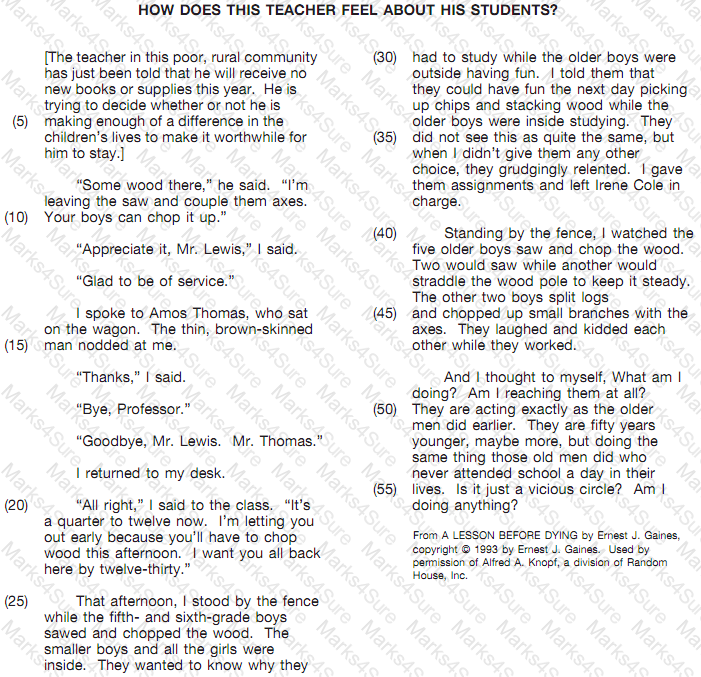
What is suggested about the teacher in line 49: "Am I reaching them at all?"
-- Exhibit –
-- Exhibit --
In lines 56–58, what does the phrase, "Emma had to repeat herself several times before Mr. Knightley would believe her," imply about Mr. Knightley’s reaction to Emma’s news?
-- Exhibit –
-- Exhibit --
Which phrase best describes Rip Van Winkle’s attitude toward earning a living?
-- Exhibit –

-- Exhibit --
Based on the excerpt, what quality does this teacher possess that might be important for his success with his students?
PDF + Testing Engine

Testing Engine
PDF (Q&A)