
Free Practice Questions for the HPE Product Certified - Aruba Data Center Network Specialist HPE2-W09 Exam (2026 Updated)
At Marks4sure, we are dedicated to providing IT professionals with the most accurate and reliable preparation materials for the HP HPE2-W09 exam. To support your certification journey, we have made a selection of our premium 2026 HPE Product Certified - Aruba Data Center Network Specialist practice questions and answers available completely free. You can take this practice test as many times as you need. Every question includes a detailed, expertly verified explanation to ensure you fully grasp the core security concepts before test day.
Is this correct positioning of AtubaOS-CX switches in the data center?
Solution: Aruba CX 6300 switches are an appropriate choice for leaf switches in a leaf-spine topology that uses Virtual Extensible LAN (VXLAN) with Ethernet VPN (EVPN).
Refer to the exhibit.
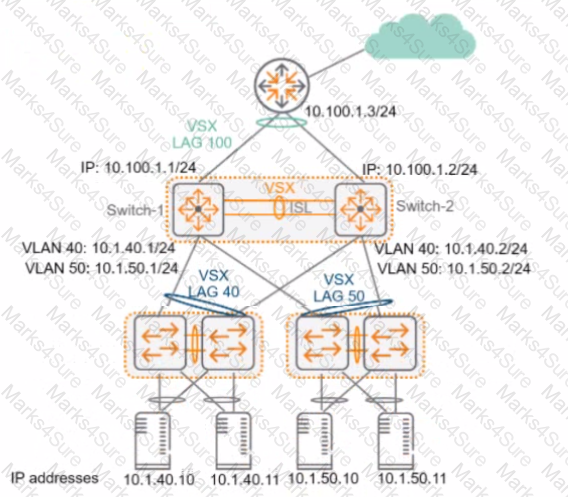
Switch-1, Switch-2, and the router run OSPF on LAG 100, which is a Layer 3 LAG. Does this correctly explain how to control how core-to-access traffic Is forwarded?
Solution: To force the router to use both links, ensure that active gateway is enabled on LAG 100 on both Switch-1 and Switch-2.
Can you attach this type of ArubaOS-CX interface to a VRF?
Solution: A Layer 3 VLAN interface
Is this a best practice when positioning ArubaOS-CX switches in data center networks?
Solution: Deploy Aruba CX 83xx switches as data center spine switches.
Refer to the exhibit.
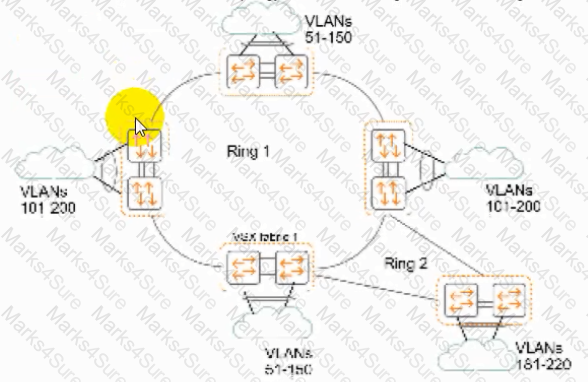
which shows the topology tot an Ethernet Ring Protection Switching (ERPS) solution.
Is this a valid design for the control and protected VLANs on the VSX fabric 1 switches?
Solution: Ring 1, Instance 1:
control VLAN: 51 protected VLANs: 51-100 Ring 1, Instance 2:
control VLAN: 51 protected VLANs: 101-150 Ring 2, Instance 1: control VLAN: 181 protected VLANs: 181-200 Ring 2, Instance 2: control VLAN: 181 protected VLANs: 201-220
Refer to the exhibit.
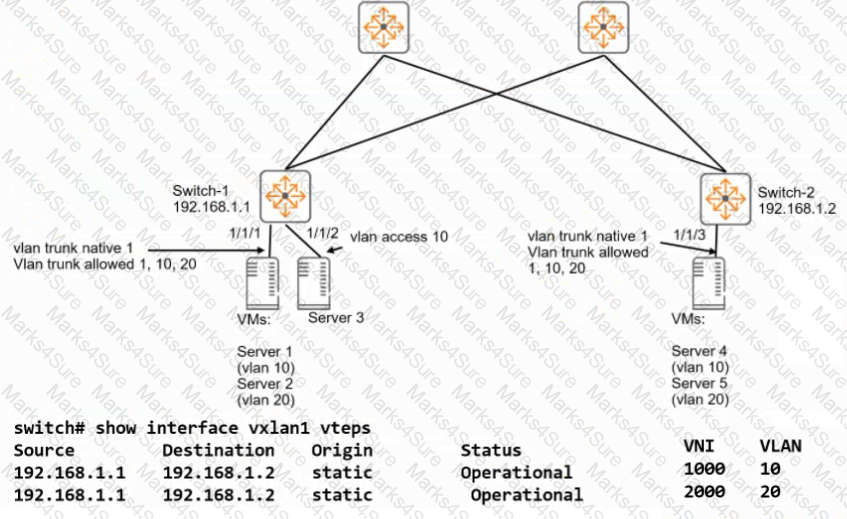
Switch-1 and Switch-2 ate ArubaOS-CX switches that implement VXLAN WITHOUT Ethernet VPN (EVPN). Switch-2 uses the same VNI-to-VLAN mappings as Switch-1. Is this how the specified servers communicate?
Solution: Server 1 and Server 4 require routing services within the VXLANs to communicate with each other.
Is this correct positioning of AtubaOS-CX switches in the data center?
Solution: Aruba CX 8325 switches are an appropriate choice for leaf switches in a leaf-spine topology that uses Virtual Extensible LAN (VXLAN) with Ethernet VPN (EVPN).
Is this a use case for disabling split-recovery mode on ArubaOS-CX switches in a Virtual Switching Extension (VSX) fabric?
Solution: You want to prevent any possibility of a split brain situation from occurring if the keepalive link fails some time after the ISL.
Is this part of a valid strategy for load sharing traffic across the links in an Ethernet Ring Protection Switching (ERPS) ring?
Solution: Implement Virtual Switching Extension (VSX) on pairs of ERPS switches at the same site. Then combine multiple links between two data centers into VSX LAGs (M-LAGs).
Is this a use case for deploying Ethernet Ring Protection Switching (ERPS)?
Solution: extending Layer 2 communications between data centers that connect over Layer 3 MPLS links
Refer to the exhibits.
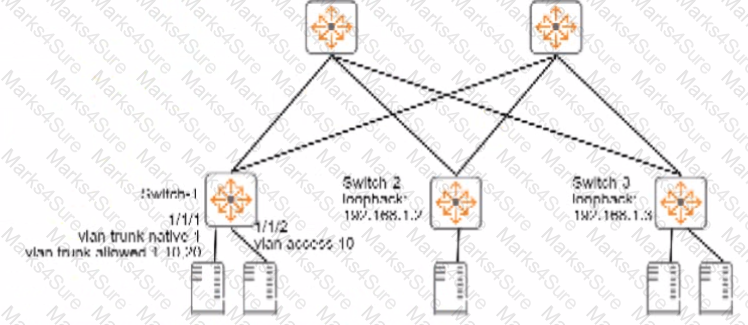
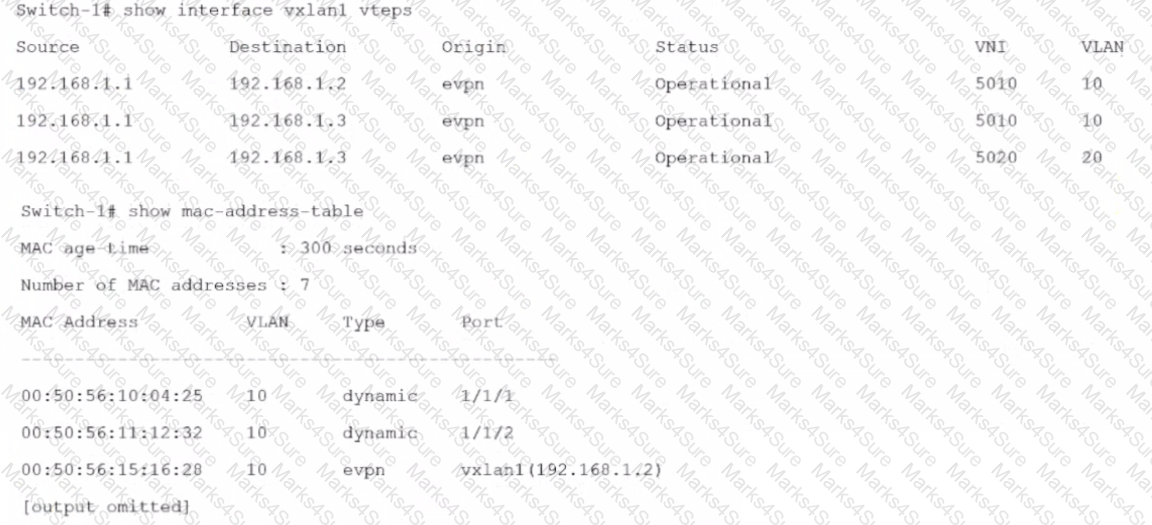
Is this how the switch handles the traffic?
Solution: A frame with destination MAC address, 00:50:56:00:00:03 arrives with a VLAN 10 tag on 1/1//1 on Switch-1. Switch-1 switches the frame out interface 1/1/2 without VXLAN.
A customer ' s servers use ISCSI, and they send data and storage traffic on the same pair of I OGbE links. Is this a best practice for supporting the ISCSI requirements?
Solution: Use Virtual Routing and Forwarding (VRF) to tunnel iSCSI traffic through the network spine on the same links that data traffic uses.
Is this something that NetEdit 2.0 does after it discovers a switch?
Solution: It enables the switch REST API Interface, if disabled.
You want to use NetEdit to configure an AtubaOS-CX switch.
Is this a minimum requirement for setting up communications between the switch and NetEdit?
Solution: Enable the REST interface in read-only mode.
Is this a way that a data center technology can help meet requirements for multi-tenancy?
Solution: Virtual Extensible LAN (VXLAN) enables multiple isolated Layer 3 domains, each with its own routing table, to share a physical network.
You enter this command on an ArubaOS-CX switch:
Switch# show erps status ring 1
Is this what the specified status means?
Solution: The status is Protection, which means that the ring is up and fully connected with the RPL port blocked.
Refer to the exhibits.
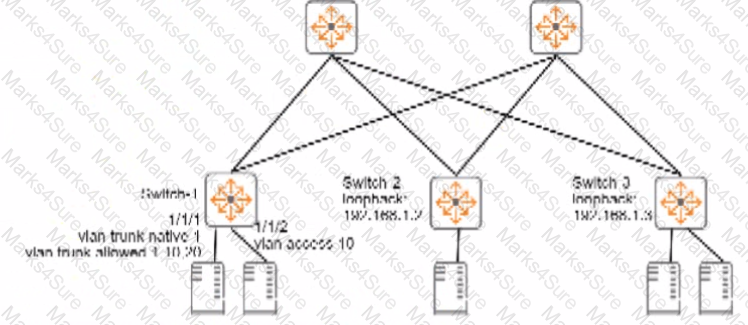
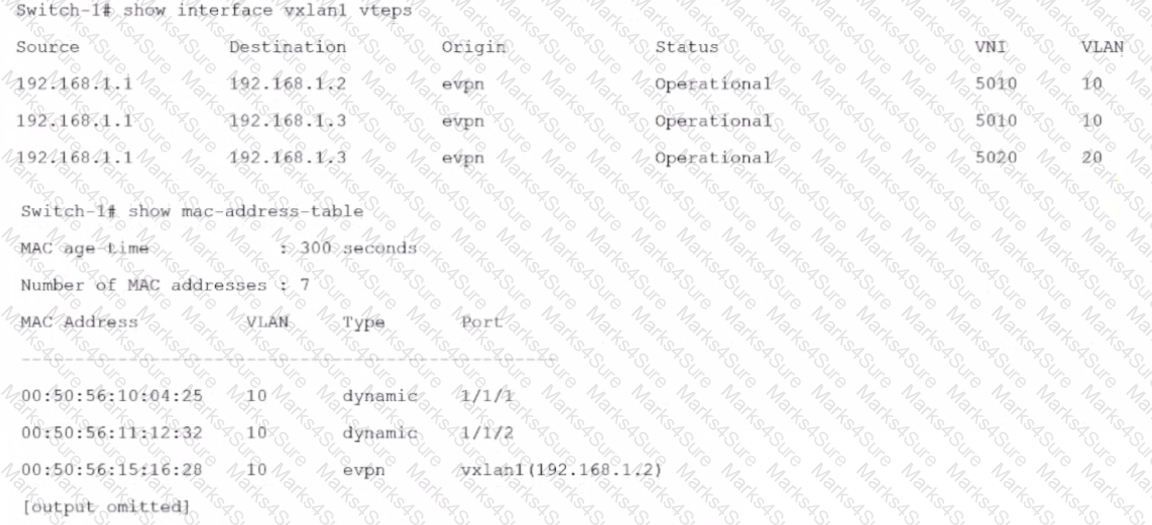
Is this how the switch-1 handles the traffic?
Solution: A broadcast arrives in VLAN 10 on Switch-1. Switch 1 forwards the frame on all interfaces assigned to VLAN 10, except the incoming interface. It encapsulates the broadcast with VXIAN and sends it to 192.168.1.3, out not 192.168.1.2.
An ArubaOS-CX is \ssmq DCBX on Interface 1/1/1. You enter this command:
show dcbx interface 1/1/1
Is this where you can see whether the connected converged network adapter (CNA) has accepted the application priorities advertised with DCBX?
Solution: in the Application Priority Map Local advertisement section
You are using NetEdit to manage AruDaOS-CX switches. You want to deploy a standard config to the switches, but need the config to include a few device-specific settings such as hostname and IP address.
Is this what you should do?
Solution: Create a conformance validation test to deploy the standard part of the configuration.
Refer to the exhibit.
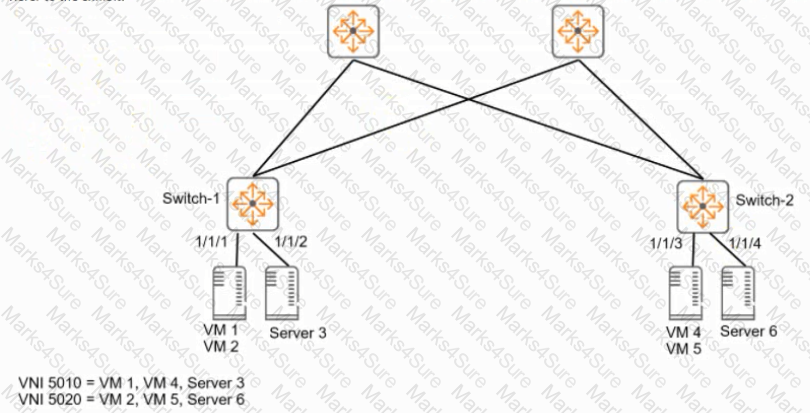
: The company wants AtubaOS-CX switches to provide VXLAN services for several VMs and servers, as shown in the exhibit. Hypervisors will not run VXLAN for this solution. Is this part of a valid configuration to meet the requirements?
Solution: Attach VNIs 5010 and 5020 to interface 1/1/3 on Switch-2.
Is this something that NetEdit 2.0 does after it discovers a switch?
Solution: It enables SNMP on the switch, if disabled.
Your customer is using Nutanix AHV and they need a network orchestration tool to simplify network provisioning. Is this operation supported when Aruba Fabric Composer (AFC) is integrated with Nutanix?
Solution: Automated provisioning of LAGs Between AHV and VSX
Is this a use case for disabling split-recovery mode on ArubaOS-CX switches in a Virtual Switching Extension (VSX) fabric?
Solution: In situations in which the primary switch fails and then reboots, you want to make the primary switch wait a period before it takes over as the primary switch.
Is this a use case for implementing Enhanced Transmission Selection (ETS) on an ArubaOS-CX switch?
Solution: to enable the switch to assign the correct priority and bandwidth to traffic that it transmits to servers
Refer to the exhibits.
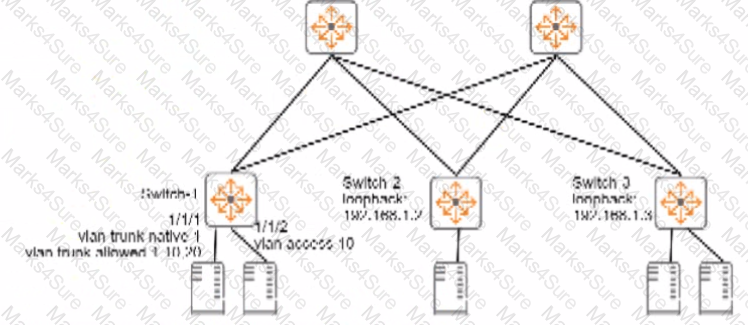
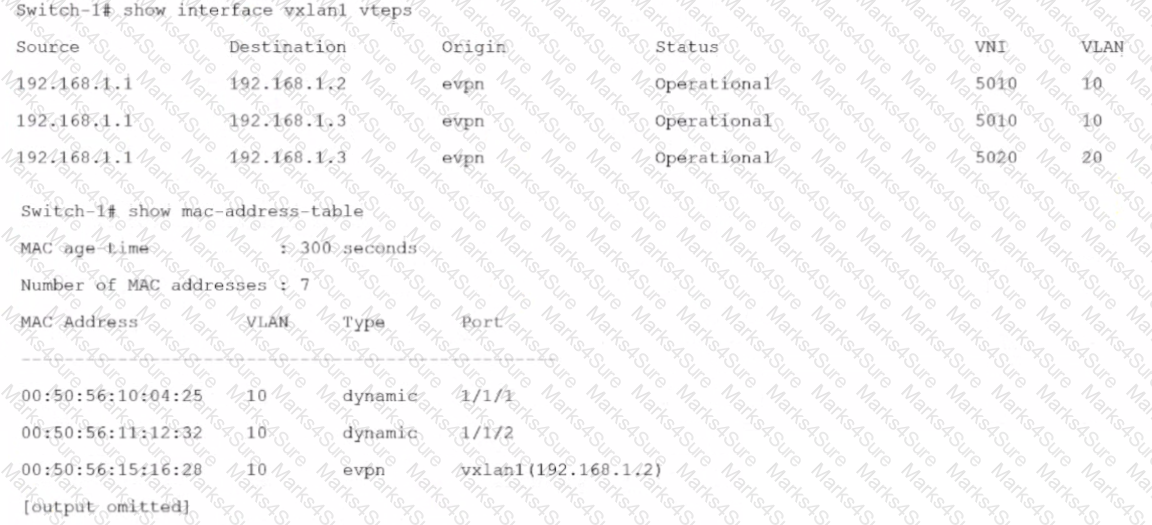
Is this how the switch handles the traffic?
Solution: A broadcast arrives with a VLAN 10 tag on 1/1/1 on Switch-1. Switch 1 drops the frame.
Can you attach this type of ArubaOS-CX interface to a VRF?
Solution: A physical interface using Layer 2 mode
Refer to the exhibit.
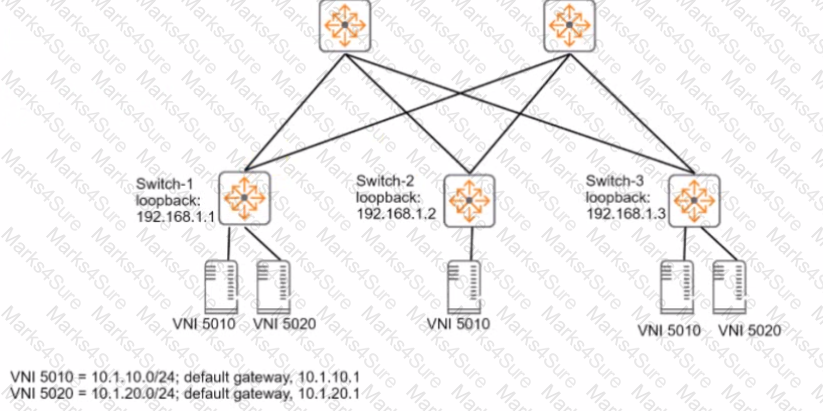
You need to set up an ArubaOS-CX switch to implement Virtual Extensible LAN (VXLAN) WITHOUT Ethernet VPN (EVPN). The exhibit Indicates which servers should be part of the same VXLANs and the desired VNls for the VXLANs. Assume that the network is already configured to permit each ArubaOS-CX switch to reach each other switch ' s loopback interface.
Is this part of the process for setting up VXLAN to meet the requirements?
Solution: On Switch-1, set 192.168.1.3 as a peer IP address in the VNI 5020 context.
Refer to the exhibit.
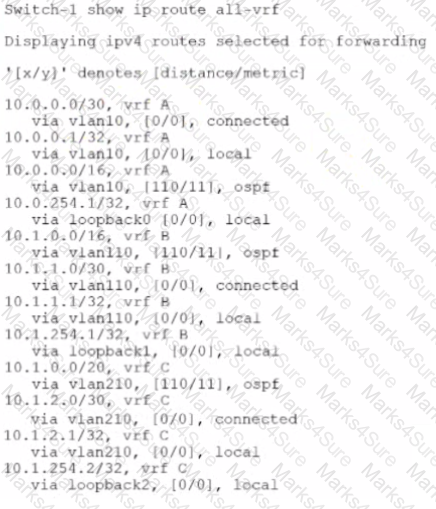
You want to enable devices in VRF B and VRF C to reach shared resources in VRF A. is this a valid strategy for meeting this goal?
Solution: Create a separate OSPF process for each VRF on Switch-1. Then redistribute each process into the other VRFs ' processes.
An ArubaOS-CX is \ssmq DCBX on Interface 1/1/1. You enter this command:
show dcbx interface 1/1/1
Is this where you can see whether the connected converged network adapter (CNA) has accepted the application priorities advertised with DCBX?
Solution: in the Enhanced Transmission Selection (ETS) Local advertisement section
Refer to the exhibit.
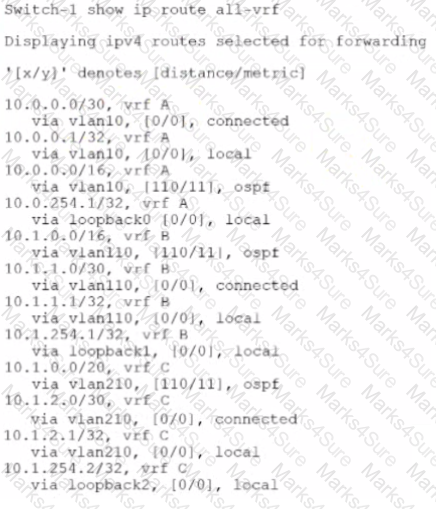
You want to enable devices in VRF B and VRF C to reach shared resources in VRF A. is this a valid strategy for meeting this goal?
Solution: Place ad three VRF$ in the same OSPF process on Switch-1.
Refer to the exhibits.
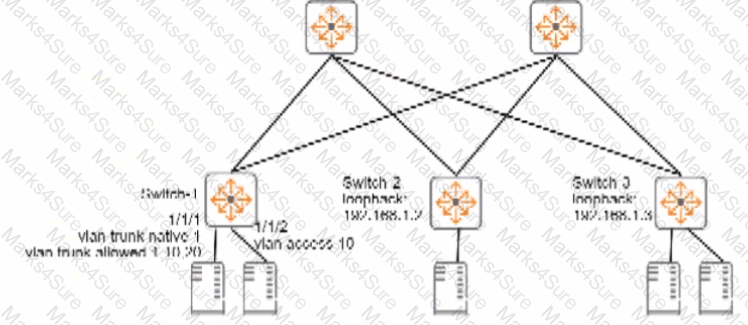
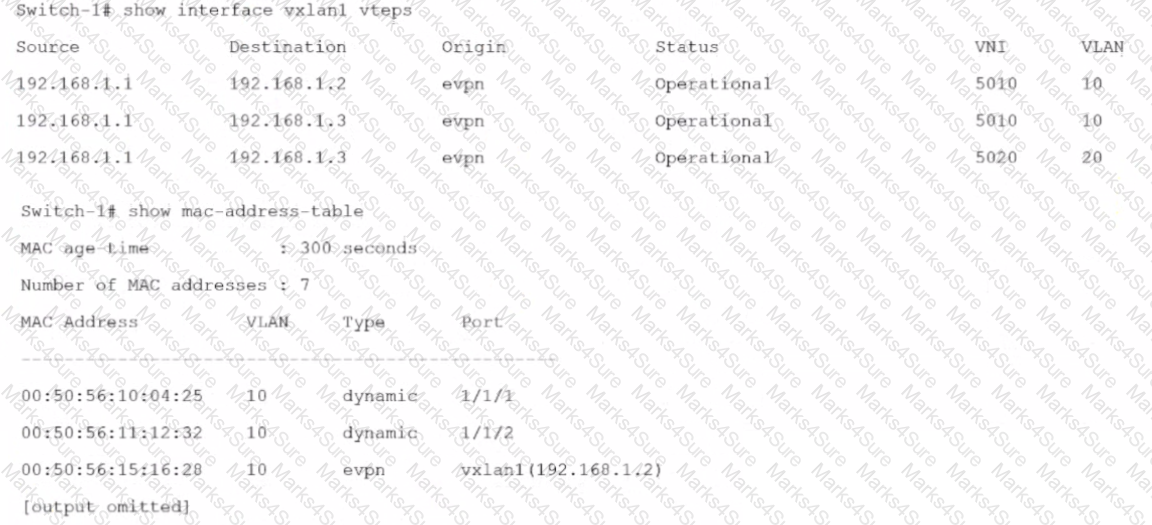
Is this how the switch-1 handles the traffic?
Solution: A broadcast arrives in VLAN 10 on Switch-1. Switch 1 forwards the frame on all interfaces assigned to VLAN10. except the incoming interface. It replicates the broadcast, encapsulates each broadcast with VXLAN. and sends the VXLAN traffic to 192.168.1.2 and 192.168.1.3.
You are using NetEdit to manage AruDaOS-CX switches. You want to deploy a standard config to the switches, but need the config to include a few device-specific settings such as hostname and IP address.
Is this what you should do?
Solution: Inside a configuration plan, right-click any device-specific parameters and modify the parameter per-device.
Refer to the exhibit.
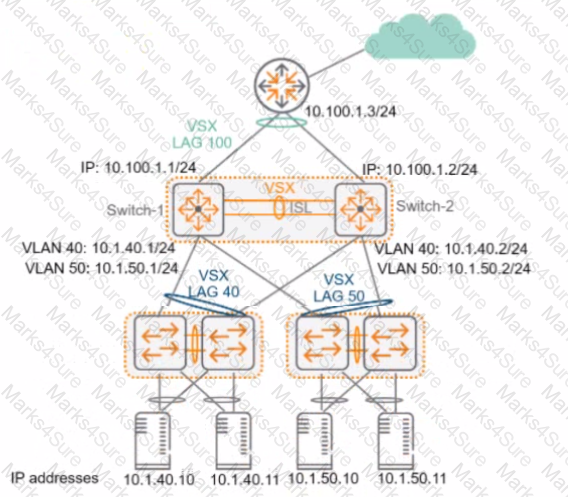
Switch-1, Switch-2, and the router run OSPF on LAG 100, which is a Layer 3 LAG. Does this correctly explain how to control how core-to-access traffic Is forwarded?
Solution: To reduce the amount of traffic sent over the ISL between Switch-1 and Switch-2. enable Equal Cost Multi Path (ECMP) on both Switch-1 and Switch-2.
Is this something that NetEdit 2.0 does after it discovers a switch?
Solution: It collects Information about the switch hardware.
You plan to use multi-protocol BGP to implement dynamic VRF route leaking on an ArubaOS-CX switch.
Is this a rule for the setup?
Solution: You cannot leak multicast routes.
PDF + Testing Engine

Testing Engine
PDF (Q&A)