
Free Practice Questions for the MuleSoft Certified Platform Architect MCPA-Level-1-Maintenance Exam (2026 Updated)
At Marks4sure, we are dedicated to providing IT professionals with the most accurate and reliable preparation materials for the MuleSoft MCPA-Level-1-Maintenance exam. To support your certification journey, we have made a selection of our premium 2026 MuleSoft Certified Platform Architect practice questions and answers available completely free. You can take this practice test as many times as you need. Every question includes a detailed, expertly verified explanation to ensure you fully grasp the core security concepts before test day.
Refer to the exhibit. An organization is running a Mule standalone runtime and has configured Active Directory as the Anypoint Platform external Identity Provider. The organization does not have budget for other system components.
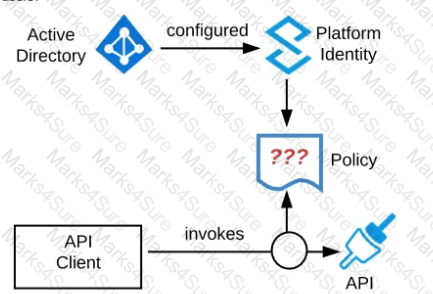
What policy should be applied to all instances of APIs in the organization to most effecuvelyKestrict access to a specific group of internal users?
An organization is deploying their new implementation of the OrderStatus System API to multiple workers in CloudHub. This API fronts the organization ' s on-premises Order Management System, which is accessed by the API implementation over an IPsec tunnel.
What type of error typically does NOT result in a service outage of the OrderStatus System API?
A company has created a successful enterprise data model (EDM). The company is committed to building an application network by adopting modern APIs as a core enabler of the company ' s IT operating model. At what API tiers (experience, process, system) should the company require reusing the EDM when designing modern API data models?
Say, there is a legacy CRM system called CRM-Z which is offering below functions:
1. Customer creation
2. Amend details of an existing customer
3. Retrieve details of a customer
4. Suspend a customer
How can the application of a rate limiting API policy be accurately reflected in the RAML definition of an API?
Version 3.0.1 of a REST API implementation represents time values in PST time using ISO 8601 hh:mm:ss format. The API implementation needs to be changed to instead represent time values in CEST time using ISO 8601 hh:mm:ss format. When following the semver.org semantic versioning specification, what version should be assigned to the updated API implementation?
What is true about API implementations when dealing with legal regulations that require all data processing to be performed within a certain jurisdiction (such as in the USA or the EU)?
A new upstream API Is being designed to offer an SLA of 500 ms median and 800 ms maximum (99th percentile) response time. The corresponding API implementation needs to sequentially invoke 3 downstream APIs of very similar complexity.
The first of these downstream APIs offers the following SLA for its response time: median: 100 ms, 80th percentile: 500 ms, 95th percentile: 1000 ms.
If possible, how can a timeout be set in the upstream API for the invocation of the first downstream API to meet the new upstream API ' s desired SLA?
What Mule application can have API policies applied by
Anypoint Platform to the endpoint exposed by that Mule application?
A) A Mule application that accepts requests over HTTP/1.x

B) A Mule application that accepts JSON requests over TCP but is NOT required to provide a response

C) A Mute application that accepts JSON requests over WebSocket

D) A Mule application that accepts gRPC requests over HTTP/2

An API client calls one method from an existing API implementation. The API implementation is later updated. What change to the API implementation would require the API client ' s invocation logic to also be updated?
An organization wants to make sure only known partners can invoke the organization ' s APIs. To achieve this security goal, the organization wants to enforce a Client ID Enforcement policy in API Manager so that only registered partner applications can invoke the organization ' s APIs. In what type of API implementation does MuleSoft recommend adding an API proxy to enforce the Client ID Enforcement policy, rather than embedding the policy directly in the application ' s JVM?
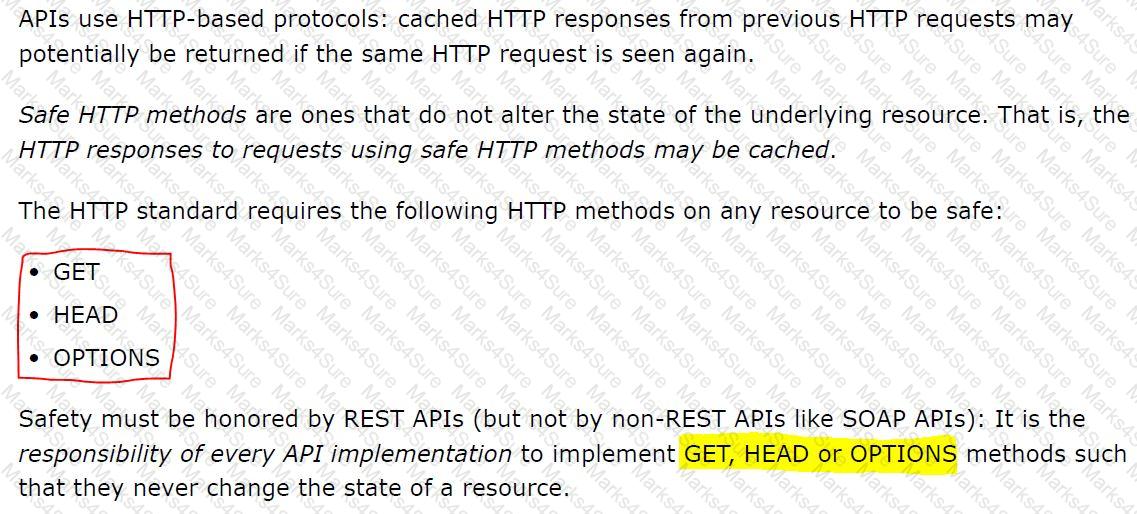
The responses to some HTTP requests can be cached depending on the HTTP verb used in the request. According to the HTTP specification, for what HTTP verbs is this safe to do?
A company requires Mule applications deployed to CloudHub to be isolated between non-production and production environments. This is so Mule applications deployed to non-production environments can only access backend systems running in their customer-hosted non-production environment, and so Mule applications deployed to production environments can only access backend systems running in their customer-hosted production environment. How does MuleSoft recommend modifying Mule applications, configuring environments, or changing infrastructure to support this type of per-environment isolation between Mule applications and backend systems?
Question 10: Skipped
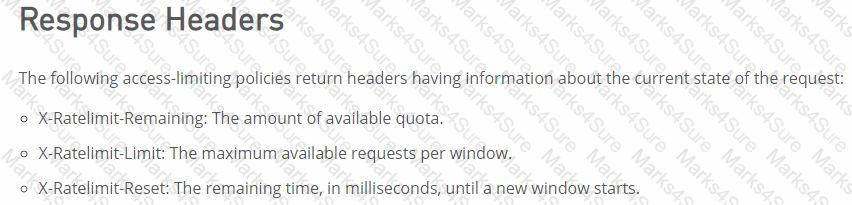
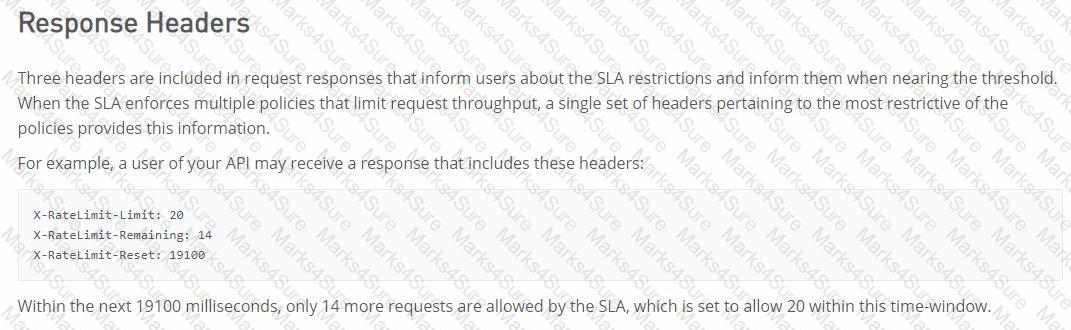
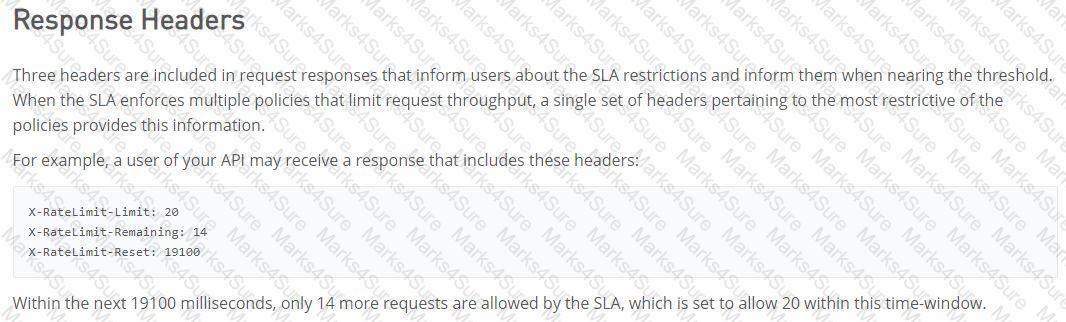
An API implementation returns three X-RateLimit-* HTTP response headers to a requesting API client. What type of information do these response headers indicate to the API client?
A Mule application exposes an HTTPS endpoint and is deployed to three CloudHub workers that do not use static IP addresses. The Mule application expects a high volume of client requests in short time periods. What is the most cost-effective infrastructure component that should be used to serve the high volume of client requests?
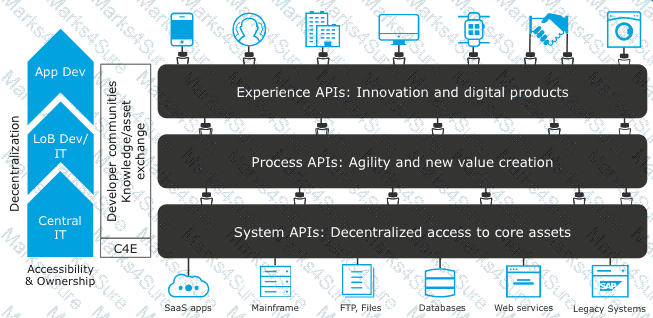
Which layer in the API-led connectivity focuses on unlocking key systems, legacy systems, data sources etc and exposes the functionality?
How are an API implementation, API client, and API consumer combined to invoke and process an API?
A set of tests must be performed prior to deploying API implementations to a staging environment. Due to data security and access restrictions, untested APIs cannot be granted access to the backend systems, so instead mocked data must be used for these tests. The amount of available mocked data and its contents is sufficient to entirely test the API implementations with no active connections to the backend systems. What type of tests should be used to incorporate this mocked data?
An API implementation is deployed to CloudHub.
What conditions can be alerted on using the default Anypoint Platform functionality, where the alert conditions depend on the end-to-end request processing of the API implementation?
PDF + Testing Engine

Testing Engine
PDF (Q&A)