
Free Practice Questions for the Fortinet Network Security Expert NSE6_SDW_AD-7.6 Exam (2026 Updated)
At Marks4sure, we are dedicated to providing IT professionals with the most accurate and reliable preparation materials for the Fortinet NSE6_SDW_AD-7.6 exam. To support your certification journey, we have made a selection of our premium 2026 Fortinet Network Security Expert practice questions and answers available completely free. You can take this practice test as many times as you need. Every question includes a detailed, expertly verified explanation to ensure you fully grasp the core security concepts before test day.
(Refer to the exhibit.
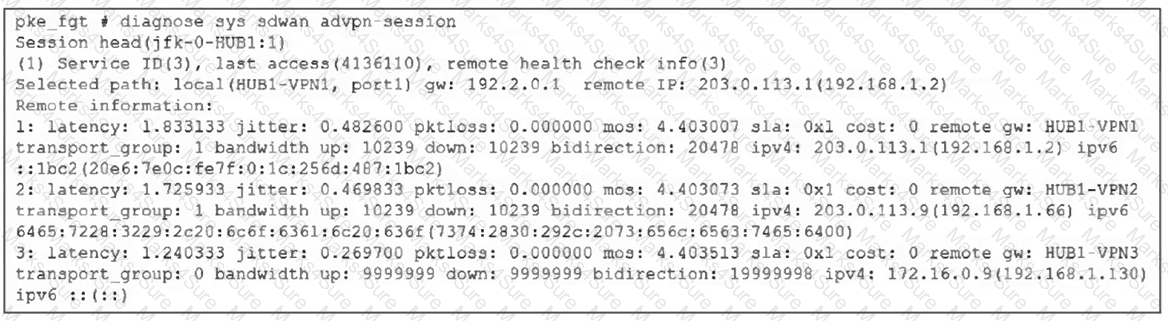
Based on the output shown in the exhibit, what can you conclude about the device role and how it handles health checks? Choose one answer.)
Refer to the exhibit, which shows the SD-WAN rule status and configuration.
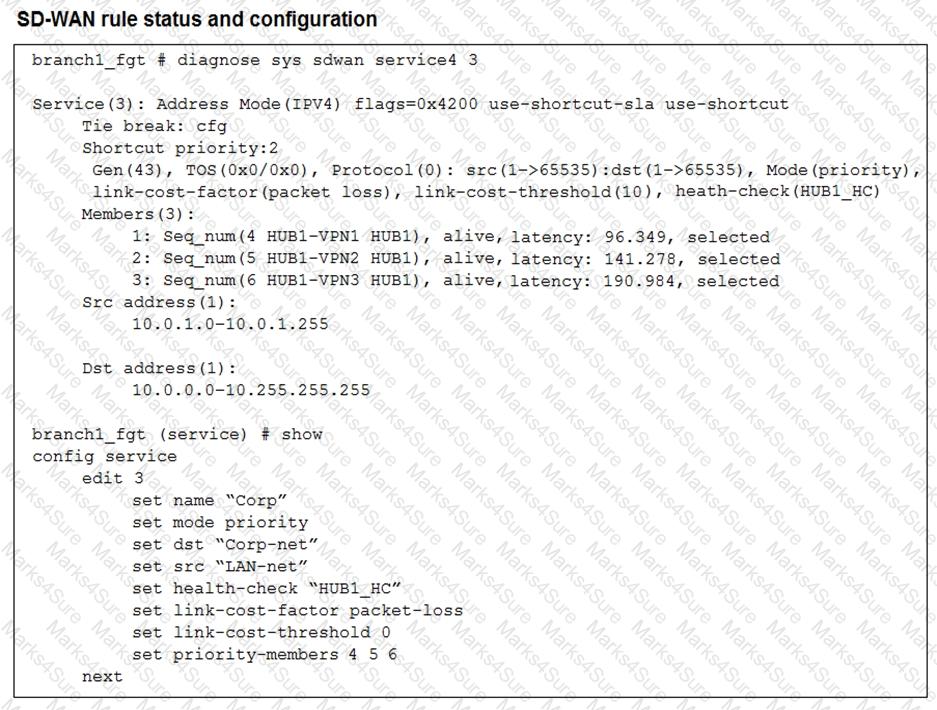
Based on the exhibit, which change in the measured latency will first make HUB1-VPN3 the new preferred member?
Refer to the exhibits.
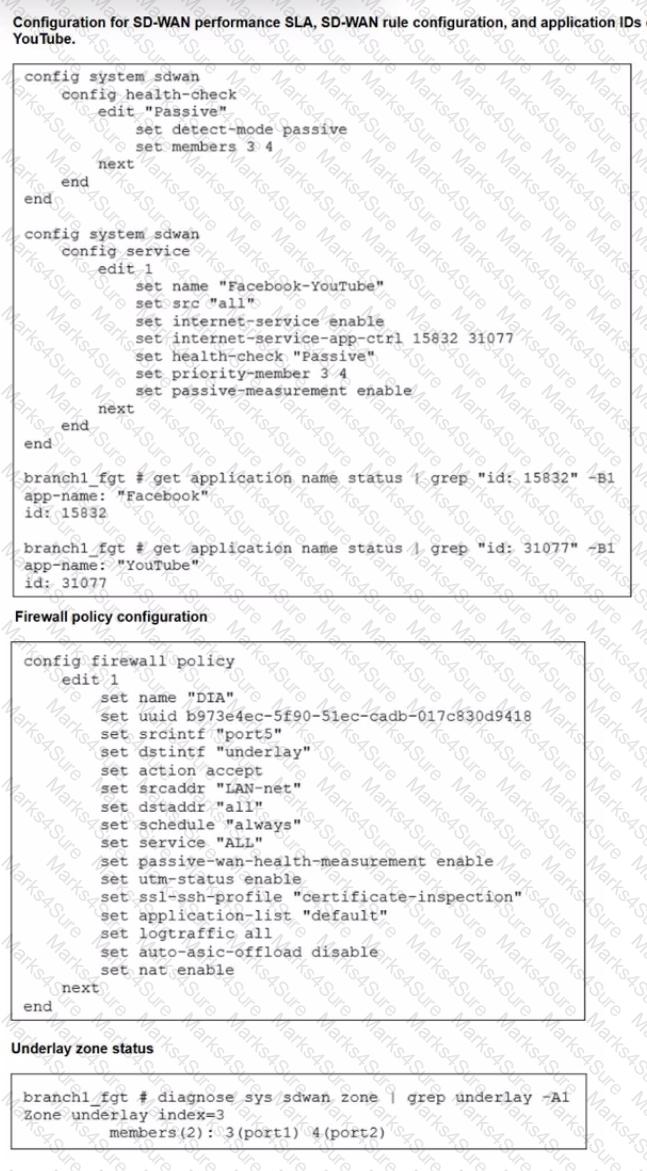
The exhibits show the configuration for SD-WAN performance. SD-WAN rule, the application IDs of Facebook and YouTube along with the firewall policy configuration and the underlay zone status.
Which two statements are true about the health and performance of SD-WAN members 3 and 4? (Choose two.)
Which three factors about SLA targets and SD-WAN rules should you consider when configuring SD-WAN rules? (Choose three.)
Refer to the exhibit.
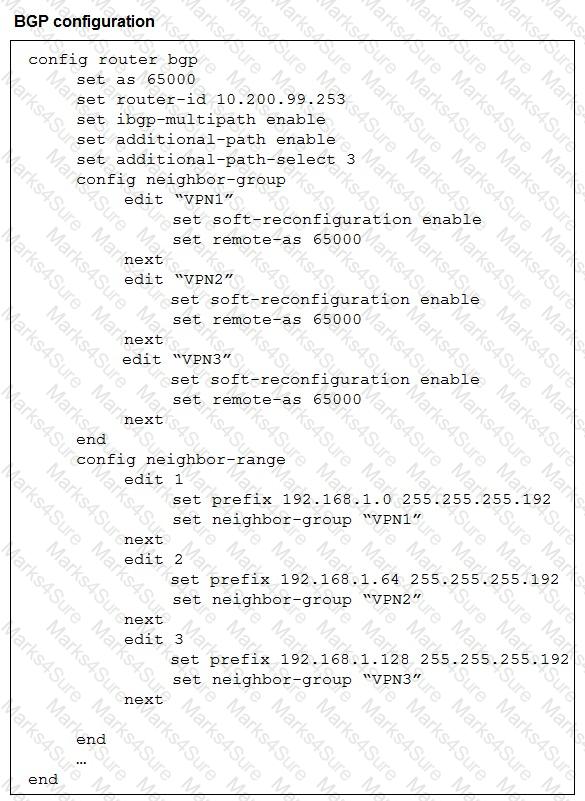
The exhibit shows the BGP configuration on the hub in a hub-and-spoke topology. The administrator wants BGP to advertise prefixes from spokes to other spokes over the IPsec overlays, including additional paths. However, when looking at the spoke routing table, the administrator does not see the prefixes from other spokes and the additional paths
Which three settings must the administrator configure inside each BGP neighbor group so spokes can learn the prefixes of other spokes and their additional paths? (Choose three.)
Refer to the exhibits.
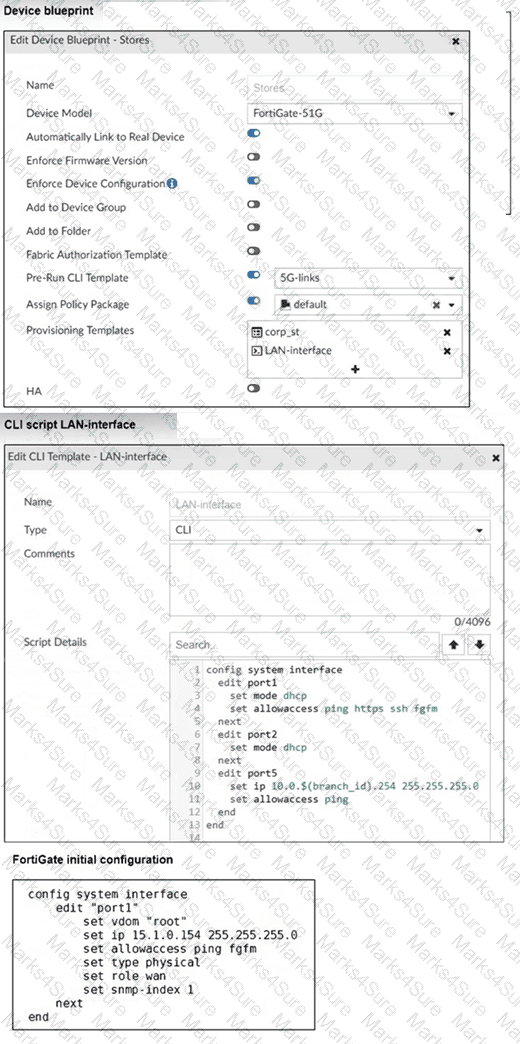
To prepare to onboard FortiGate devices to your company ' s stores, you configure the device blueprint and CLI scripts shown in the exhibit. Then, a technician prepares a FortiGate 90G with a basic configuration and connects it to the network. The basic configuration contains the port1 configuration and the minimal configuration required to allow the device to connect to FortiManager.
After the device initially connects to FortiManager, FortiManager updates the device configuration.
Based on what is shown in the exhibits, which statement about the actions taken by FortiManager is true?
The FortiGate devices are managed by ForliManager, and are configured for direct internet access (DIA). You confirm that DIA is working as expected for each branch, and check the SD-WAN zone configuration and firewall policies shown in the exhibits.
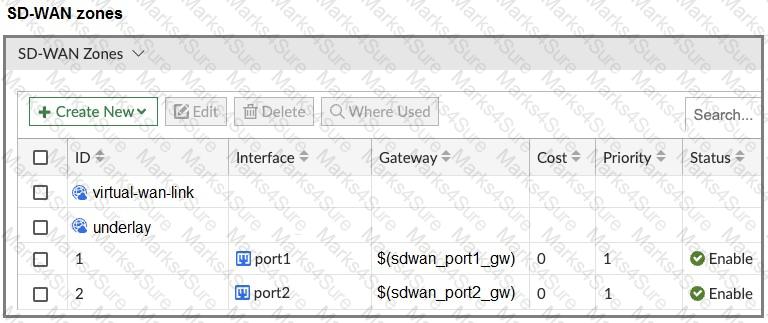

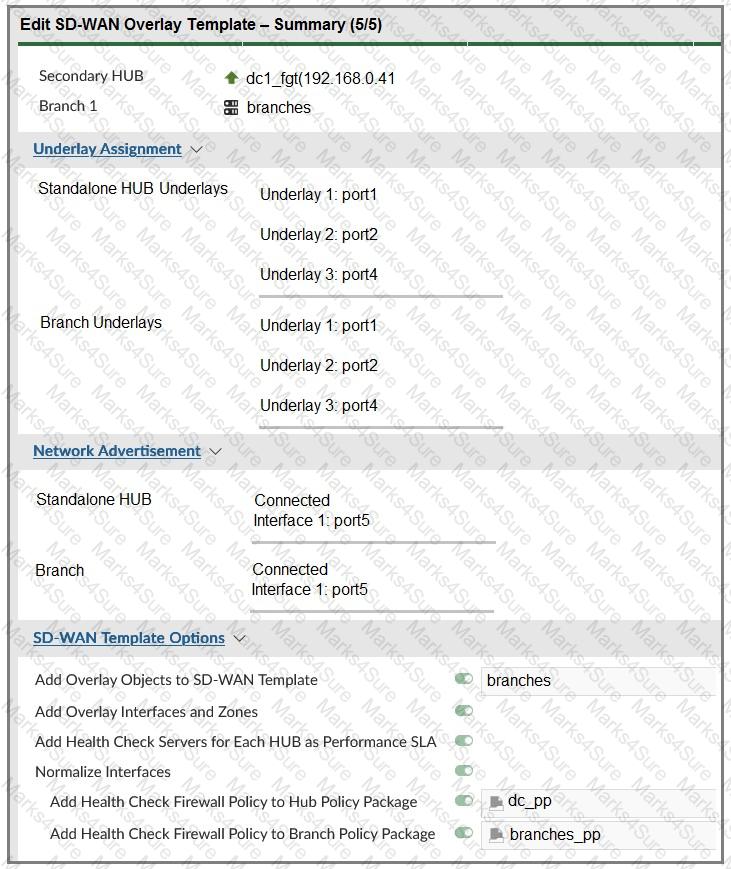
Then, you use the SD-WAN overlay template to configure the IPsec overlay tunnels. You create the associated SD-WAN rules to connect existing branches to the company hub device and apply the changes on the branches.
After those changes, users complain that they lost internet access. DIA is no longer working.
Based on the exhibit, which statement best describes the possible root cause of this issue?
When you use the command diagnose sys session list, how do you identify the sessions that correspond to traffic steered according to SD-WAN rules?
Refer to the exhibits.
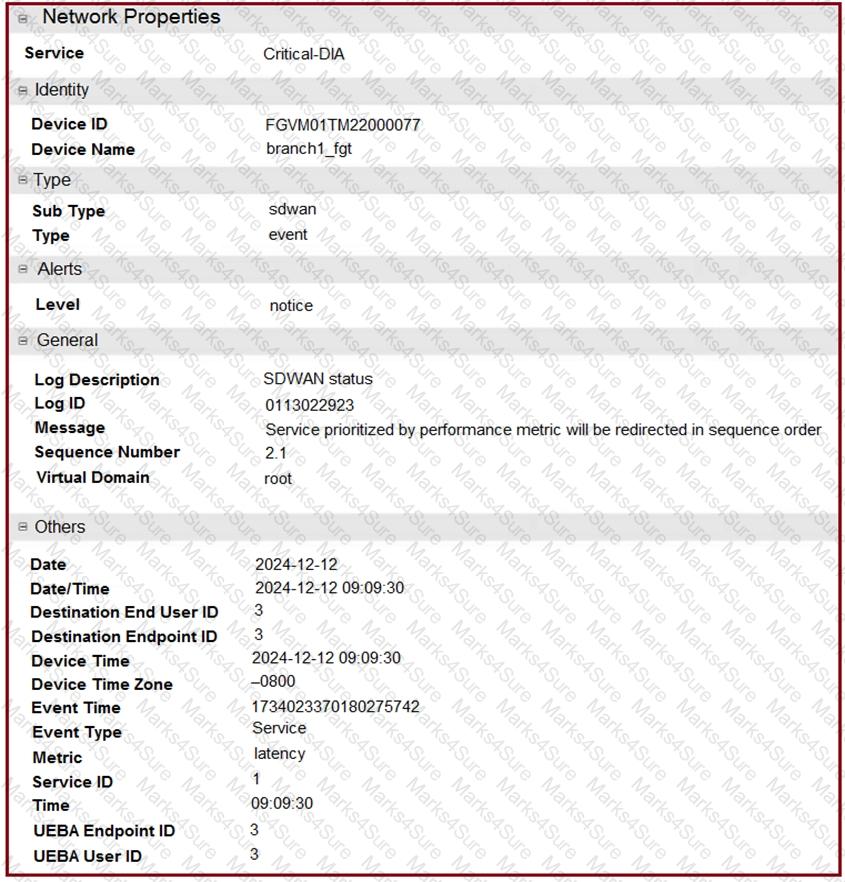
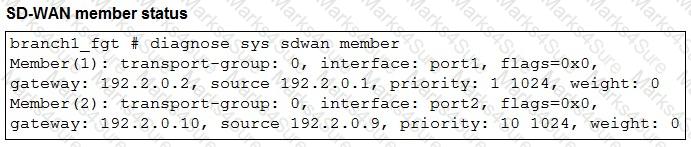
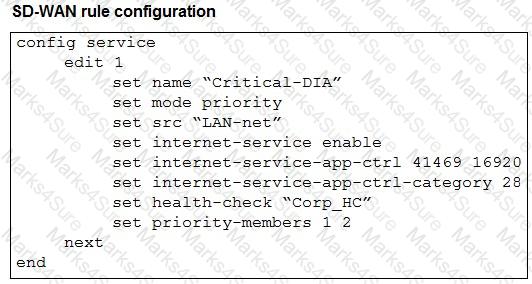
The exhibits show an SD-WAN event log, the member status, and the SD-WAN rule configuration.
Which two conclusions can you draw from the information shown? (Choose two.)
Refer to the exhibit.
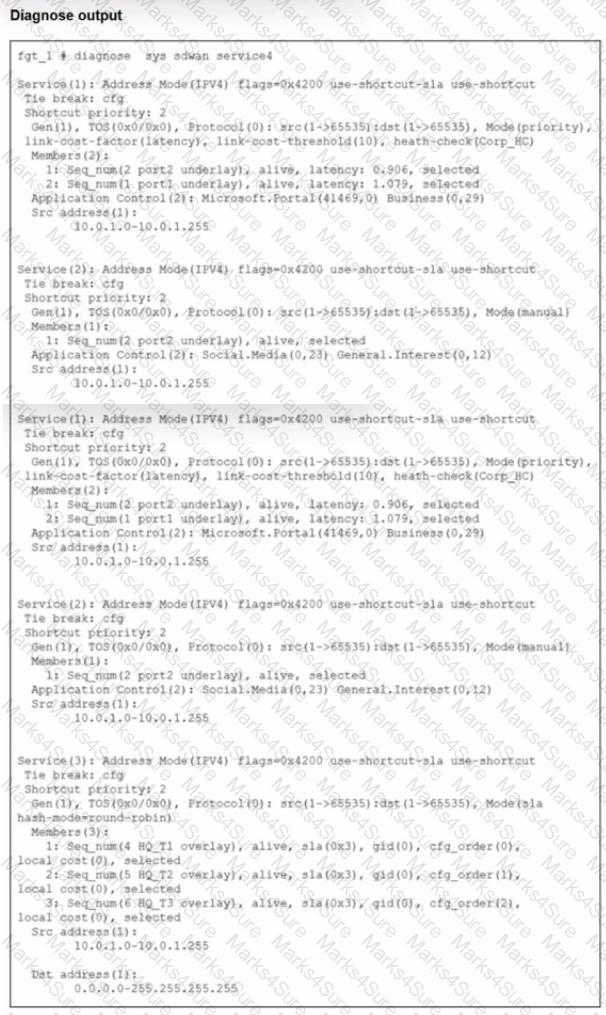
The exhibit shows output of the command diagnose sys adwan aervice4 collected on a FortiGate device.
The administrator wants to know through which interface FortiGate will steer traffic from local users on subnet 10.0.1.0/255.255.255.192 and with a destination of the social media application Facebook.
Based on the exhibits, which two statements are correct? (Choose two.)
Refer to the exhibit.
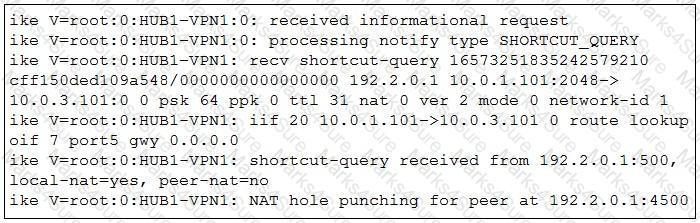
Which statement best describe the role of the ADVPN device in handling traffic?
(Refer to the exhibit.
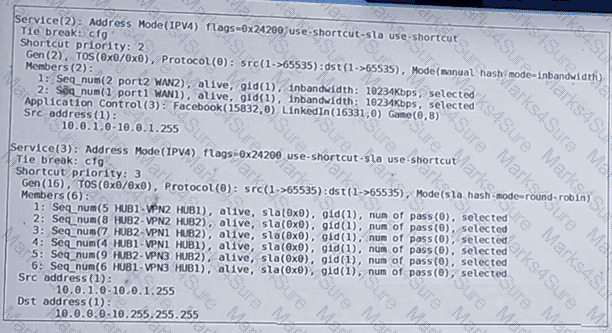
The administrator configured two SD-WAN rules to load balance traffic.
Which interfaces does FortiGate use to steer the traffic from 10.0.1.124 to 10.0.0.254 ? Choose one answer.)
Exhibit.
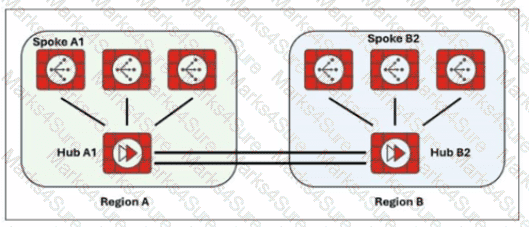
Two hub-and-spoke groups are connected through redundant site-to-site IPsec VPNs between Hub 1 and Hub 2
Which two configuration settings are required for the spoke A1 to establish an ADVPN shortcut with the spoke B2? (Choose two.)
Refer to the exhibit.
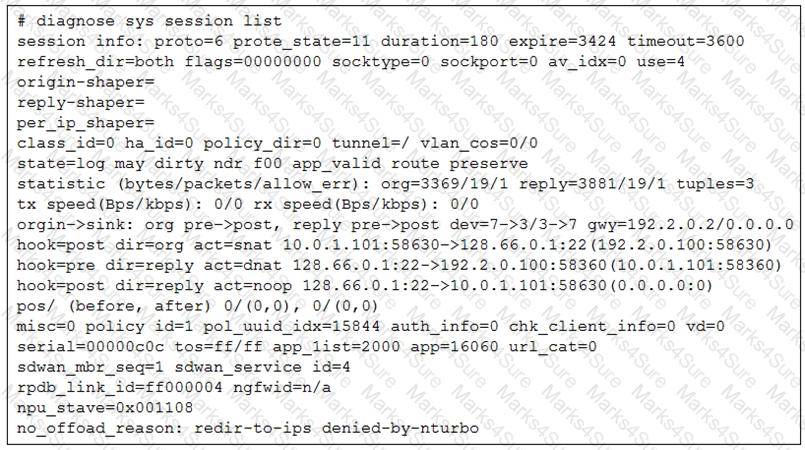
The administrator configured the SD-WAN rule ID 4 with two members (port1 and port2) and strategy lowest cost (SLA).
What are the two characteristics of the session shown in the exhibit? (Choose two.)
(Refer to the exhibit.
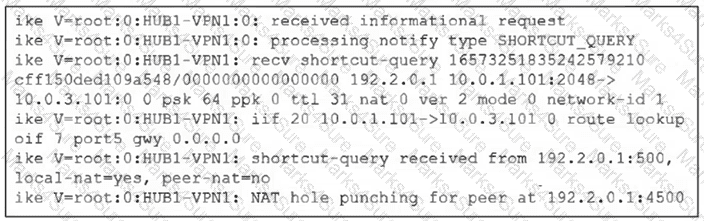
Which statement correctly describes the role of the ADVPN device in handling traffic? Choose one answer.)
You manage an SD-WAN topology. You will soon deploy 50 new branches.
Which three tasks can you do in advance to simplify this deployment? (Choose three.)
The SD-WAN overlay template helps to prepare SD-WAN deployments. To complete the tasks performed by the SD-WAN overlay template, the administrator must perform some post-run tasks. What are two mandatory post-run tasks that must be performed? (Choose two.)
You have a FortiGate configuration with three user-defined SD-WAN zones and two members in each of these zones. One SD-WAN member is no longer in use in health-check and SD-WAN rules. You want to delete it.
What happens if you delete the SD-WAN member from the FortiGate GUI?
Exhibit.
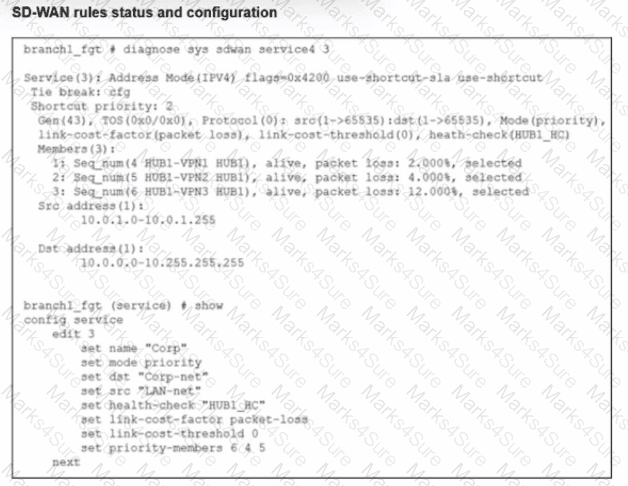
Refer to the exhibit, which shows the SD-WAN rule status and configuration.
Based on the exhibit, which change in the measured packet loss will make HUB1-VPN3 the new preferred member?
You want FortiGate to use SD-WAN rules to steer local-out traffic.
Which two constraints should you consider? (Choose two.)
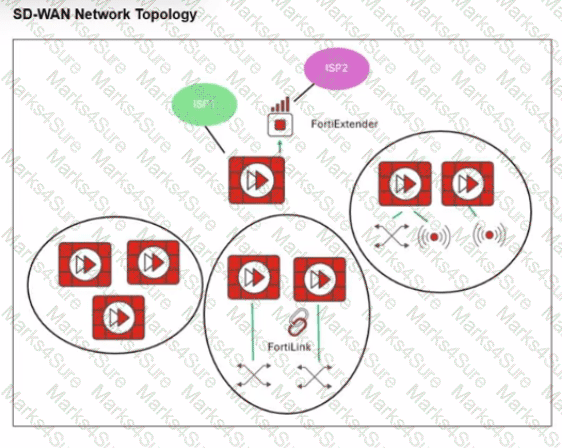
Refer to the exhibit.
You want to configure SD-WAN on a network as shown in the exhibit.
The network contains many FortiGate devices. Some are used as NGFW, and some are installed with extensions such as FortiSwitch. FortiAP. or Forti Ex tender.
What should you consider when planning your deployment?
Refer to the exhibit.
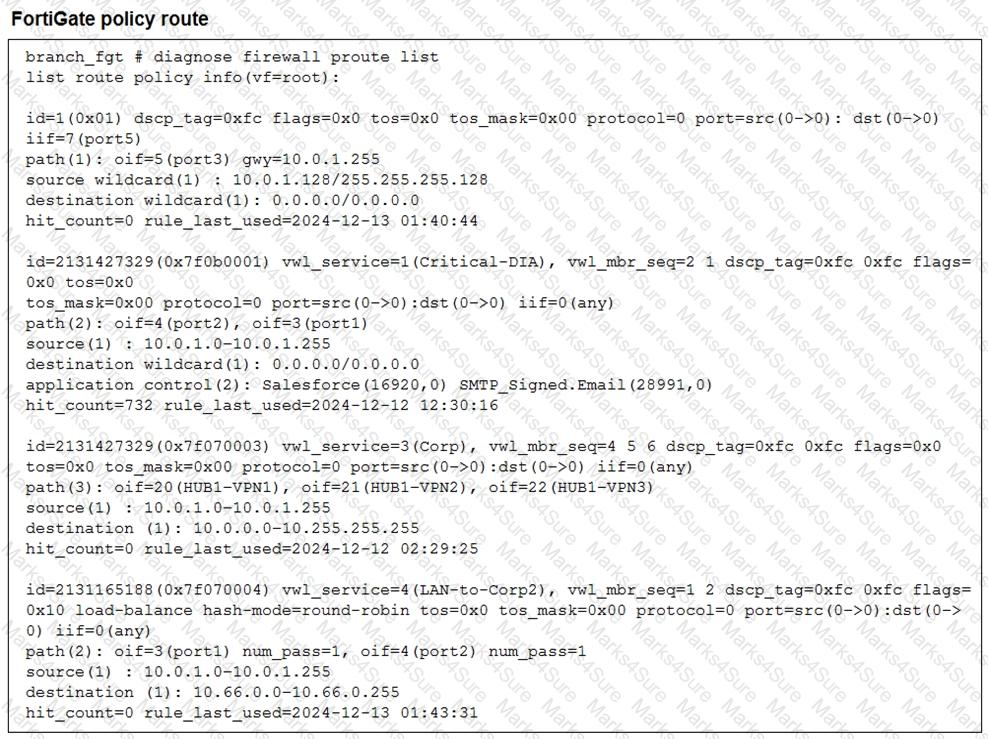
What conclusions can you draw about the traffic received by FortiGate originating from the source LAN device 10.0.1.133 and destined for the company’s SMTP mail server at 10.66.0.125?
Refer to the exhibits.
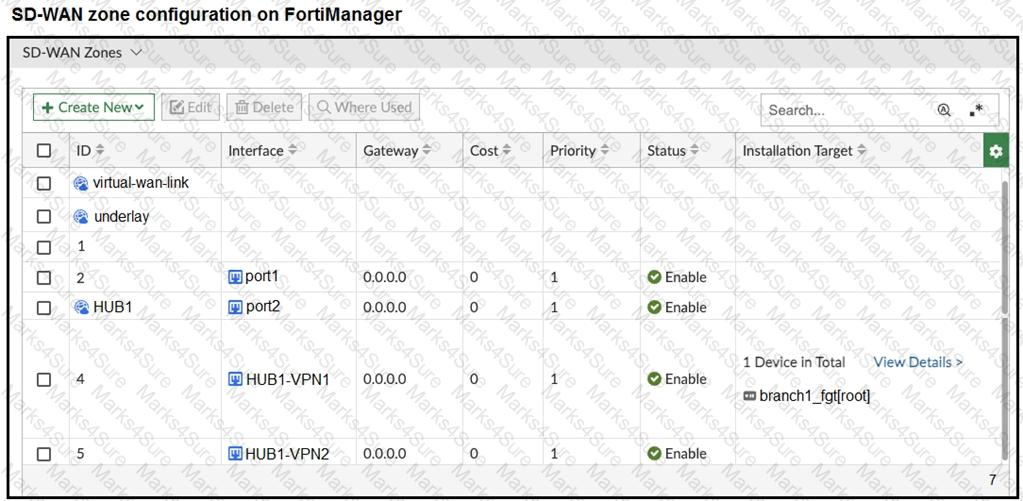
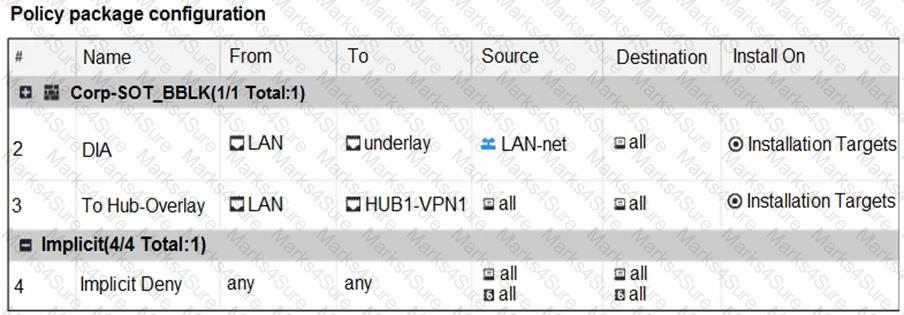
The exhibits show the SD-WAN zone configuration of an SD-WAN template prepared on FortiManager and the policy package configuration.
When the administrator tries to install the configuration changes, FortiManager fails to commit.
What should the administrator do to fix the issue?
Refer to the exhibits.
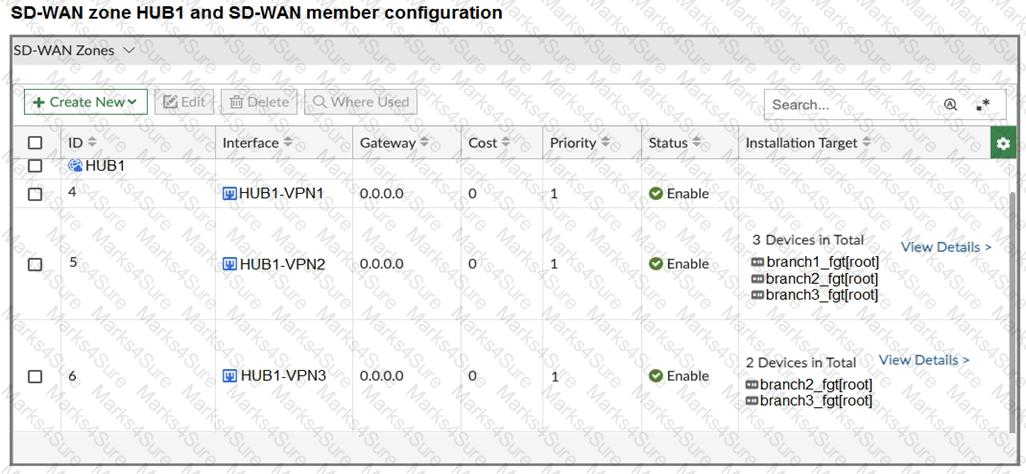
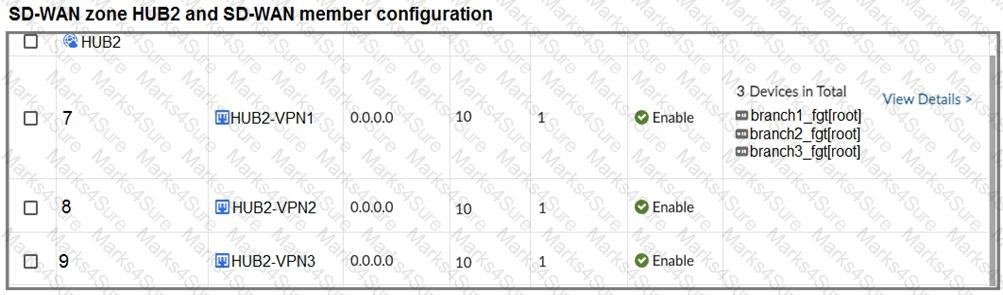
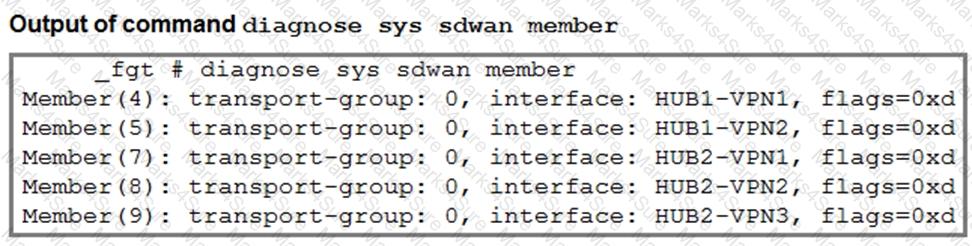
The first exhibit shows the SD-WAN zone HUB1 and SD-WAN member configuration from an SD-WAN template, and the second exhibit shows the output of command diagnose sys sdwan member collected on a FortiGate device.
Which statement best describes what the diagnose output shows?
Refer to the exhibit that shows an SD-WAN zone configuration on the FortiManager GUI.
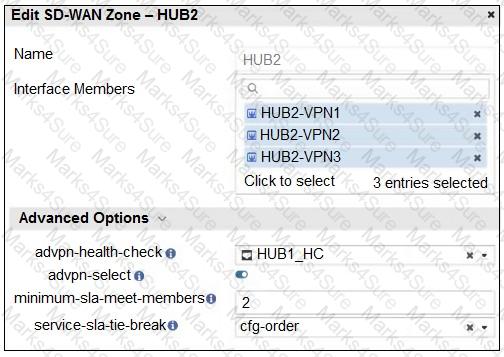
Based on the exhibit, how will the FortiGate device behave after it receives this configuration?
PDF + Testing Engine

Testing Engine
PDF (Q&A)