
Free Practice Questions for the Fortinet NSE 6 Network Security Specialist NSE6_WCS-7.0 Exam (2026 Updated)
At Marks4sure, we are dedicated to providing IT professionals with the most accurate and reliable preparation materials for the Fortinet NSE6_WCS-7.0 exam. To support your certification journey, we have made a selection of our premium 2026 NSE 6 Network Security Specialist practice questions and answers available completely free. You can take this practice test as many times as you need. Every question includes a detailed, expertly verified explanation to ensure you fully grasp the core security concepts before test day.
Your organization is deciding between deploying an active-active (A-A) or active-passive (A-P) FortiGate high availability (HA) cluster in AWS cloud.
Which two statements are true about A-A clusters compared to A-P clusters? (Choose two.)
A global organization with cloud networks deployed in several AWS regions wants to set up next-generation firewall (NGFW) protection using FortiGate Cloud-Native Firewall (CNF).
What are two deployment considerations for the organization? (Choose two.)
Refer to the exhibit.
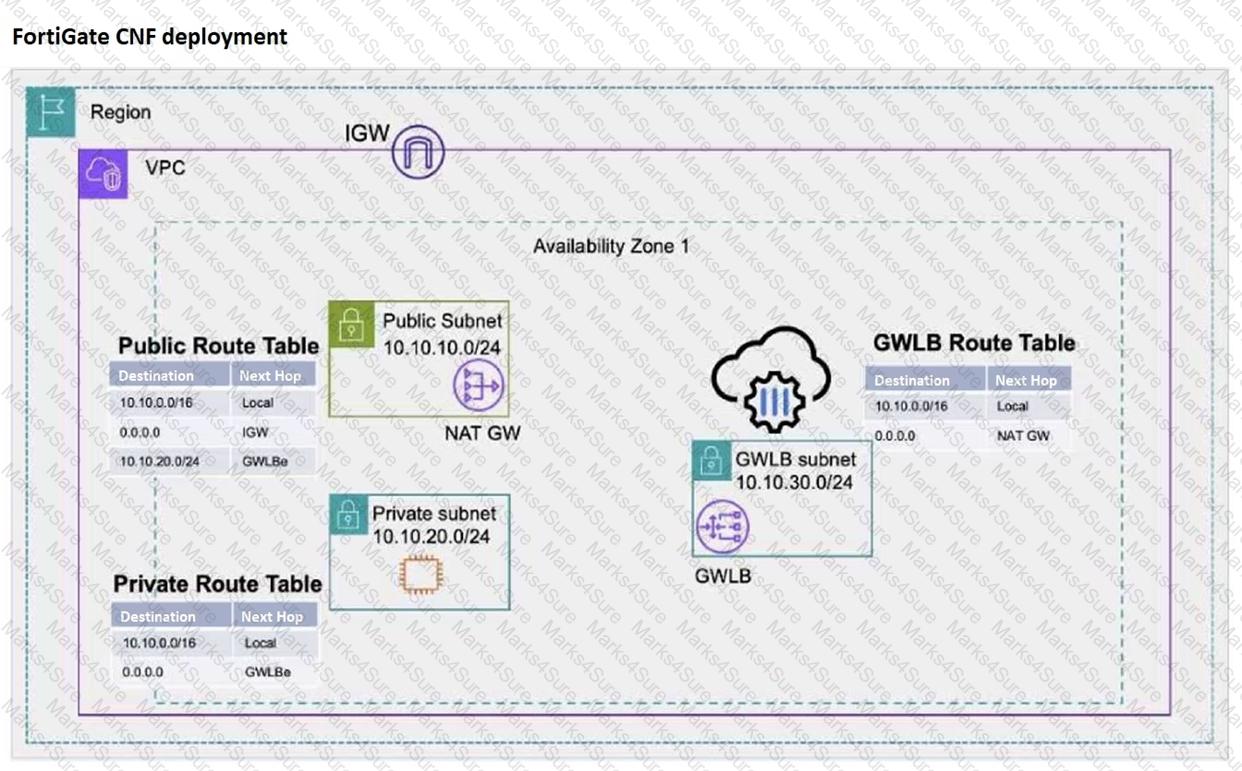
Traffic is initiated from the EC2 instance and is destined for the internet.
Which traffic flow is correct?
You are troubleshooting network connectivity issues between two VMs deployed in AWS.
One VM is a FortiGate located on subnet " LAN " that is part of the VPC " Encryption " . The other VM is a Windows server located on the subnet " servers " which is also in the " Encryption " VPC. You are unable to ping the Windows server from FortiGate.
What are two reasons for this? (Choose two.)
Refer to the exhibit.
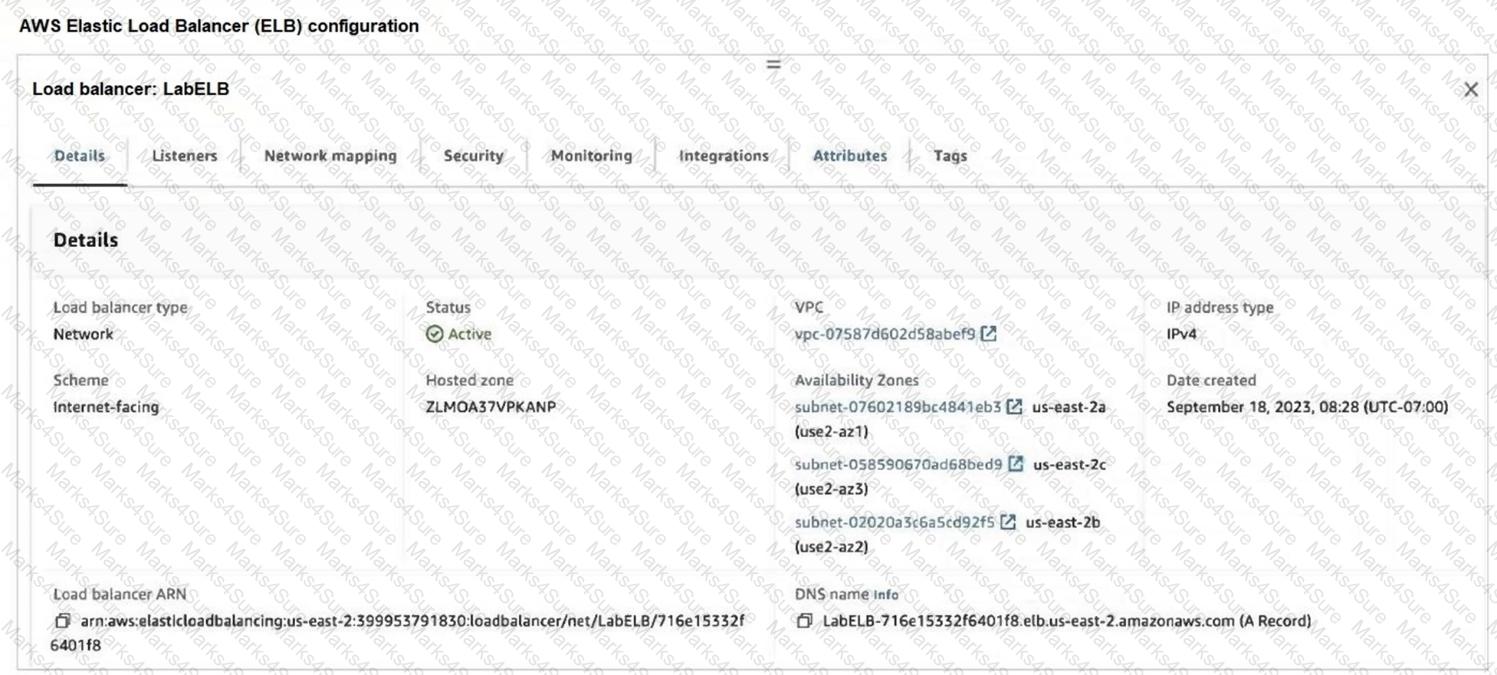
A customer is using the AWS Elastic Load Balancer (ELB).
Which two statements are correct about the ELB configuration? (Choose two.)
Refer to the exhibit.
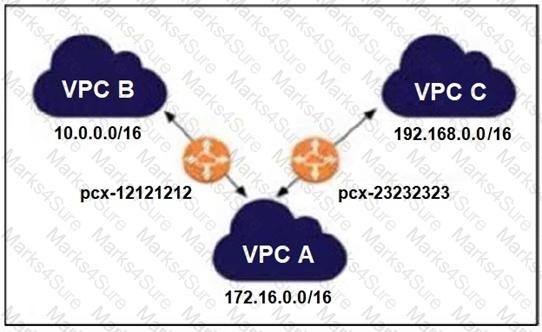
Which statement is correct about the VPC peering connections shown in the exhibit?
An administrator has been asked to deploy an active-passive (A-P) FortiGate cluster in the AWS cloud across two availability zones.
In addition to enhanced redundancy, which other major difference is there compared to deploying A-P high availability in the same availability zone?
PDF + Testing Engine

Testing Engine
PDF (Q&A)